
On September 7 and 8 in 1850, the Superior Robinson and the Huron Robinson treaties were signed between some Anishinaabe peoples along the north shore of Lake Superior and Lake Huron, and the British Crown. Similar to land cession treaties signed between Anishinaabe peoples and the United States government south of the border, these treaties are the legal foundation for economic growth that occurred in the region beginning in the second half of the nineteenth century with emerging industries like commercial logging and mining. These treaties also have significant impacts in the present, including an on-going landmark legal dispute between twelve Anishinaabe First Nations and the governments of Ontario and Canada. If you live in Ontario or travel in the Ontario part of the northern Great Lakes, this is important history to understand.
In the Robinson treaties, Anishinaabe people ceded approximately 35,700 square miles of land along the northern shores of Lake Superior and Lake Huron to the British Crown. According to the text of the treaties, the boundary between them was a line between Lake Superior’s Batchawana Bay and the height of land separating the Great Lakes basin from watersheds to the north. The treaties’ namesake is trader named William Robinson, who assisted with negotiating them on behalf of the British Crown. Canada did not become a nation-state until 1867, just under a century after the United States declared independence from Britain. So, in 1850, Canada was still a collection of British colonies. This is why many land cession treaties in Canada pre-1867 were with the British Crown rather than the federal government of Canada. Canada inherited these treaty obligations when it became a nation.
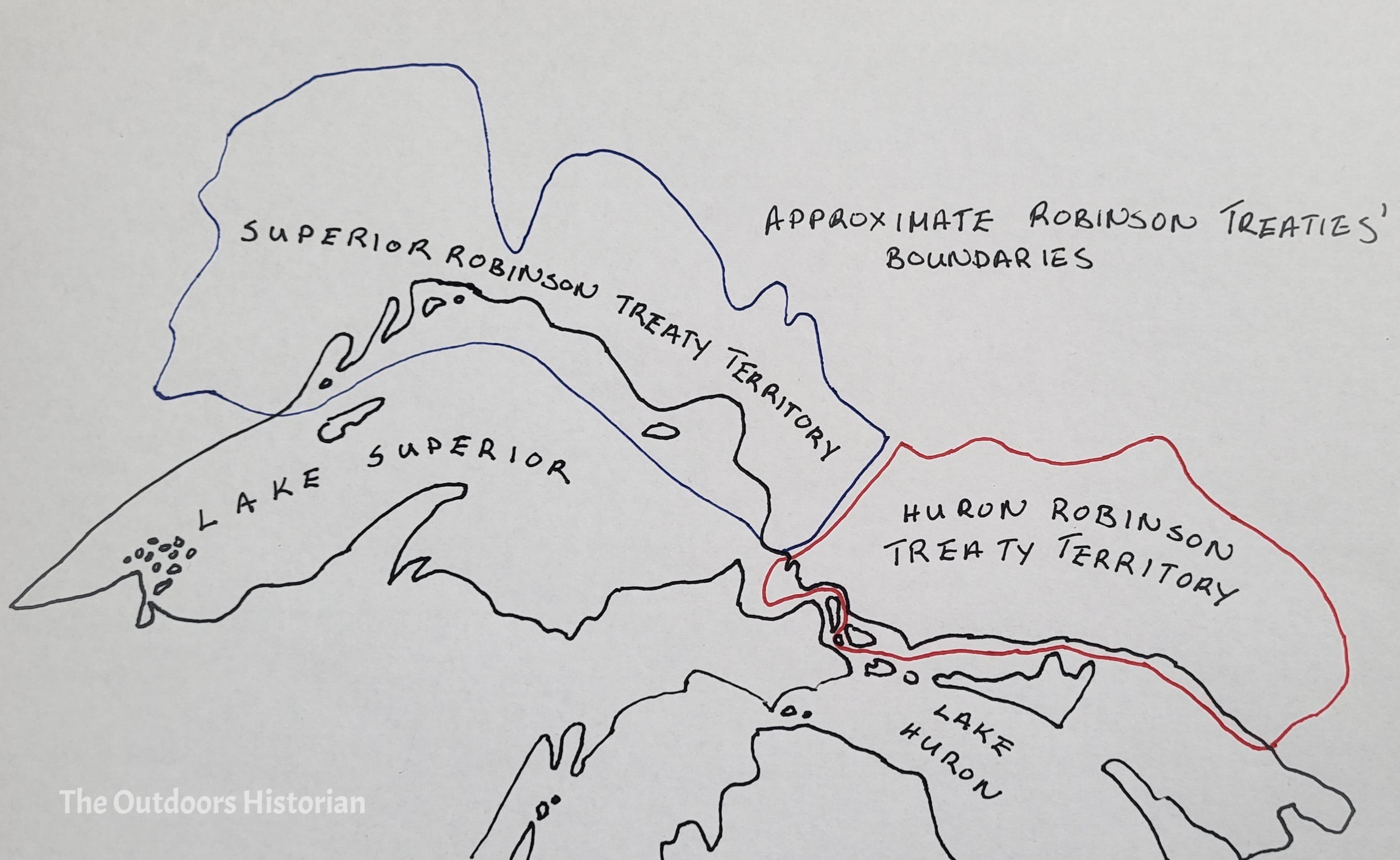
A map of the approximate territories ceded by the Robinson Treaties. Map created by the author.
Leading up to the Robinson treaties, individual settlers and companies began prospecting on Anishinaabe land north of Lake Huron and Lake Superior, angering Anishinaabe peoples who stewarded these lands for generations. Interest in mineral deposits along the north shore of Lake Superior was inspired by Americans successfully finding copper in the Keweenaw Peninsula following the Treaty of La Pointe in 1842 (which ceded land along the south shore from present-day Superior, Wisconsin to Marquette, Michigan, to the United States). The colonial government of Canada began granting mining licenses in the 1840s, and prospecting activity increased, including by surveyors and geologists.
Anishinaabe leaders like Shingwauk from Garden River began to petition against this activity. The colonial government ignored the complaints. So Shingwauk and others took matters into their own hands. In November 1849, Shingwauk led a group of about one hundred armed Anishinaabe men from Sault Ste. Marie along the shore of Lake Superior for about 200 miles to Mica Bay. When they arrived at the community run by the Quebec Mining Company, the company agent, John Bonner, surrendered without resistance. The miners returned to Ottawa and explained they were evicted by the Anishinaabe. In response to the Mica Bay conflict, the Upper Canada government sent officials to the north shores of Lake Huron and Lake Superior to explore the possibility of establishing treaties. Some leaders (including Shingwauk) were arrested, sent to Toronto for trial, and then later released.
Much like Anishinaabe peoples south of the border, land cession treaties were negotiated with a distinct power imbalance. The United States and British Canada made it clear they were willing to extract from and expand onto Anishinaabe lands, regardless of whether or not treaties were signed. Leaders among the independent bands of Anishinaabe people spread throughout the watershed had different opinions on the best way to proceed and the best strategies to protect their self-determination and lands. Many leaders saw treaties as a way to have the United States and British Canada legally recognize certain rights, including the rights to remain in their ancestral lands.
After prolonged negotiations, leaders from some Anishinaabe communities signed the Robinson Superior Treaty on September 7 and the Huron Robinson Treaty on September 8, 1850 in Bawating (present-day Sault Ste Marie, Ontario). The treaties included the rights to hunt and fish throughout the ceded treaty territory (often known as treaty rights or usufructuary rights), and annuity payments in perpetuity. The treaties called for increasing the annuity if the Crown can do so without incurring loss (known as the “Augmentation Clause”).
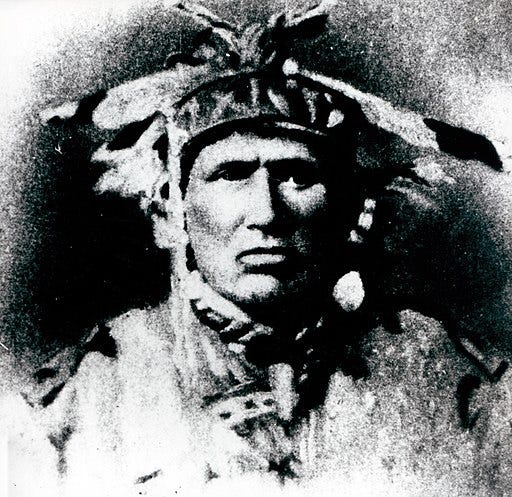
Shingwauk at the signing of the Huron Robinson treaty. Image from Wikimedia Commons.
The treaties set the legal foundation for Canadian economic development in the watersheds. The Soo Locks where Lake Superior flows into the St. Mary's River (which then flows into Lake Huron) opened in the second half of the nineteenth century. The creation of the locks both devastated Anishinaabe whitefish fisheries in the river and opened the doors to increased resource extraction an d development, including commercial logging and the pulp and paper industry, commercial mining (including nickel, uranium, iron, silver, and more), the development of a cross-Canada railroad, and, eventually, the construction of a cross-Canada highway.
In 1875, the Crown increased the annuity payments. There were no further increases, resulting in annuity payments to the Indigenous beneficiaries being frozen at $4 per person for almost 150 years. Despite the flatlining of annuity payments, the region has seen a century and a half of resource extraction.
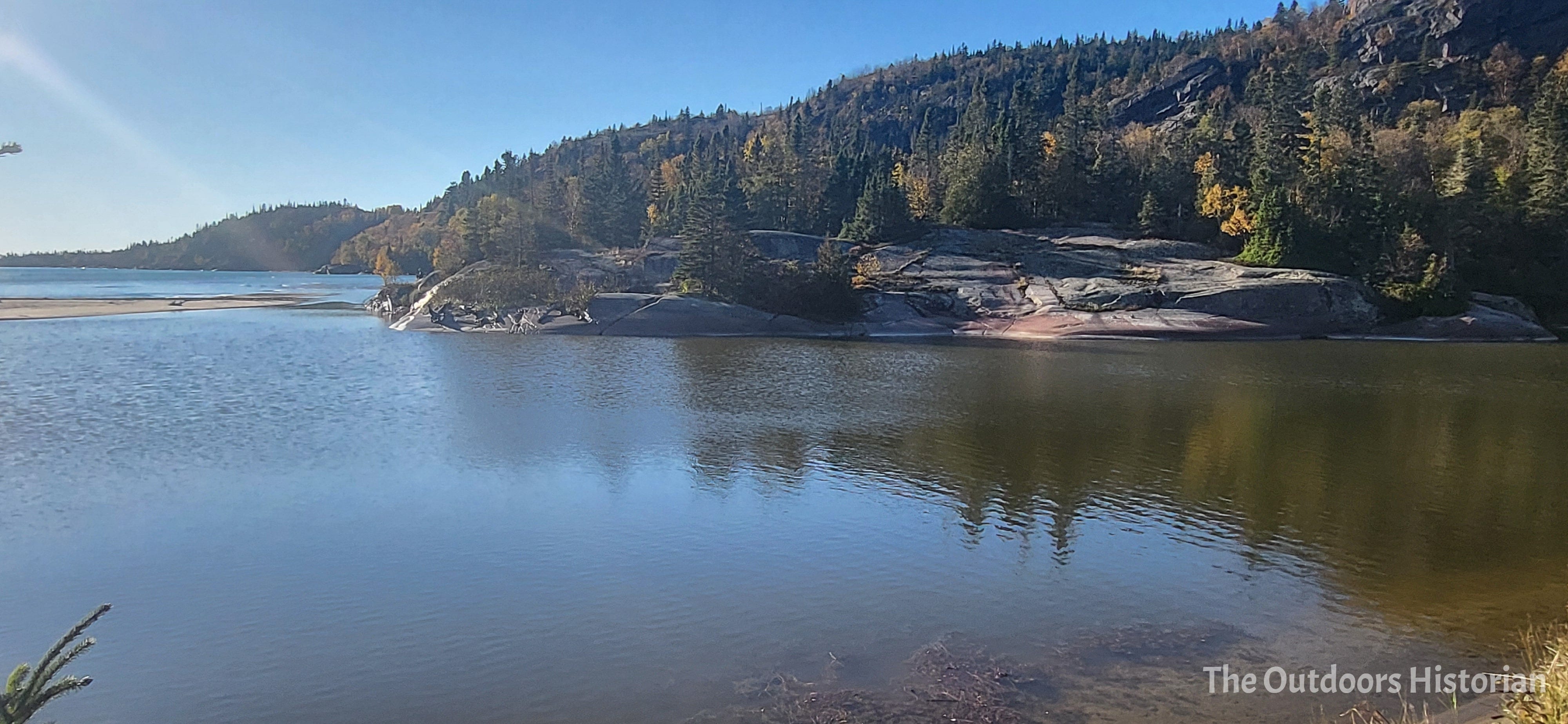
At the mouth of the Little Pic River (in Neys Provincial Park), there are still metal rods and hooks in the bedrock that were used to secure large rafts of logs that had been harvest upriver and floated downstream, before being towed to nearby sawmills on the coast. They are visible reminders of how logging shaped the region in the wake of the Robinson Superior Treaty. Photo taken by the author.
Beneficiaries of the Robinson treaties began to seek legal action focused on annuities in the late twentieth and early twenty-first centuries. These legal proceedings were heard together in three stages: the first stage involved the interpretation of the Robinson Treaties and whether there was a breach; the second stage considered the defenses of Crown immunity and limitations barred relief; and the third stage dealt with the remaining issues, including damages and the allocation of liability between the nation of Canada and the province of Ontario. The Ontario Superior Court of Justice and the Ontario Court of Appeal decided Stage One and Stage Two in favor of the treaty beneficiaries. Ontario and Canada subsequently appealed to the Supreme Court of Canada.
Stage 3 began in June 2023. During that stage, the beneficiaries of the Robinson Huron Treaty reached a settlement with Canada and Ontario for $10 billion for past breaches of the Augmentation Clause. The Robinson Superior Treaty beneficiaries did not reach a settlement.
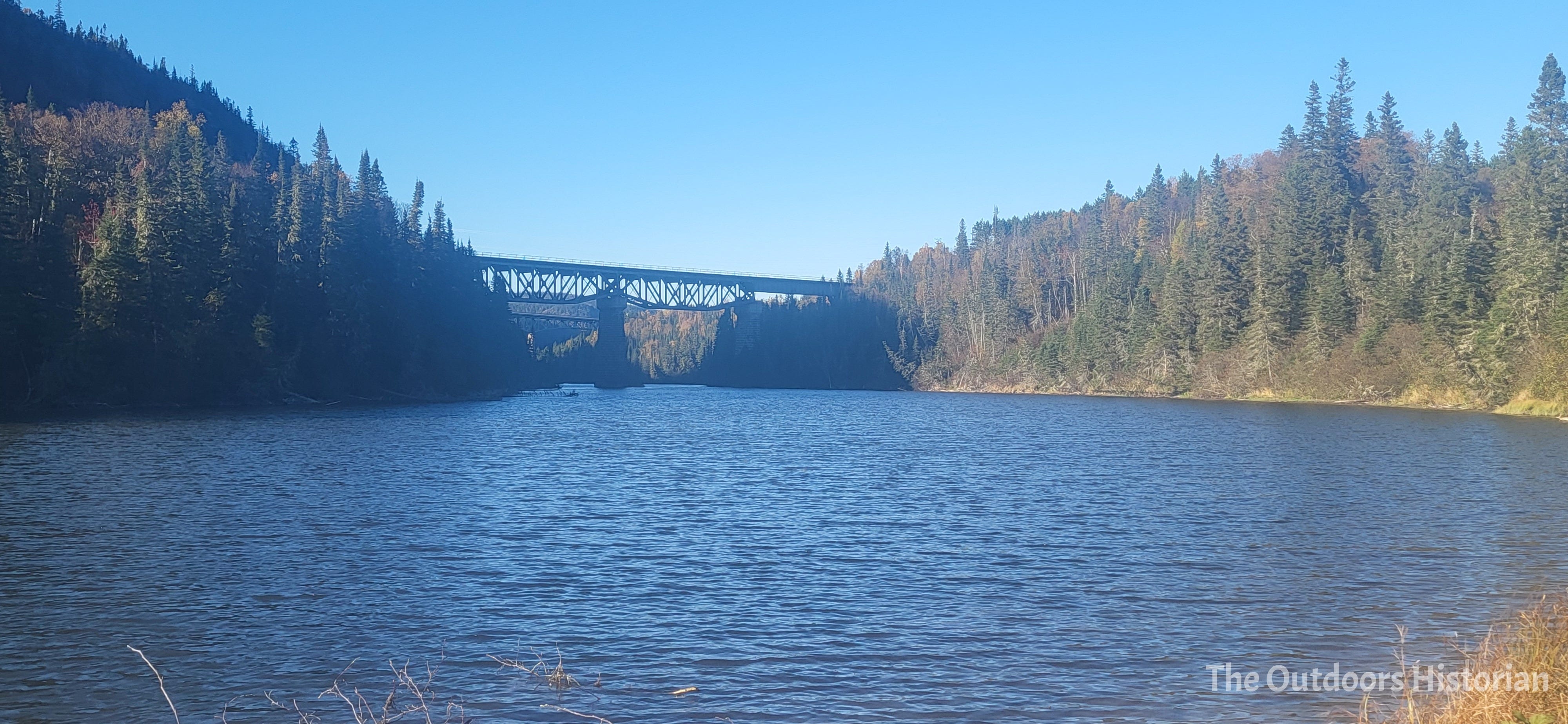
The railroad trestle over the Little Pic River in Neys Provincial Park in October, 2024. Photo taken by the author.
In July 2024, the Supreme Court of Canada unanimously ruled that the Crown breached the Robinson treaties by failing to increase the annuity payments owed to Indigenous beneficiaries (Ontario v. Restoule). The Court also ruled that the Crown must implement its treaty obligations and increase the annuity payments to the beneficiaries.
The Court strongly condemned Canada and the Crown’s history of failing to live up to its obligations, but it also concluded they should have the opportunity to exercise its discretion under the Augmentation Clause. The Court directed Canada to “meaningfully” and “honourably” engage with the beneficiaries of the Robinson-Superior Treaty and set out the process to remedy the Crown’s breaches. The Court also emphasized that its decision does not prevent Canada from being judicially compelled to pay a certain sum of money.
Canada had six months from the date of the decision to reach a settlement with the Robinson-Superior Treaty beneficiaries. Near the deadline, in January 2025, Canada and Ontario offered a settlement of $3.6 billion. The First Nations involved in the lawsuit rejected the offer. While the two Crown governments claim it was a fair offer, chiefs of the First Nations state the offer doesn't match the economic reality of the amount of profit extracted from Anishinaabe lands over the past 175 years. Expert witnesses involved with the case have made similar statements, with some economists estimating the profit is equivalent to more than $10 billion. Other economists place the estimate significantly higher, around $100 billion.
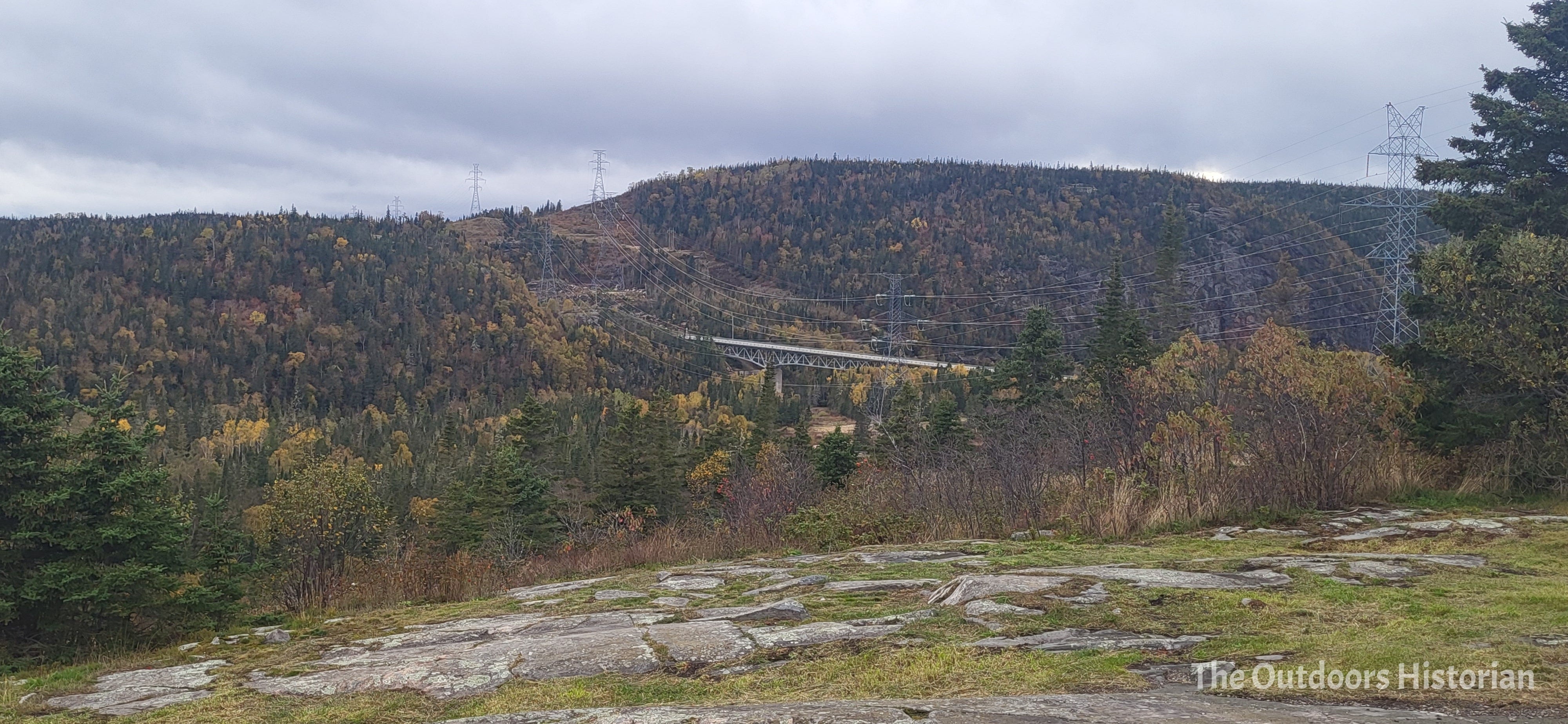
Today, Highway 17—part of the Trans Canada Highway—and transformers and powerlines cut across the Anishinaabe lands ceded by the Superior Robinson Treaty. Photo taken by the author.
Since no settlement was reached, the Court will exercise its discretion to determine an amount owed as compensation for past treaty breaches. In June 2025, Judge Patricia Hennessey in the District Court of Thunder Bay, heard arguments for the case. Her decision is expected later this year.
While there are twelve First Nations involved in the litigation process, only six of them stand to benefit immediately from any compensation. They are the signatory or adherent First Nations: Animbiigoo Zaagi’igan Anishinaabek, Fort William First Nation, Kiashke Zaaging Anishinaabek (Gull Bay First Nation), Michipicoten First Nation, Red Rock First Nation, and Whitesand First Nation.
The other six First Nations must first resolve their outstanding Aboriginal title claims or adhere to the Treaty before they gain access any annuity compensation: Biigtigong Nishnaabeg (Pic River First Nation), Biinjitiwaabik Zaaging Anishinaabek (Rocky Bay First Nation), Bingwi Neyaashi Anishinaabek (Sand Point First Nation), Long Lake No. 58 First Nation, Netmizaaggamig Nishnaabeg (Pic Mobert First Nation), and Pays Plat First Nation.
For example, Biigtigong Nishnaabeg (also known as Pic River First Nation) argue their leaders never signed the Robinson Superior Treaty and that their traditional lands are unceded, which means they have “unextinguished Aboriginal title”. The federal government of Canada insists that they should be considered signatories to the treaty. In 1979, then-chief Roy Michano of the Biigtigong Nishnaabeg launched a land claim arguing that nearly 8,000 square miles of territory had never been ceded to the Crown. The government of Canada denied the claim. However, the Biigtigong Nishnaabeg are still in legal negotiations with the province of Ontario.
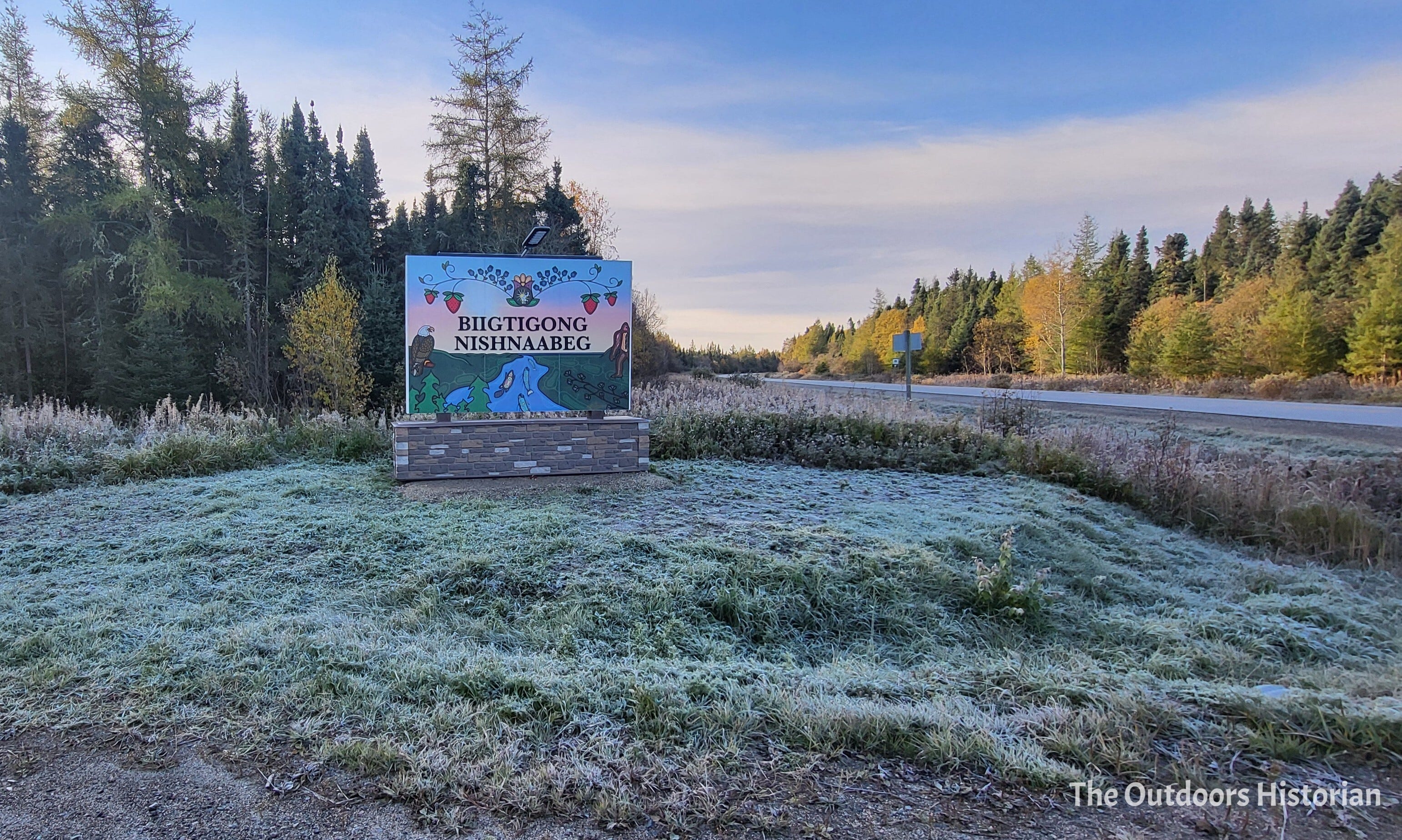
A sign for Biigtigong Nishnaabeg on a frosty morning in October, 2024. Photo taken by the author.
In 2019, when traveling around Lake Superior with college students, road access to Pukaskwa National Park was closed due to construction on a bridge over the Pic River. We drove along some side roads and met a citizen of Biigtigong Nishnaabeg. He very kindly and generously offered to give us a tour of their powwow grounds and the dunes along the shore on the west side of the Pic River. I’ll always remember how generous he was with his time and knowledge. It was a reminder of the ways Anishinaabe people continue to care for the watershed and educate visitors to their lands. It was a special experience and a highlight for many of the students.
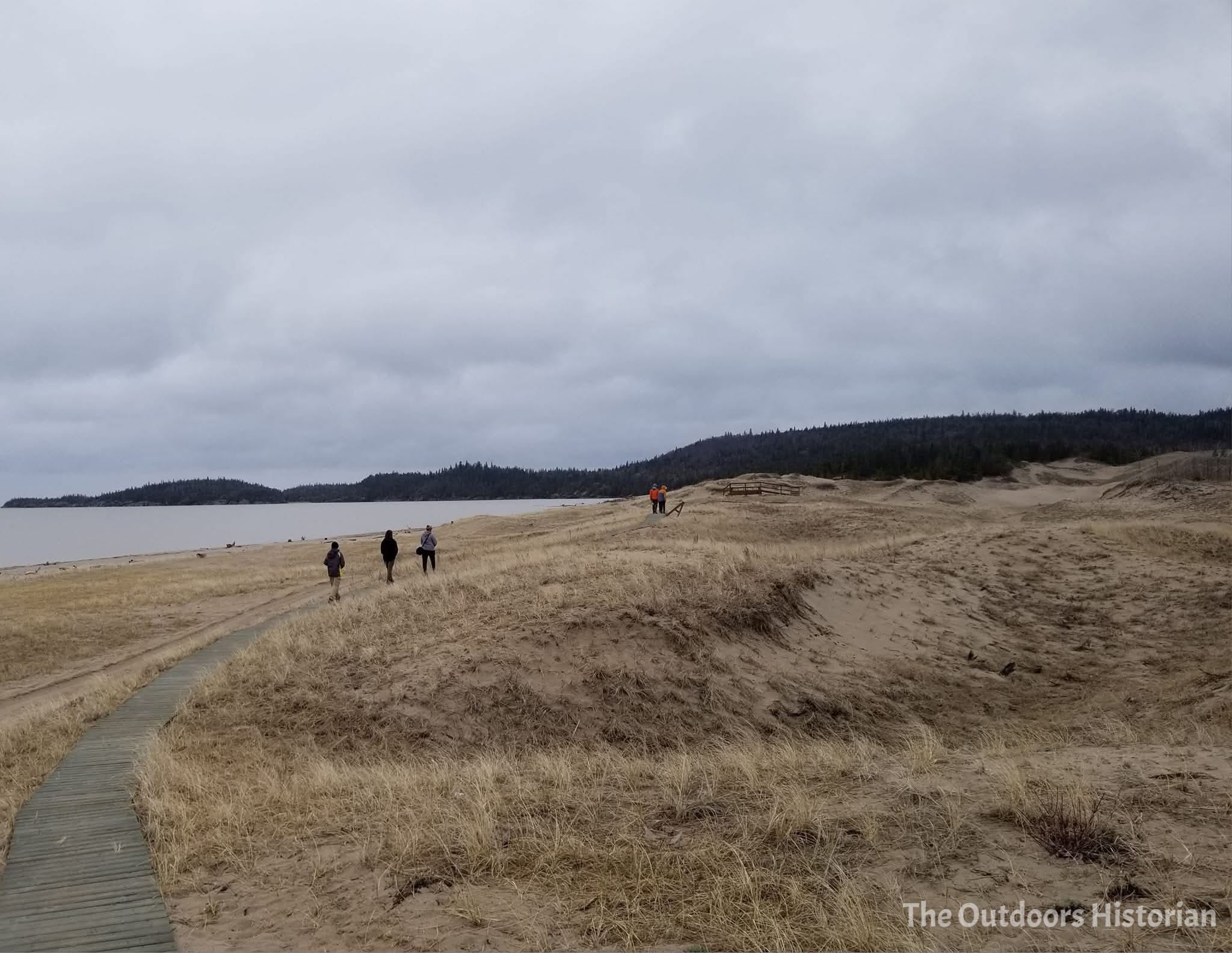
Visiting Biigtigong Nishnaabeg on a windy, rainy day in May, 2019. Photo taken by the author.
What about the $10 billion settlement reached between the twenty-one First Nations in Huron Robinson Treaty and Ontario and Canada? Legal fees and other associated costs were paid from the settlement. Then, 39% of the settlement money was divided amongst the First Nations and paid in increments with the final installment paid in March, 2025. An additional 25% of the settlement was distributed based on the population size of each First Nation, and the remaining 25% was distributed according to how many annuity recipients were in each community.
The Robinson Treaties are clear examples of how treaties are not just documents from the past. They have legal implications for the present.
Read transcripts of the treaties!
Other sources:
Leyland Cecco, “The Crown promised riches to First Nations in Canada – over 150 years on, they could finally get billions,” The Guardian, December 2023.
Leyland Cecco, “‘We didn’t sign that treaty’: in Canada, the Anishinaabe fight for land they never gave up,” The Guardian, February 2024.
Nick Dunne, “Billions have been made on Robinson Huron Treaty lands. First Nations could finally get a fair share,” The Narwhal, March 2023.
Maggie Kirk, “Northern Ontario First Nations claim billions over Robinson Treaties,” The Sault Ste Marie Star, January 2025.
Maggie Kirk, “Robinson Superior Treaty First Nations reject $3.6 billion offer for 175 years of breaches.” The Sault Ste Marie Star, January 2025.
Have questions or comments? Share them below!
Four dollars a year per person; for 175 years. I am gobsmacked.