
On September 30, 1854, the Treaty of La Pointe in 1854 was signed between Anishinaabe nations in the western Lake Superior region and the United States federal government. This treaty changed the political landscape of the western half of Lake Superior on the American side of the border, and has important and long-lasting implications for Minnesota, Wisconsin, and Michigan. The treaty ceded the Minnesota North Shore to the United States and created the majority of Anishinaabe reservations in northern Wisconsin and the western Upper Peninsula of Michigan.
Like many parts of history, this treaty has multiple sides. On the one hand, it secured permanent homelands in the western Lake Superior region for Anishinaabe peoples on the American side of the border. On the other hand, it also marks a tipping point in the region’s history: from European arrival to the mid-nineteenth century, Anishinaabe peoples were the demographic majority in the western Lake Superior watershed. From the mid-nineteenth century on, European-descended American settlers became the demographic majority. Furthermore, the treaty is another example of the United States gaining significant wealth by acquiring Indigenous lands.
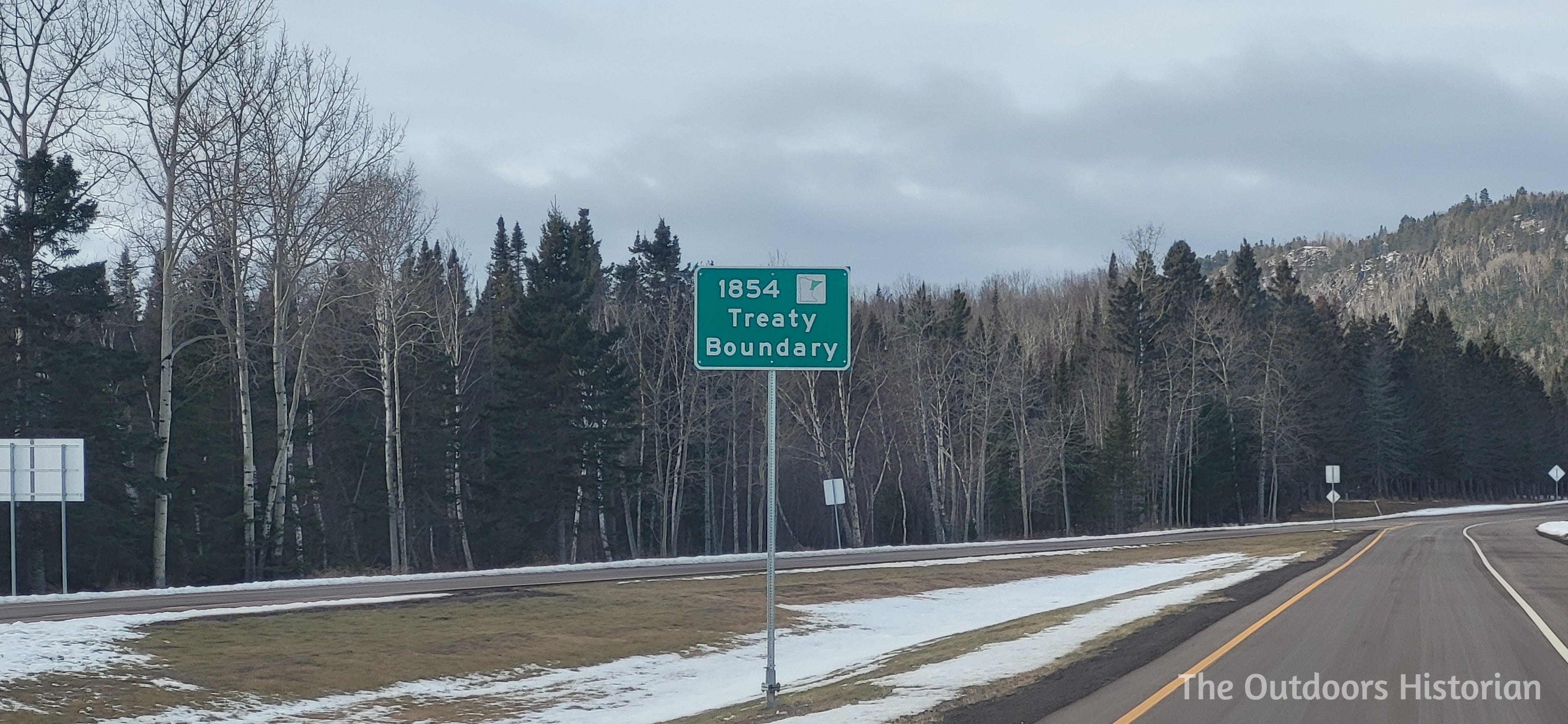
A sign notes you are entering lands ceded by the Treaty of La Pointe in 1854 as you cross the international border at Pigeon River and drive from Ontario into Minnesota. Photo taken by the author.
This treaty was negotiated in the wake land cession treaties, like the Treaty of St. Peter’s in 1837 and the first Treaty of La Pointe in 1842, and attempted removals, like the Sandy Lake Tragedy. Described as a tragedy in most history books, Sandy Lake was the biggest removal threat that Anishinaabe people in the western half of the Lake Superior watershed faced. Approximately four hundred Anishinaabe peoples died as a result of the events orchestrated by Minnesota Territory officials and backed by the federal government.
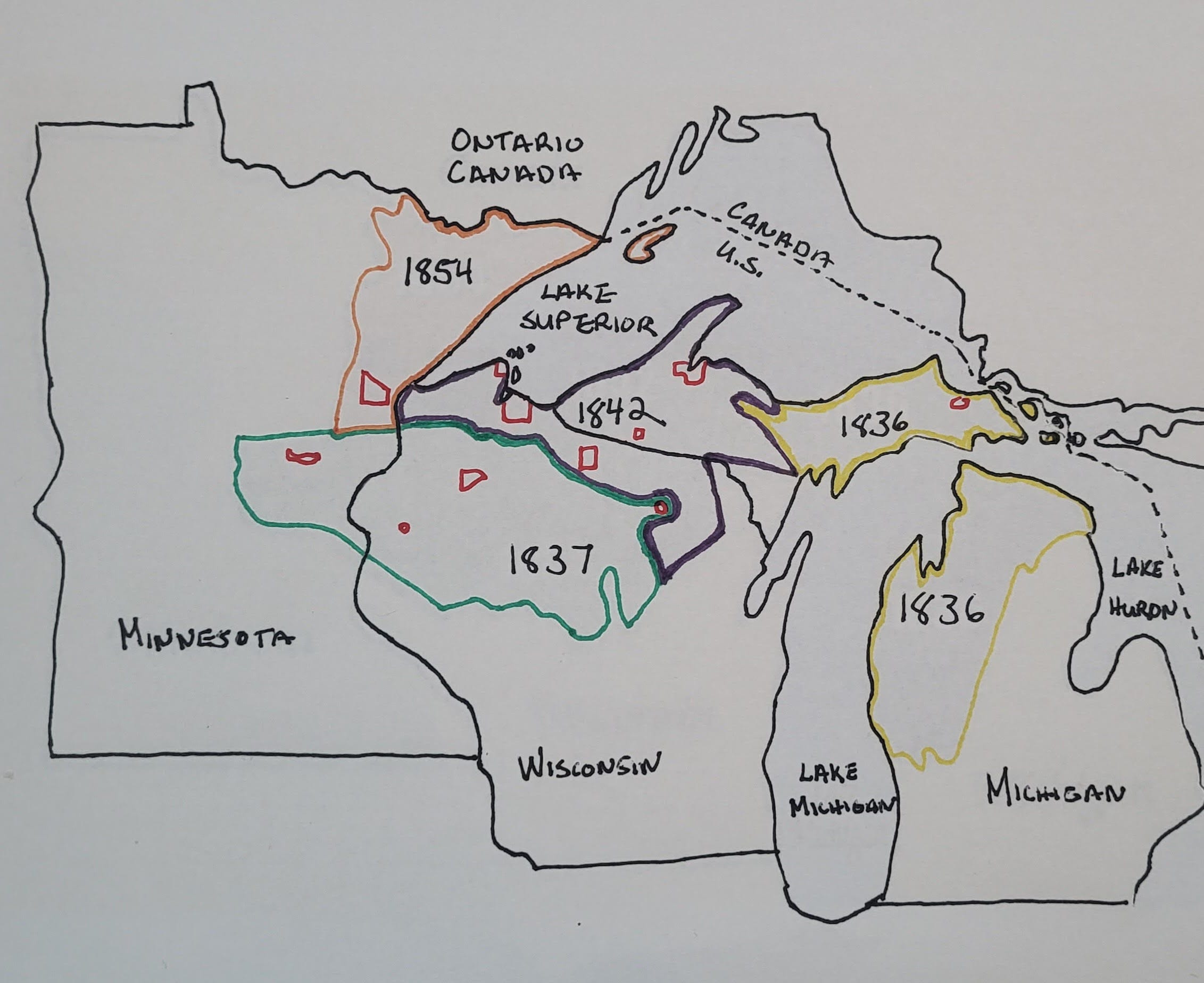
A map showing Anishinaabe lands ceded in 1836, 1842, and 1854. Map drawn by the author.
The treaty was also signed after two decades of removal policies targeting Indigenous peoples living east of the Mississippi River. As I’ve previously discussed, in 1830, a newly elected President Jackson ushered in a new era of federal Indian policy characterized by forced removals. Jackson ignored decisions by the United States Supreme Court like Worcester v. Georgia, that (problematically) recognized Indigenous sovereignty and Cherokee claims to land in north Georgia, and instead passed an an executive order, commanding the United States army to remove Indigenous peoples from their lands. This order led to many forced removals, including the Trail of Tears when Cherokee, Chickasaws, Creeks, and Seminole peoples in the southeastern United States were forced from their homes and removed to Indian Territory (present-day Oklahoma).
Indigenous peoples throughout the Great Lakes were targeted for removal, including Anishinaabe peoples like the Potawatomi who resided in Indiana Territory and the Ho-Chunk in Wisconsin Territory. Then, in 1850, President Zachary Taylor issued an order to remove Anishinaabe peoples from the western Lake Superior region, even though the land cession treaties previously signed (like the Treaty of St. Peter’s in 1837 and the Treaty of La Pointe in 1842) did not contain removal clauses.
In the wake of Taylor’s order, Minnesota Territorial Governor Alexander Ramsay changed the location of annuities payments in the fall from La Pointe, on Madeline Island in Wisconsin Territory, to Sandy Lake, in Minnesota Territory. Annuities were annual payments of cash and goods and were part of the ways that the federal government compensated Indigenous peoples for land cessions.
Anishinaabe people from the Upper Peninsula of Michigan Territory and northern Wisconsin Territory were forced to travel west to receive annuities, eventually meeting up with their relatives at Sandy Lake. The annuity payments were scheduled for October 25, 1850. However, they were delayed for months. Similar to moving the location of the annuities, this delay was another tactic by Ramsay aimed at the goal of removal—he hoped if the payments were distributed late enough in the year, snow and frozen waterways would force Anishinaabe people to stay at Sandy Lake through the winter rather than return to their homes.
Anishinaabe peoples at Sandy Lake faced severe food shortages. The fall wild rice crop had failed because of flooding of the Mississippi River. When the annuities eventually arrived, the food portions were mainly spoiled and unfit for consumption. Sickness and death spread across Sandy Lake. Even though rivers and lakes froze, Anishinaabe people from Wisconsin and Michigan made the difficult trek home, during the cold winter. Sometimes they had to carry their family members who died, since the ground was too frozen for burials.
In 1852, a group of Anishinaabe leaders, including Bizhiki from La Pointe on Madeline Island (who was in his nineties), traveled from Lake Superior to Washington D.C. by a combination of canoe, steamboat, and railroad to petition against the removal efforts. In response to the delegation, President Millard Fillmore agreed to rescind the removal order and pledged that future annuities would be distributed at La Pointe on Madeline Island.
The Treaty of La Pointe in 1854 built on President Fillmore’s promises by creating reservations for the Anishinaabe in western Lake Superior. However, Americans did not enter into the Treaty of La Pointe for selfless reasons—they were eager to gain legal access to the valuable iron deposits along the Minnesota North Shore. So while the treaty ensured Anishinaabe peoples in the American half of the western Lake Superior watershed had permanent homelands in their ancestral territory, it also meant Anishinaabe peoples along the North Shore were required to cede their lands to the United States.
A film by the Great Lakes Indian Fish and Wildlife Commission describes the treaty as follows:
“In this treaty they also reserved the usufructuary rights to hunt, fish, and gather on the lands they ceded to the government. They would never be ordered to cede their homelands again. This was a major victory for the Ojibwe that the would impact their people for generations in to the future.”
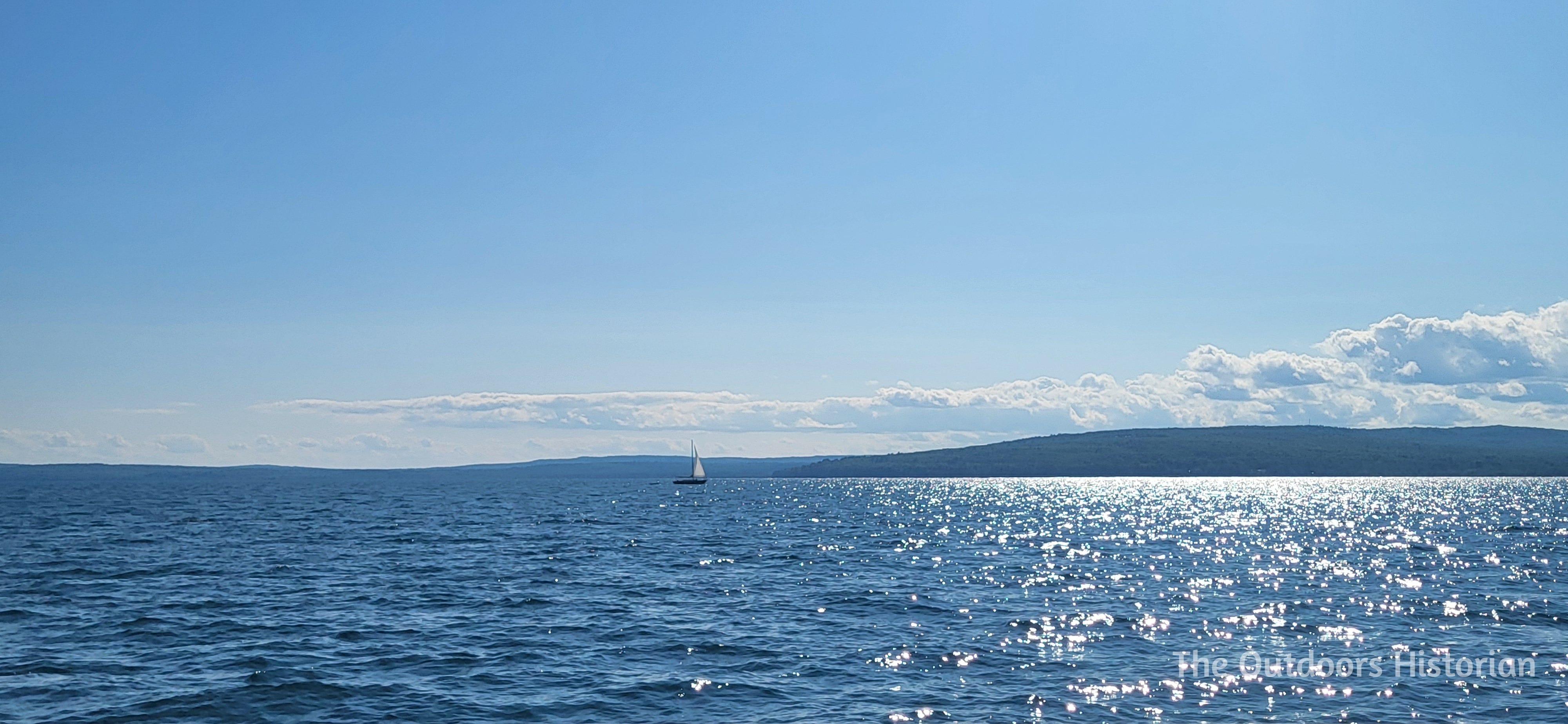
The creation of permanent reservations by Treaty of La Pointe in 1854 meant that Anishinaabe peoples in the western Upper Peninsula of Michigan and northern Wisconsin would not be removed from their territory and displaced to Minnesota or other areas further west. Photo taken by the author.
Anishinaabe historian Erik Redix (Lac Courte Oreilles) emphasizes how this treaty (along with the Treaty of St. Peter’s in 1837 and the first Treaty of La Pointe in 1842) were the building blocks of American extraction from the region:
“The acquisition of the territory of the Lake Superior Ojibwe was tantamount to robbery. Abundant historical evidence demonstrates that Ojibwe leaders were told they were merely selling resources (pine, copper, iron ore) and not the land itself. Moreover, the compensation provided was a pittance compared to the wealth of the resources exploited by the US government in the nineteenth century alone.” (Redix, The Murder of Joe White, 59)
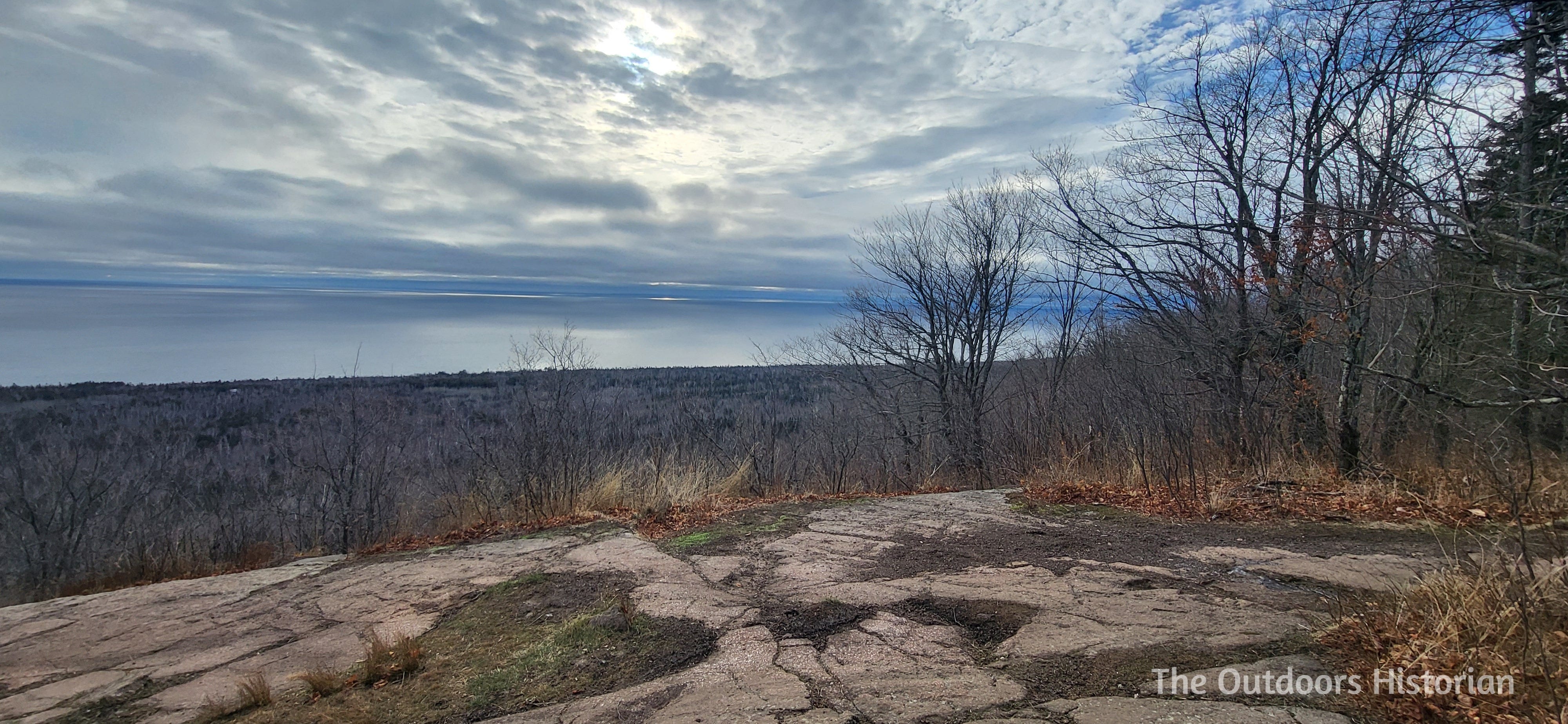
Treaty of La Pointe in 1854 ceded Anishinaabe lands along the Minnesota North Shore of Lake Superior. Photo taken by the author.
When teaching college students who lived in northwestern Wisconsin about this treaty, I emphasized that both perspectives are important. The treaty was both a victory for the Anishinaabe people and part of the overall robbery of resources and land that they experienced during the growth of the United States. Watershed moments in history are not one-sided. They are complex.
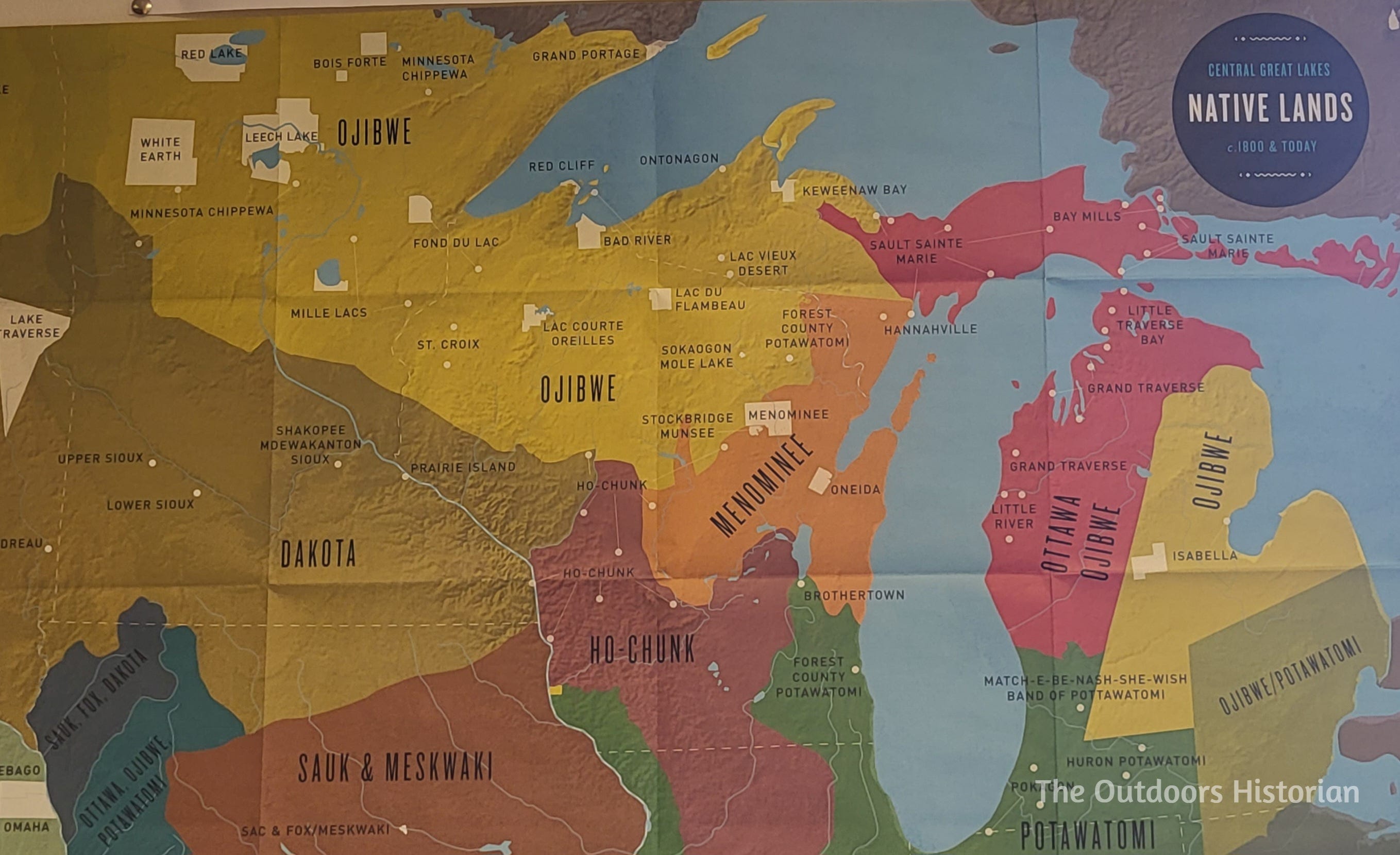
I had this map, which shows which ceded lands and reservations in the western Great Lakes, hanging in my office at Northland College. The map was a reminder of our location on ceded territory, and the on-going importance of Indigenous sovereignty in our region. You can access a version of this map online. Photo taken by the author.
The Treaty of La Pointe in 1854 continues to shape the western Lake Superior region today. The treaty is why those of us who live in northern Wisconsin have Anishinaabe nations as neighbors. These nations are important economic drivers in the region (tribal nations are consistently among the top employers in the counties where they are located) and environmental stewards, passing legislation to protect waterways and clean air that benefit everyone who lives in the region.
Along with being complex, treaties are important. Everyone who lives on ceded territory has a responsibility to understand how treaties shaped the land they live and why those treaties still matter.
Works Cited
To learn more about treaties in northwestern Wisconsin, I recommend Erik Redix’s, The Murder of Joe White: Ojibwe Leadership and Colonialism in Wisconsin, (Michigan State University Press, 2014).
To learn more about the Sandy Lake Tragedy, I suggest the films “The Sandy Lake Tragedy” and “They Are Remembered: Sandy Lake” by the Great Lakes Indian Fish and Wildlife Commission.