
Author’s Note: I (Emily Macgillivray ) originally drafted this piece over a year ago, but I am sharing a revised version now as a form of personal closure.
This piece is based on my own experiences and how I felt/feel about the situation at Northland based on the knowledge and information available to me. I know the exigency process and closure was a very complex and sad situation for many people. I’m sure other people affected by the events at Northland since March 2024 have different perspectives on what happened. I am not writing this to try and claim that this is the “true” or “correct” version of events. I wrote this piece to share my perspective: the perspective of one faculty member who was cut during the exigency process. While other faculty members who were cut might relate to some of what I’ve shared, I’m sure they’ve also had different experiences and would interpret the events differently.
I also want to acknowledge how my interpretations of others’ actions are based on the knowledge I have. I know that I might be missing information. Perhaps people I’ve judged believed they were making the best decisions from an array of horrible choices. Despite these limitations, I also felt the need to share my story. While most of the posts I write are aimed to be educational, this is a personal piece.
I have revised this author’s note to include my full name.
On Monday, March 11, 2024, my life changed.
It was the first Monday back to teaching after spring break at Northland College, a small college in northern Wisconsin. I had a quiet break, staying at home. I had submitted my tenure folder a few weeks before, and I felt like I really needed some time to rest. Tenure is essentially a permanent job status earned by professors after a rigorous multi-year period of being an assistant professor. The intent is to protect academics from being fired without severe cause, ensuring they have the freedom to research and teach controversial topics. I tried to prioritize rest over the break, but looking back, I can already see how burnt out I was. Little did I know what was to come.
I was teaching my afternoon class: an introductory class on Native American History of the United States. After the class, I had a usual routine: a short break, then a Faculty Welfare Committee meeting, followed by office hours before driving my twenty-five-mile commute home.
Students were working on an activity in the final ten minutes of class when my phone buzzed with an email alert. I glanced at it. I expected the usual: a student who wasn’t in class explaining their absence, a student from my class tomorrow giving me the heads up about not being able to attend, or a student requesting to meet to talk about an upcoming assignment.
Instead, it was a meeting request from the President’s Office for the Faculty Welfare Committee to meet in just over an hour, which was partway through our usual committee meeting time.
My heart sank. We’d only met with the President once this academic year, which was a meeting we lobbied for (to discuss changes to our benefits before they were finalized). My mind immediately went to the worst-case scenario. We were a small school, and we all knew our situation was precarious. Would closure be announced today?
I moved through the final few minutes of class in a daze. I headed to my office, texted my fellow committee members to make sure they saw the email, and tried to eat my lunch. While I feared the announcement was about closure, I was also confused. A month prior, the President gave a town hall talk to faculty and staff. We were told the college had challenges ahead, but we were ready to tackle them with new initiatives and the board’s support. I’d heard much grimmer announcements from previous presidents over my six and a half years as an assistant professor. A few days after the town hall, the President brought his family to a large, annual community event that the college helped sponsor. He casually socialized with the group of faculty that I was hanging out with. There were no indications of disaster.
I left my office and met with my other faculty committee members. Then, we met with the President, the Chair of the Board of Trustees, and the Dean of Faculty. We heard the news: Our school needed to raise $12 million in about three weeks, or it would close at the end of the academic year. This amount seemed insurmountable to me. Based on the knowledge I had, our school had never fundraised that much in a year in recent history, let alone in a matter of weeks. Maybe the urgency would help us? We were small, but I knew a lot of people cared about Northland.
Later that afternoon, the same announcement was made to faculty, staff, and students. Then, an announcement was placed on the College’s website. Insurmountable or not, the news was officially public.
The 12-Million Dollar Storm
This announcement set off a storm in our college community. While the announcement felt devastating, it also led to amazing community efforts that were some of the most inspiring work I’ve ever been a part of. From collaborative community sessions that led to a new and exciting vision for the college to grassroots fundraisers that brought together people who loved the school from near and far. It was an exhausting time, but it was also exciting.
My understanding is Northland never came close to fundraising the $12 million it needed to stay open. But throughout the process, it was hard for faculty to get clear answers about the fundraising totals from the administration. A lot of the money that came in was from local, community-driven efforts. Many faculty supported and volunteered at these events. We also lobbied for more updates and transparency from the President and the Board. To me, it felt like we were usually ignored.
At the beginning of April, on the date we were supposed to learn the school’s fate, students created humorous bingo cards for the announcement. Per usual, they were a big reason why I still had hope. Since the closure announcement, they made a lot of social media content, talked to the press, and helped organize fundraising efforts. They also planned events to support each other. Many of them were balancing trying to save the school, finishing their classes, and making plans in case the school closed, while also trying to care for themselves and each other.
At an awkward gathering in the gym, we all learned the board decided to delay their final decision and instead gave us three weeks to go through exigency to revamp the curriculum and create a new budget for the upcoming academic year. If we did these things and the Board approved what we came up with, the College would stay open.
At that moment, this decision seemed both impossible and like a lifeline. Until that announcement, we were told if exigency was declared, we would open the next academic year and go through the exigency process then. Faculty were told the original fundraising deadline was non-negotiable because students needed to decide about their next academic year. We were told extending the deadline was impossible because it would go against what was best for the students. A 3-week exigency process (that lined up with the end of our semester) was never even implied as a possibility. But, there we were. In hindsight, I believe that moment was the beginning of the end.
On the curriculum side of things, the faculty worked. Hard. We had evening meetings. We had early morning (6 a.m.) meetings. We had Saturday meetings. We had Sunday meetings. Many of us worked 7 days a week for much longer than 8 hours a day for weeks in a row. We hired a facilitator to try and make our sessions as productive as possible. We knew the end result would be some of us getting cut. But I believe we put that aside and did the work needed to create a very streamlined curriculum that we supported. It wasn’t perfect, but we believed it managed to stay true to the mission and give us the footing to be financially sustainable in the future. So, we supported it. We also continued to teach our classes, attend student events, and advise students about ways to best plan for their future amid so much continued uncertainty.
The budget work was largely left to an ad-hoc committee that was assembled by the President. The Faculty Handbook was the only institutional document that mentioned the exigency process. So, we had that to “guide” the curriculum side of things, although it was clearly never intended to be such a shortened process. However, there was no institutional policy or process guiding the budget committee.
The Faculty Welfare Committee advocated having three faculty members on the budget committee. Based on the knowledge I had, it didn’t seem to me like any administrators were willing to advocate for three faculty members.
We were told we could have two faculty members: our Faculty Council President and another faculty member that we elected as a body. This felt like the beginning of a trend: administrators who had very little experience with the current academic program or related aspects of it (the general education requirements, block programs for first year students, student internships, research assistantships etc.) were prioritized over the voices of faculty.
Then we heard from the Board. They wanted us to add certain programs back into the curriculum. It didn’t feel like we had much choice. It felt like the Board had all the power, and several key administrators (who had very little direct connection to the academic programs) supported the Board. According to the Faculty Handbook, the curriculum was under the control of the faculty. Yet, for many of us, the Board’s feedback—and some administrators’ support for it—felt like both an ultimatum and a betrayal. After all, the Board made it clear this wasn’t an ongoing negotiation: they would either approve the proposed budget and curriculum or not.


We made the requested changes. Then the Board dragged their feet to announce a decision. Eventually they shared this decision during the beginning of our four-week May semester: they agreed to the budget and the curriculum. Northland would stay open.
I was co-teaching a class for first-year students, in which we traveled around Lake Superior, often camping, for the May Semester. Myself and the professor who I was co-teaching with (and who was also a close friend) learned the news with our students our first night camping at Temperance River State Park on the Minnesota North Shore.
The school would stay open. But, since the school was in exigency, faculty members would be cut. The exigency committee, consisting of a small group of faculty and led by the Interim Dean (because the previous Dean resigned) decided which faculty lines would not be renewed for the fall. It’s obvious but also worth pointing out that these cuts were influenced by curriculum desired by the Board. From what I was told, the exigency process looked at faculty contributions from a narrow lens.
Faculty didn’t know when the cuts would be announced. It was like living in a weird purgatory while still being expected to teach and doing our best to support students. For myself and co-instructor/friend, we were living this purgatory while on the road camping with eighteen year olds who were also trying to cope with all of the news and how it affected their lives.
May 14: The Day I Was Cut
Just like I remember March 11, I remember the day I got the news that I was cut.
It was May 14, 2024. The middle of our May semester. Our Lake Superior travel course should have been just crossing the border back to the United States at Sault Ste. Marie, but we had paused our trip and returned to campus a few days prior because several students had issues that needed time and/or medical attention. The students were doing a great job caring for each other amid the turmoil, but it was a trip that required constant readjusting. I was so tired of making plans. I didn’t realize it, but at this point, I was pretty much beyond burnt out.
May 14 was the day we would be getting back on the road. I also had an online interview for the only job I had applied for (it was with a local school district, and a close friend suggested I apply). I hadn’t applied for other academic positions. Partly because the number of decent Humanities jobs I was a fit for available in March and April was very slim. But more importantly, I loved the Chequamegon Bay area. I had a life here. I wanted to stay, so I put my time and effort into trying to save Northland.
I planned to take the interview in my office mid-morning, then meet up my friend/co-instructor for the course and the students and leave together. But everything quickly began to unravel.
Around 8 am, a few hours before the interview, I received a meeting request through email from our interim Dean of Faculty. Our informal faculty information networks quickly confirmed that whoever received these meeting requests was getting cut.
I drove to my office on campus. The news weighed on me as I started my interview. Predictably, it didn’t go the way I wanted. It was my first time interviewing for a job outside of higher education in over a decade. And it’s hard to connect with the people interviewing you when you know you’re going to get fired shortly afterwards. Along with my mental state, the posted position lacked details shared at the interview’s start. These details made the position a much weaker fit for my strengths and, realistically, my interests.
Minutes after my interview ended, I got the call from the interim Dean. I was cut, and I wasn’t officially tenured. The faculty had voted to grant my tenure almost two months ago, but the Interim Dean informed me that the board was still not planning to act on any tenure or promotion cases during exigency.
Not having tenure had significant financial implications in terms of being cut. The interim Dean made no indication they planned to challenge this decision. When the previous Dean told me that the faculty voted to approve my tenure, they delivered the news that the Board had no plans to vote on any tenure cases during exigency, and they also made no indication to me that they would do anything about it.
I always knew it was possible I would lose my job. I wanted to believe that because the faculty kept emphasizing the importance of Native American Studies to other programs and the general education curriculum, my work would be seen and valued. I taught a course that was part of the Education major and required by the state. I taught in a popular interdisciplinary, experiential, and place-based program for first-year students. My classes were cross-listed in several majors and minors connected to the college’s mission. I was the faculty curator for the Native American Museum on campus which gave Humanities students practical experience that helped them secure excellent internships and jobs in the region. My research was also directly tied to the mission of the College.
When I got the news I was cut, it felt like none of that mattered. I was devastated. Heartbroken. I loved Northland. Really, really loved it. And I believed in it. And, just like that, my place in it was gone.
Based on what I heard in the phone call when I was cut, I did not have tenure. I would not get tenure. It felt like all my work and all my efforts were for nothing. Like I had given so much of myself and so much of my life. For what? To be tossed to the side? While teaching a time-intensive and emotionally draining field course where I was responsible for students 24/7?
No Escape in Nature
I was numb, and I did the only thing I felt I could do: I got back on the road with the students. I thought maybe being by Lake Superior would make me feel better.
I loved the areas I was bringing the students to, like Grand Marais, Michigan at the eastern end of Pictured Rocks, and the Keweenaw Peninsula. But, I couldn’t enjoy them. I had never felt like this before. No matter how stressed I had been in grad school or my years as an assistant professor, or how stressed I was from family issues, including the estrangement of my brother (first from my parents, and later from myself too), I had always been able to escape by Lake Superior. For the first time ever, I couldn’t.
I got even angrier. How could the place I loved so much also take this from me? The fact that Northland taught me to love the lake even more than I had when I first arrived felt like salt on the wound. What else did I have left? How could I get by? How could I be expected to teach while my professional and personal identity—what felt like almost my whole life—crumbled around me? How could the place I loved so much be so cruel to tell me I was cut while I was teaching a field course away from home and responsible for eighteen-year-olds?
Furthermore, this field course was mainly rustic camping with very limited internet access in most locations, which meant that even the few parts of me that wanted to forge forward and focus on the future felt stuck. Because if I had a glimmer of energy or belief in myself, it was very difficult to search for jobs or begin to update my resume. Everything felt impossible.
Predictably, I couldn’t really be there for the students. I also couldn’t be there for my co-instructor, who was one of my closest friends, but who also wasn’t cut and was a constant reminder to me of the faculty who got to stay. I also couldn’t be there for Eugene, my partner, who had joined us on the trip for support. I tried. I pushed myself to be there for others, desperate to feel like the person I used to be. But realistically, I couldn’t even look after myself.
I made it through the course, but just barely. I didn’t sleep much even though I was constantly exhausted. I broke down in tears several times, usually away from the students, but not always. When I finally got home from the travel portion, I struggled with basic tasks. Yet somehow, I managed to kind of hold myself together for the final end-of-the-academic-year events: cleaning out the van and trailer and returning gear; submitting grades; and going to the Champagne Toast to celebrate the graduating seniors.
I tried to use whatever energy I had left to begin hastily (and honestly, haphazardly) revising my resume and applying for jobs. I was in no mindset to do simple tasks, let alone more complex ones, but giving myself time to breathe didn’t feel like an option. I felt like all I could do was keep trying to forge ahead, despite how awful everything felt.
Then, on the day of commencement, there was a bright spot. I learned from the President that the Board had approved my tenure, although I was asked not to share this news with others yet. It was the first good news I had received since learning I was cut. I didn’t have my identity as an academic or my career, but I had some financial assurances for the coming year, including healthcare. And most importantly, all of my hard work—everything I had given Northland over six and a half years—didn’t feel like it was completely for nothing.
In my mind, now I could allow myself a pause. A break. Time to heal. Looking back, I know Eugene and my family would have supported me while I took a break no matter what, but at the time, having some kind of ongoing income felt really important to my self-worth while it felt like so much of my professional identity had crumbled.
When commencement weekend was over and the academic year was officially finished, I spent days sleeping and moving through the day in a daze. It was the very start of my healing.
A Different Kind of Fall
I wrapped up most of my academic projects and had a few interviews in June. The interviews didn’t lead to any job offers, so then, I really took some time for myself.
I still followed the Northland news. I rolled my eyes at leadership, trying to spin the changes created by the exigency process as leaning into the College’s mission and focusing on what makes the College unique. Personally, I didn’t believe any of it. But I also knew I was biased. And I had no energy to do anything about it except when ranting to friends and family. And what role was left for me anyways? I was cut. My relationship to the place had changed.
I spent lots of time with friends who were leaving the area. Many of them weren’t cut, but they still made the very hard decision to leave Northland. Some described it as a heartbreaking decision. More than one faculty member emphasized to me that they weren’t leaving for a “better” position. They left because they felt (for various reasons) that they had to, even though they loved the students, the Northland community, and this region. They said that they made this difficult decision because they had major concerns about the long-term stability based on the College’s plan. They had lost trust in leadership and didn’t see the leadership presenting a clear path to regaining that trust or actively taking steps to regain that trust.
When summer wrapped up and September 2024 started, I was worried. I thought the fall would be excruciatingly hard for me because the season would be a reminder I would probably never teach in this region as a full-time faculty member ever again. Fall has represented the start of an academic year for me for decades of my life.
But when I visited my office on campus to sort through and downsize my things, I felt feelings I didn’t expect. So many faculty and students who I loved made that hard decision to leave. And the campus felt different. Quieter. Sad. Even on sunny fall days, barely any hammocks were hanging on the mall. It was rare to see them occupied with one person. In years past, there were groups of hammockers, slack-liners, or circles of students hanging out in the grass. I missed that activity. While hubs like the Hulings Rice Food Center and the Indigenous Cultures Center were still operating, the absence of the specific faculty and student mentors who had poured so much extra time and effort into them made the spaces feel fundamentally different.
I tried to focus on things I love, like hiking and camping. Eugene and I took two and a half weeks to do the Lake Superior Circle Tour, focusing on parts of the Ontario shore that we hadn’t explored before. I also took time to write for myself and not for any academic reason. That felt strange and novel. I began to grapple with just how much I gave up for academia. That started in grad school, years before I arrived at Northland. The decision to focus on writing that brings me joy is what led me to create this Substack.
The End of an Era
On February 19, 2025, Northland College announced it would close on May 31, 2025. It was over. At least the announcement came before March 11, 2025. I was dreading a one-year anniversary of the “$12 million or closure” announcement with Northland still existing in limbo. It was one small bright spot amid the devastating news.
I got the closure announcement while I was at my new job. It’s a very different job, and it’s not what I would have predicted for myself, but for the most part, I enjoy it. I’m learning a lot. And it’s slowly sinking in just how much of myself I gave to Northland and just how much the people with power undervalued my labor and the labor of other faculty, particularly those of us doing “invisible labor” supporting our students who are deeply involved in multiple aspects of the campus community.
But despite my complicated feelings for Northland, my heart broke yet again when I heard about the closure. While I didn’t have much optimism about the college’s future after everything I’d seen, I continued to wish for the best. I still cared. How could I not?

Hindsight is a funny thing. When I lost my faculty position, I was crushed. I began the process of mourning a career and reevaluating my relationship to higher education. I faced the reality that if I wanted to stay in the place I loved with a community I cared deeply about, I would not be able to be a professor of Native American Studies, History, or a related field. This wasn’t an easy choice, but it was clear what I needed to do. I no longer had faith in traditional higher education to provide a stable career. I deeply believe the Humanities matter, yet the reality is they are constantly underfunded and undervalued.
I’ve realized that even though I’m not working in academia, I can continue to be a historian. Afterall, that’s what this Substack is all about. I am still plugging away at a book project (the one academic project I haven’t wrapped up), and I’m glad to be diversifying my work experiences. While I don’t want to think the worst, I don’t know what the future holds for higher education, especially the Humanities; I don’t think they will be valued more highly any time soon. Increasingly, I question whether traditional higher education is effectively illustrating the benefits of the Humanities to the broader public.
Of course, a part of me still misses Northland. It was the most transformative educational institution I’ve ever been a part of. It shaped me. It was my first time really being part of a community I had shared values with as an adult. And beyond its impact on me, there’s the impact of its loss on the region. There’s unlikely to ever be a liberal arts institution of its size in the area again.
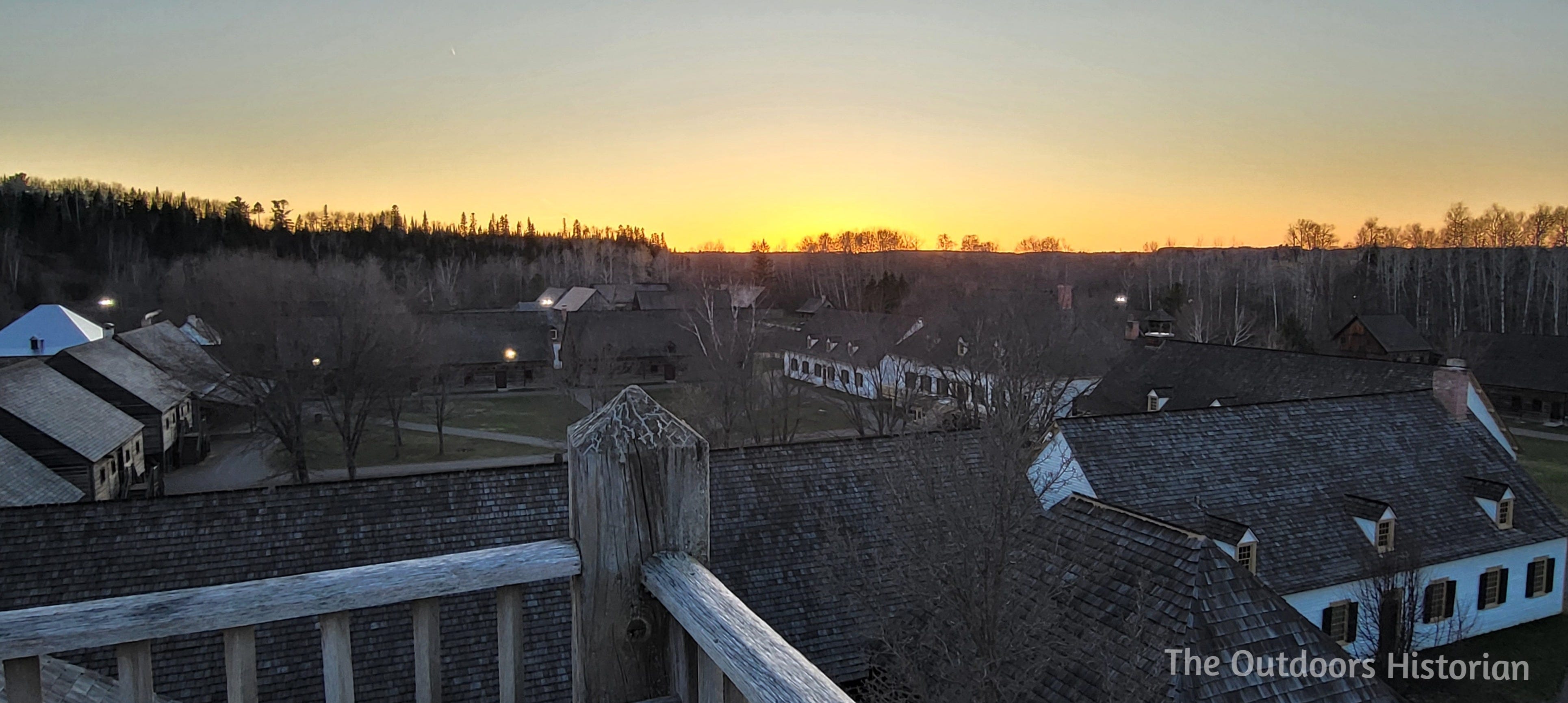
I feel like I’m making good progress toward moving on, including focusing on my new job, and what I love, including writing and spending time outdoors. I’m also honored to be part of efforts to continue the heart of Northland in a smaller, more financially nimble structure. That is a big part of what is giving me hope for the future.
Another part of that hope is finding new ways to share the beauty and complexity of this watershed with others, by helping them connect to the lake that has shaped so much of my own story. In the coming weeks, I’ll be sharing the stories and history from the trip around Lake Superior focused on reconnection with the lake and the landscape.
To learn more about the closure of small liberal arts colleges on the south shore of Lake Superior in a historical context, read my piece, Crepe Paper and Copper.
Heartbreaking when I hear about each small college and university that is forced to close and the holes they leave behind in the hearts people and the communities they served.
Thanks for sharing this background on the closing of Northland College. The spirit of the school is worth saving and your scholarship seems at the heart of it. What an ordeal you’ve been through and such a small consolation to have earned tenure. The collab initiative looks promising. Reinventing higher ed is on the horizon.