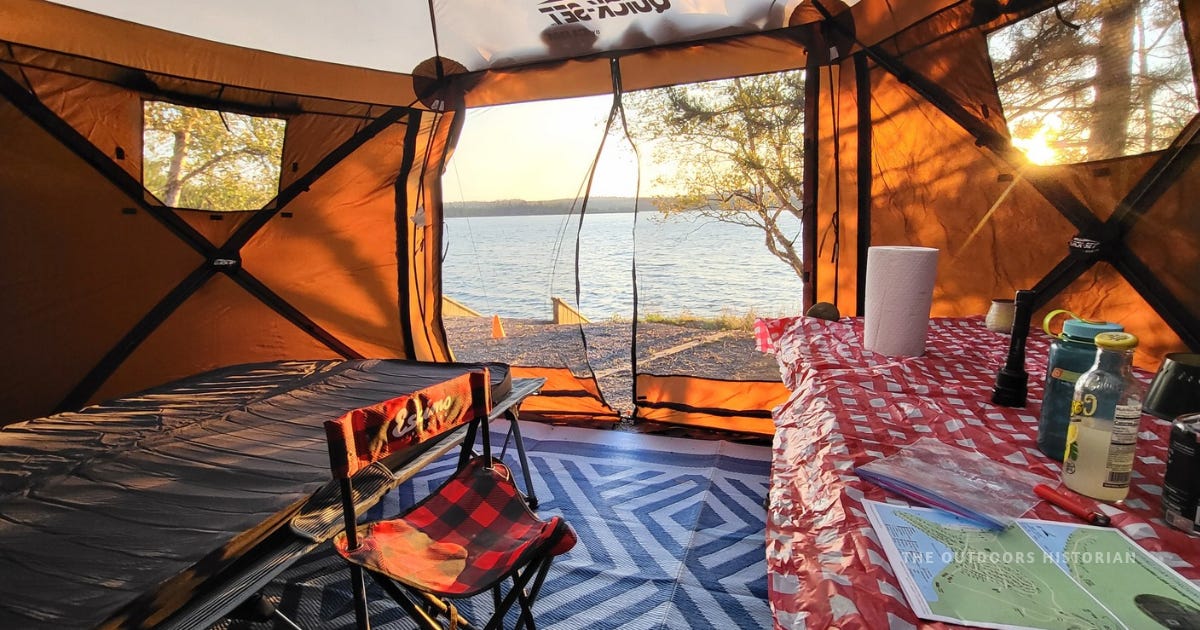
We were camped on Marie Louise Lake, inside Sleeping Giant Provincial Park, on a night in early October now more than two years behind us. The night that started out unremarkable and turned into one of our most memorable nights in a tent.
It was windy when we went to sleep. Nothing that gave either of us pause. The kind of wind you register for a second and then stop noticing.
We woke up to something else entirely. Thunder first, then lightning close enough to see through the tent fabric, then rain coming down hard, and wind gusting hard enough that the fabric didn’t so much flap as slam — a flat, percussive sound, over and over, like something trying to get in.
We lay there for hours. Not talking much. Just listening to the tent take it, waiting for the moment it might not. We saw plenty of headlights flash as they drove by. It seems like a lot of other campers decided not to stick it out and to head back home. Honestly, if we lived in Thunder Bay and were just there for the weekend, we might have done the same thing.
We stuck it out and our tent held. The stakes stayed put, the guylines stayed tight, and somewhere in the process of lying awake bracing for the worst, we actually fell back asleep — around six in the morning, as the storm was finally easing off. We’d planned an early start that day. We slept until eight instead, and neither of us apologized for it.
What stayed with me wasn’t just the storm. It was how loud fear is, physically, when you’re lying inside a thin nylon wall instead of a building. To top it off, this memroable night in a tent wasn’t even on the shores of Lake Sueprior. Marie Louise Lake is inland, tucked into the park.
I couldn’t stop wondering what that same storm was doing out on Superior itself.
The Gales of November, and the Nights That Don’t Fit
Every fall, without fail, someone brings up the Gales of November. Usually it’s the Fitzgerald — the song, the wreck, the whole mythology built around one specific storm on one specific night in 1975. Say “November storm” to almost anyone who knows this lake at all, and they know exactly what kind of weather you mean.
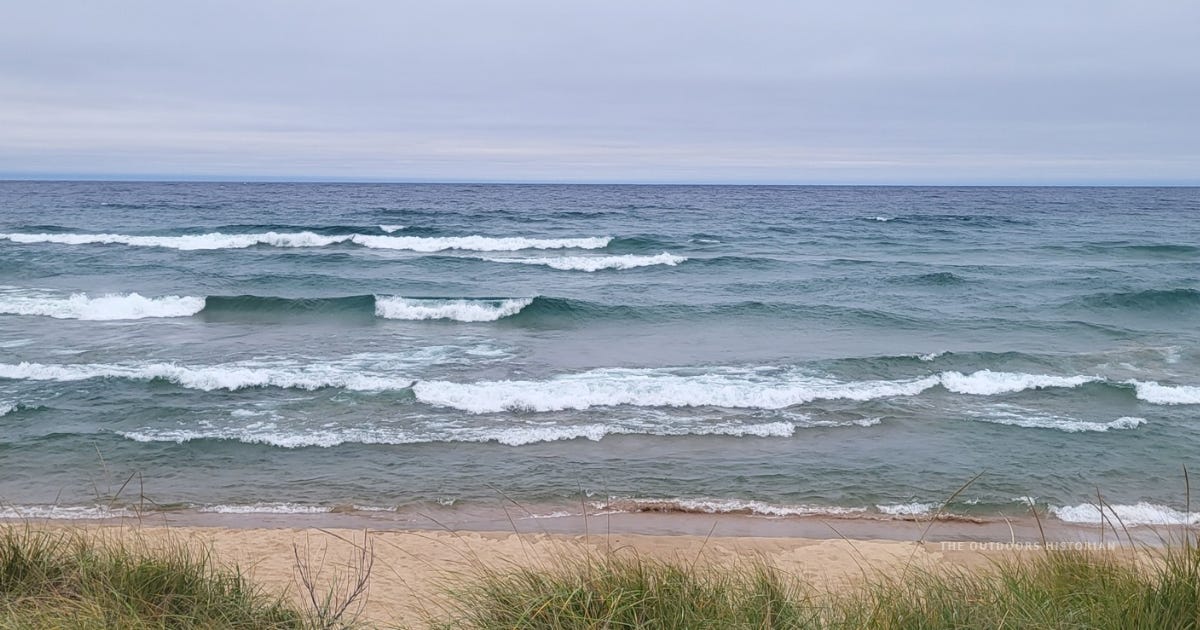
But November has never had a monopoly on storms, at least not in my own experience. We’ve spent several October days in the eastern UP where the Lake is cold and moody with whitecaps rolling in, weeks before the calendar would call it storm season.
The night on Marie Louise Lake was the same thing again, just louder: driving rain, cracking thunder, wind slamming the tent broadside, all of it arriving the first week of October.
If the same kind of storm shows up in October and in November, then “the Gales of November” isn’t really describing a month. It’s describing something the lake does — something the calendar just happens to get credit for.