
Welcome to The Circle Tour Series. In Fall 2024, my partner, Eugene, and I circled Lake Superior. We left our home in Bayfield, Wisconsin, and headed clockwise up the Minnesota North Shore, crossing the border into Ontario. Then we drove along the Ontario shore before crossing the border at Sault Ste. Marie and traveling through the UP to return home. Most of our time was spent between Sleeping Giant Provincial Park and Pukaskwa National Park.
Part travelogue, part history, this series explores the intersection of industrial ruins, boreal ecology, and personal transition. It is a journey to see how landscapes survive when the systems built upon them—including mines, railroads, and careers in higher education—fall apart. This is Part 5 of 7. You can read Part 1 here, Part 2 here, Part 3 here, and Part 4 here.
On our final morning at Pukaskwa, we packed up with the efficiency of a team that had been living out of a truck for nine days. We had found our rhythm in the ‘inky dark’ of the boreal forest, but the real world was calling us back. We each had responsibilities to return to, but that didn’t mean we rushed our exit.
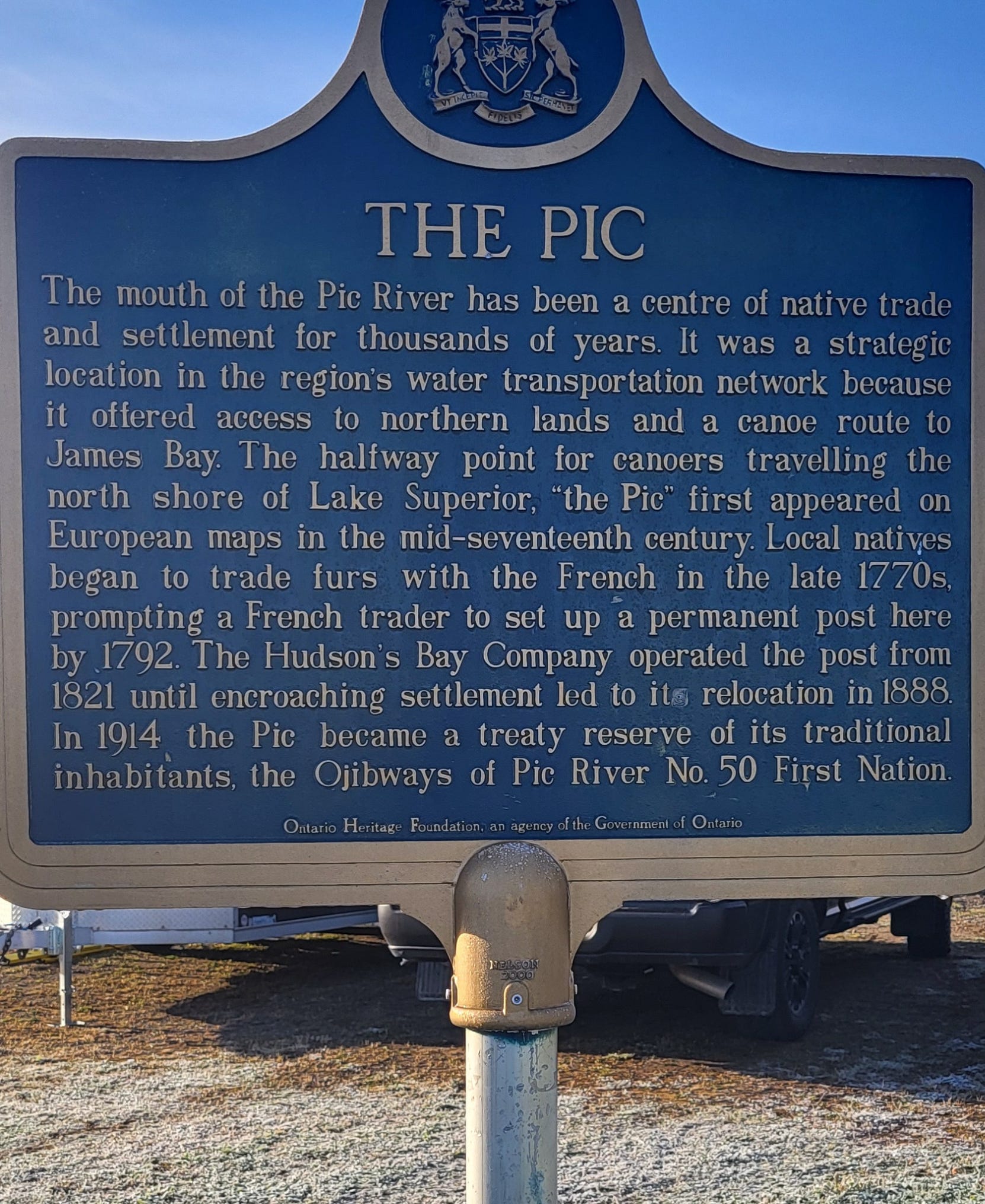
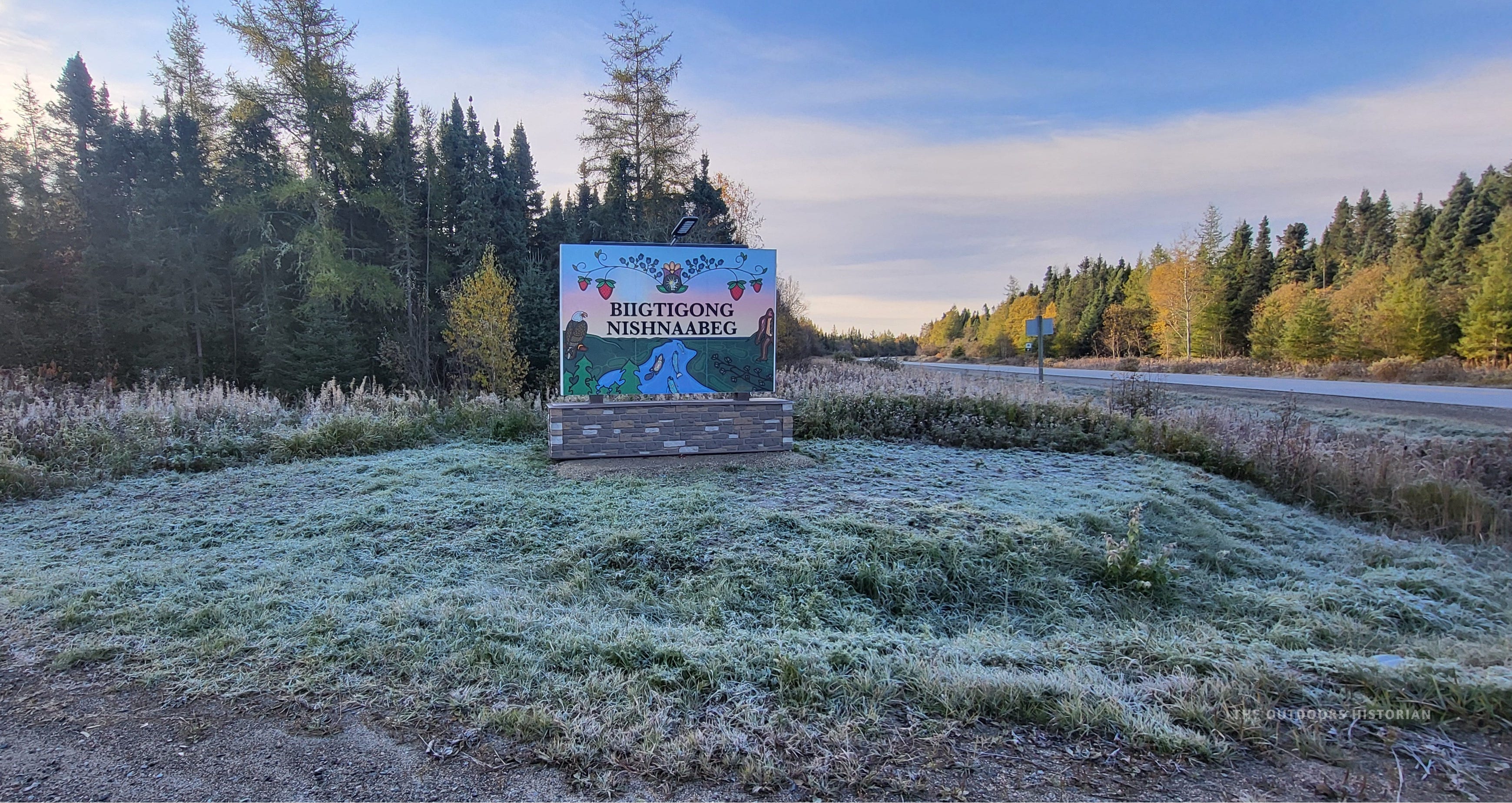
Even with 250 miles and an international border crossing ahead of us, we took our time. Shortly after leaving Pukaskwa we stopped at a historical marker in the Biigtigong (Pic River) Anishinaabe Nation. Anyone who has traveled with me knows that I love stopping at historical markers; I use them as entry points into the deeper landscape.
This specific marker was the perfect place to begin our final day on the Ontario North Shore. It was a reminder that this watershed has been a highway for Anishinaabe peoples, fur traders, and commerce long before it was a modern tourist route.
The historic marker on the lands of a contemporary sovereign First Nation was yet another reminder of how Anishinaabe peoples have stewarded this watershed in both the past and present. It felt like a fitting way to begin our final day driving the Ontario North Shore.
Kitsch, Culture, and Complexities
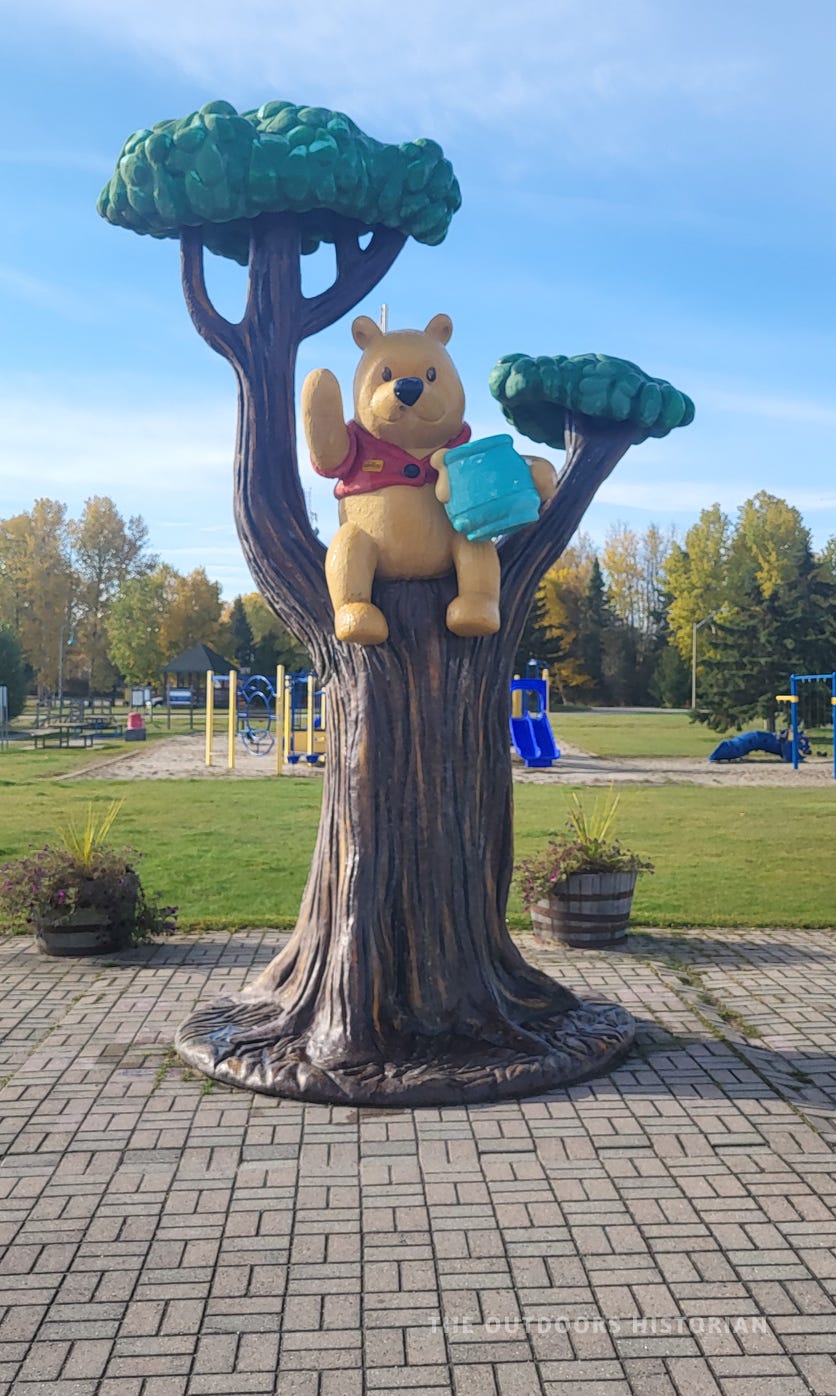
We fueled up the Tundra and our stomachs in White River, getting gas and snacks at A&W, and made the required visit to say hi to the Winnie the Pooh statue. While it's a lighthearted stop, the story of 'Winnie'—the black bear cub from White River who eventually inspired A.A. Milne—is another layer of the 'stacked maps' that connect this rugged corridor to a much larger global imagination. But just down the road, the 'stacked maps' shifted from literary icons to abandoned infrastructure. We stretched our legs at a no-longer-operating provincial park. It was an impromptu stop that tied together many of the recurring themes. In hindsight, it was one of the most secluded, peaceful stops of the day. While tourism isn’t a boom-bust industry (and in some communities, it is positioned as a sustainable alternative to volatile industries based on extraction), it a different kind of reminder of failed systems and abandoned infrastructure.1
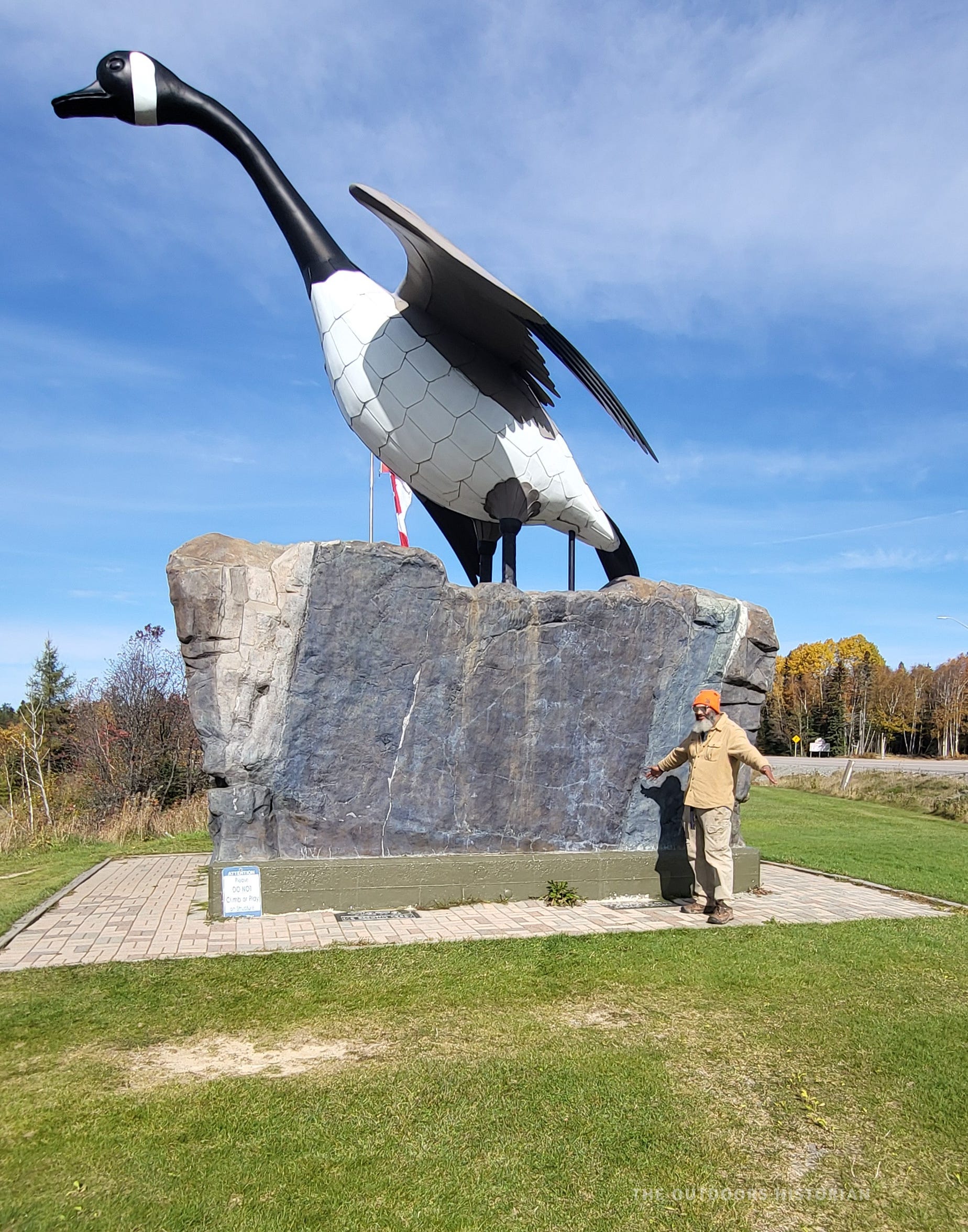
Next, we made the mandatory stop in Wawa to visit the famous Goose statue. It’s kitschy and exactly the kind of quirky that speaks to me, but as a historian, I can’t help but notice the layers of translation at play. While the town’s name is often cited as the Ojibwe word for 'Goose,' the linguistic reality is more specific. The Ojibwe word we’we (in the most commonly used orthography for the language, an ‘e’ makes a long ‘a’ sound that would rhyme with ‘hay’ or the Canadian ‘eh’) actually refers to the Snow Goose. Snow geese look quite different from the massive Canada Goose immortalized in the statue. The Ojibwe word for Canada goose is very different: nika. It’s a small detail, but it’s a reminder of how easily local narratives can oversimplify the complex Indigenous geographies they claim to represent.
We also stopped at Tim Hortons where Eugene was desperate for a latte after days of camp coffee. We found their machine broken. We took it as a sign to keep moving.
The Windshield Tour: Lake Superior Provincial Park
We left Wawa behind and crossed into Lake Superior Provincial Park. This landscape rivals the stretch from Nipigon to Marathon for beauty. In fact, many people feel it is the most beautiful stretch of the Ontario Shore (or the entire Circle Tour). The vibe is different here: you are transitioning from the true boreal forest to the mixed conifer and hardwood forest that defines the eastern part of the lake and the majority of the South Shore. It’s a unique stretch: you get a lot more hardwoods along with the dramatic Ontario topography.
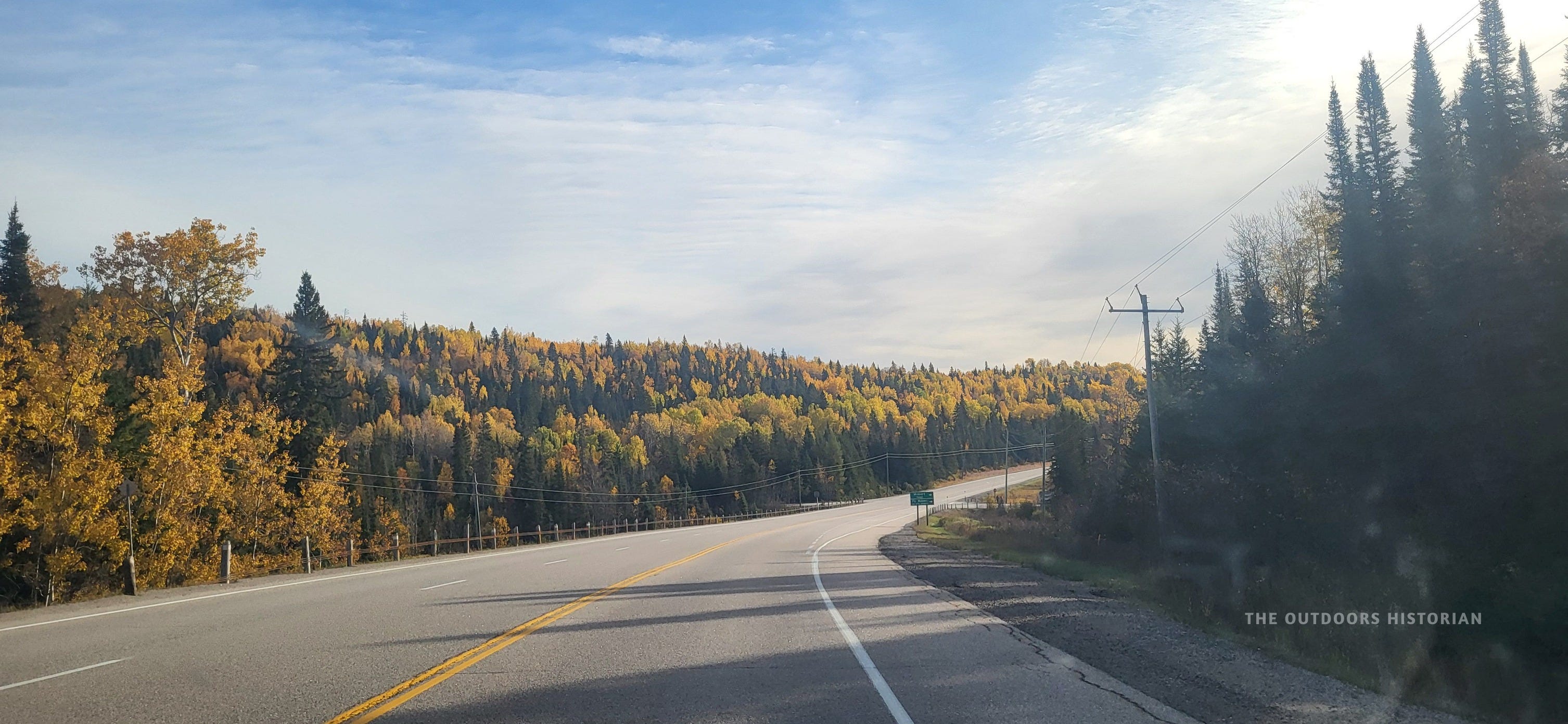
We also noticed that it was a much busier section. This wasn’t surprising: it was the Saturday of the Canadian Thanksgiving long weekend and we were closer to the population centers of Ontario than when we started the trip in the northwestern part of the province. Many people (including some residents of Ontario) don’t realize the province’s full scale. It’s approximately 80,000 square miles larger than the state of Texas. Maybe there needs to be an “Everything’s bigger in Ontario” rebranding.
As I mentioned in Part 2, Ontario has a lot of impressively large provincial parks. The biggest is Polar Bear Provincial Park at over 5.8 million acres. Second is Wabakimi Provincial Park at over 2.2 million acres. Neither of these parks are accessible by road. Third largest is Algonquin Park at over 1.89 million acres and Quetico comes in close behind at over 1.8 million acres. Next is Opasquia Provincial Park with over 1.5 million acres, however, like Polar Bear and Wabakimi, there is no road access.
Lake Superior Provincial Park trails behind these at over 395,000 acres. This might sound measly in comparison to the top four, but it still dwarfs other provincial and state parks directly on the Circle Tour (the largest state park in Michigan, the Porcupine Mountains, is “only” approximately 60,000 acres).2
Of course, whenever there are public lands of this size in North America, it illustrates a historical tension: these were lands controlled by Indigenous peoples until government entitities forced them off (through treaties or military actions). And even when treaties promised Indigenous peoples the rights to use government-owned lands for hunting, fishing, and gathering, these rights were rarely honored until after long, legal battles in the late twentieth-century.
The Ancient Face in the Cliffs
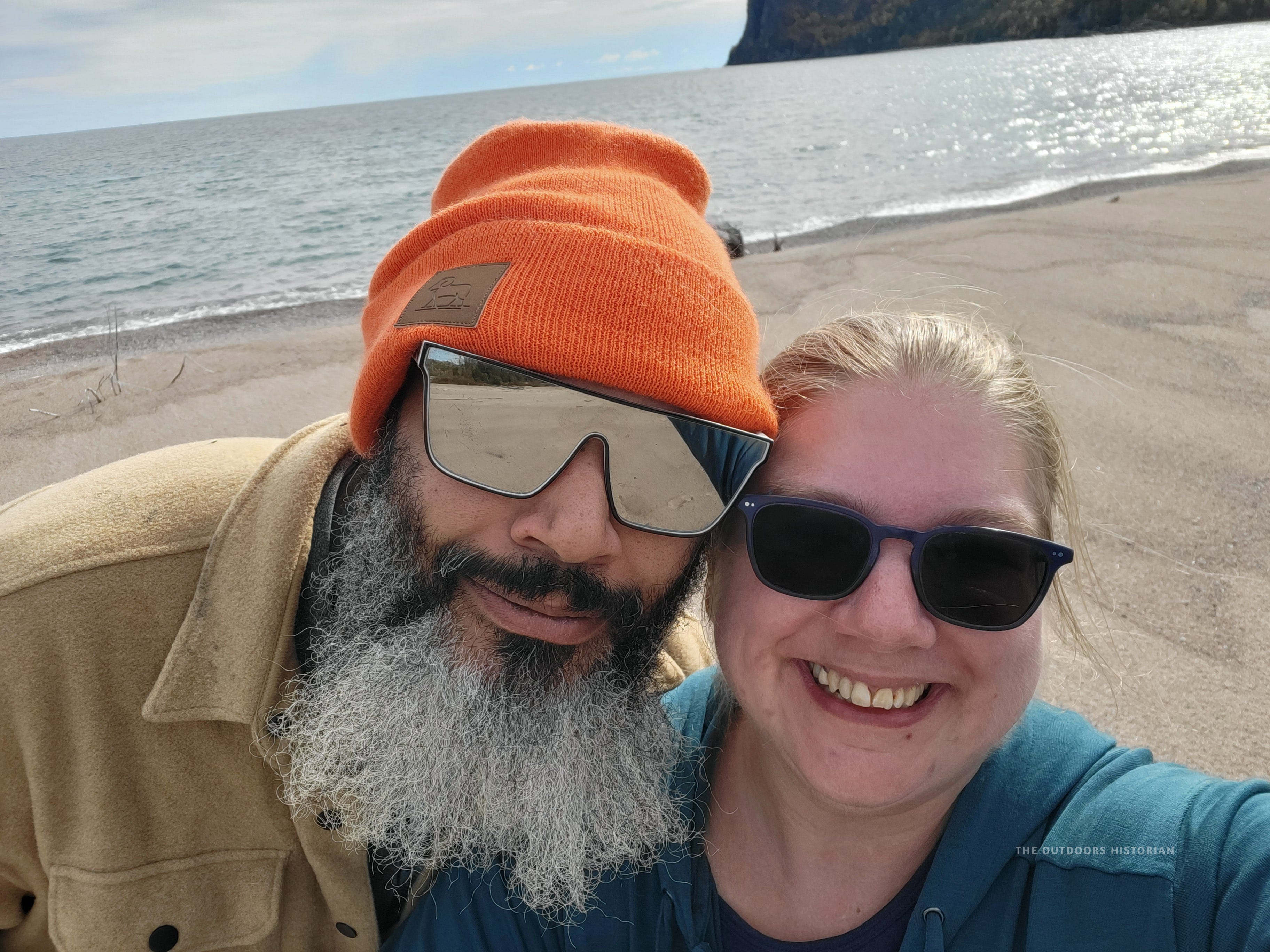
Our first stop in the park was at Old Woman Bay, one of my absolute favorite spots on the lake. The bay is named for the face of an old woman that can be seen in the 400-foot (200-meter) standing cliffs on the south side of the bay. We wandered the long curve of the sandy beach for an hour and chatted with a salmon fisherman who had just returned from the water.
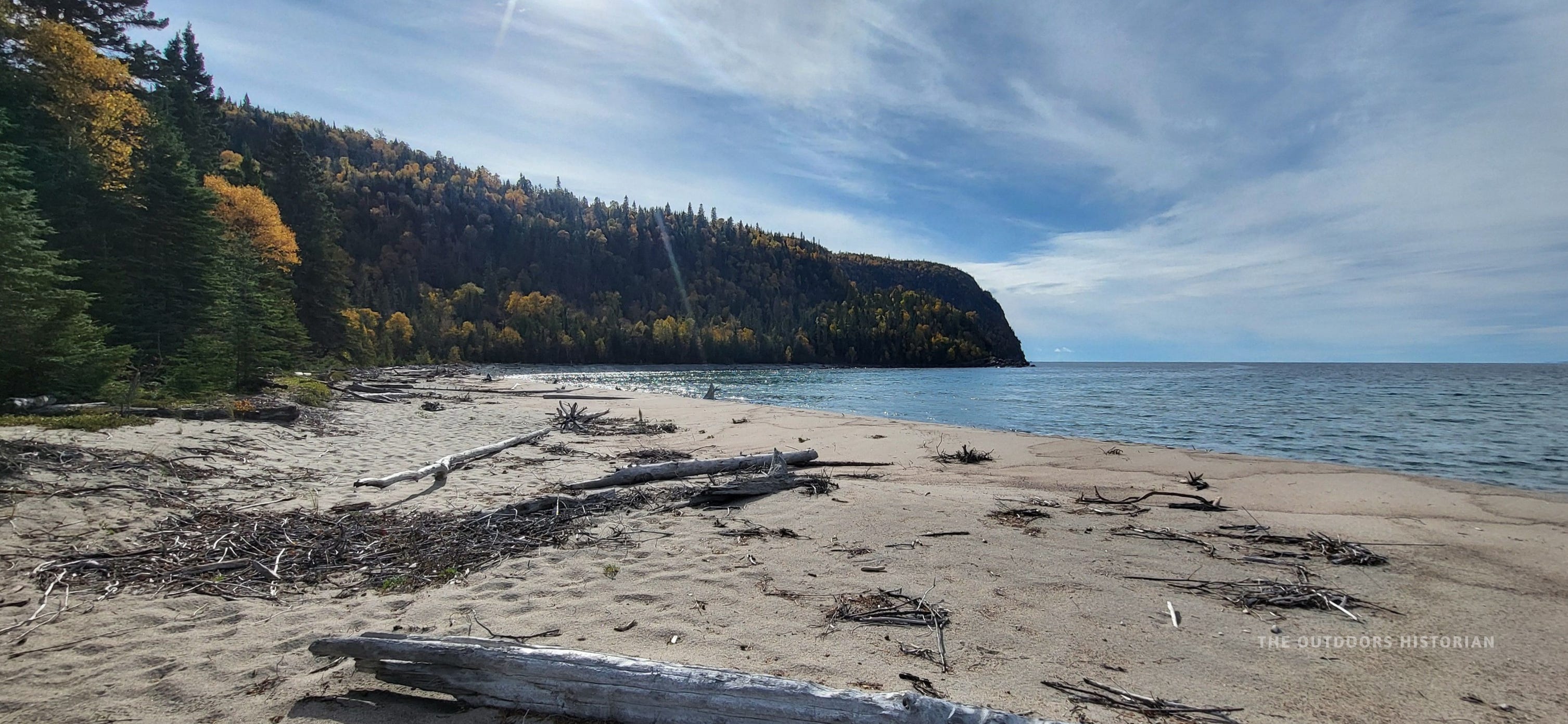
Old Woman Bay is a site I fell in love with when driving from Thunder Bay to Kingston, Ontario during my undergraduate and master’s degrees. I never had much time to explore the Ontario North Shore on those trips, but by chance, I stopped at Old Woman Bay once, and something about it spoke to my soul.
Now I know that when you look south at the massive 400-foot cliffs, you are looking at the edge of a continental scar. While these cliffs are made of Canadian Shield granite, they were created by the Mid-Continent Rift, the same 1.1 billion-year-old tear in the earth that created the Sawtooth Mountains along the Minnesota North Shore and the Nor’Westers in Thunder Bay and the Penokee Hills in northwestern Wisconsin and the rugged copper-laden terrain of the Keweenaw.
The MCR is the bedrock for the mineral wealth (like iron, silver, and copper) that drove the very "extraction systems" that have defined the landscape since land cession treaties were signed in the mid-nineteenth century. Deep clefts in the rock create the face of the woman and illustrate differential erosion along geologic faults. These same faults acted as the plumbing system for the mineral-rich fluids that, a billion years later, would draw the very mining interests we had been tracking along our Circle Tour.
The land continues to speak to my soul here. I wonder how a human can see this site and not feel moved on a deep level. It feels like a bridge between the true boreal further west and the mixed hardwoods further south, and a dramatic duet between the primordial and the accessible. Unlike the sandy stretches of the South Shore, Old Woman Bay offers a long, inviting curve of beach that sits directly in the shadow of massive and ancient 400-foot cliffs. You have the soft sand underfoot: an entry point to the water. This grounding feeling is immediately contrasted with the stoic, Canadian Shield granite sculpted by the MCR. And as the shifting sky moves light across the ‘face’ in the rock, you’re reminded that this landscape isn’t just a backdrop; it is a living conversation between the elements.
Spontaneous Backroad Detours
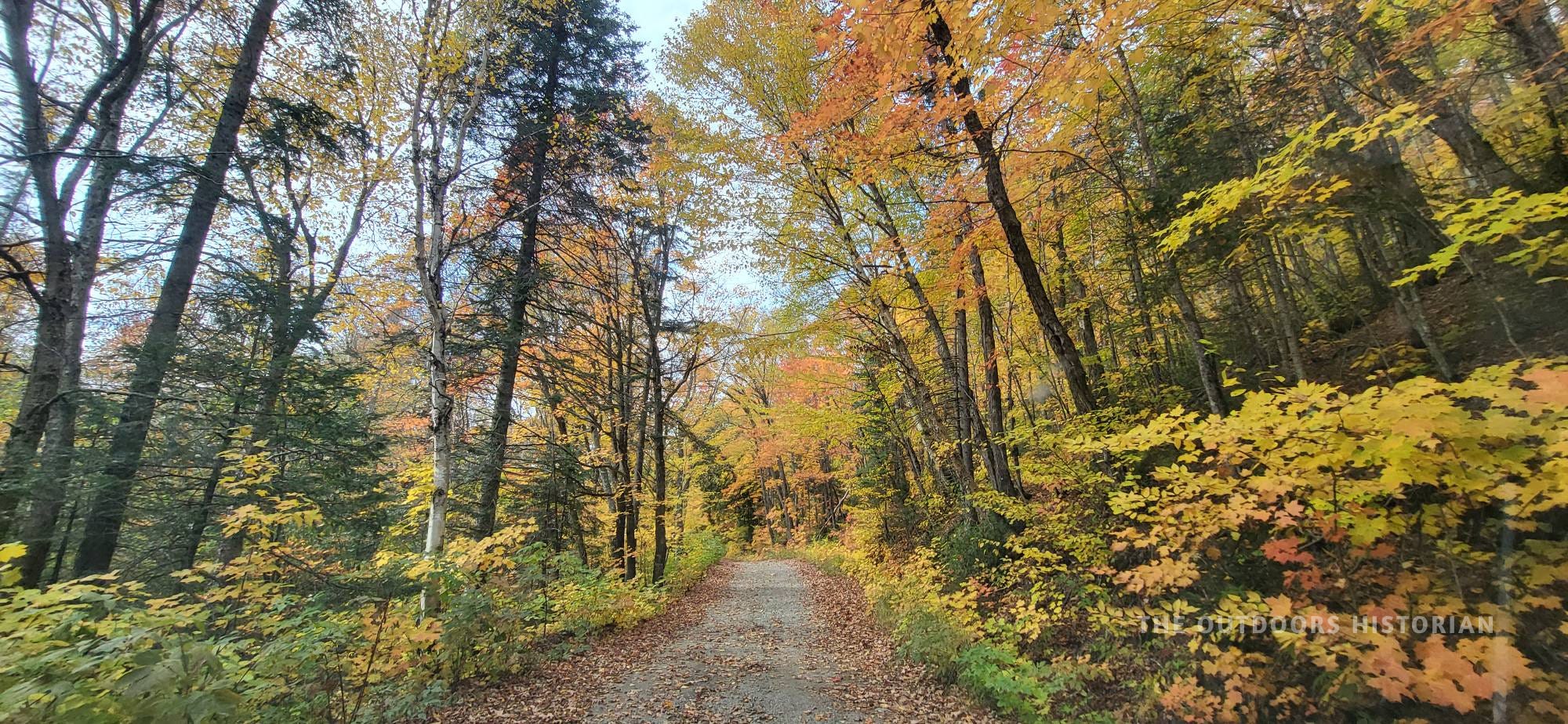
Our next stop in the park was a spontaneous detour to Gargantua Harbor. Faced with a sign warning of a 14-kilometer rough road one-way, I asked Eugene if we should turn back. His response was typical. He said, “I’m up for exploring!” Formerly a logging and fishing village in the 1930s and 1940s, today, Gargantua is a popular access point for the Lake Superior Coastal Trail.
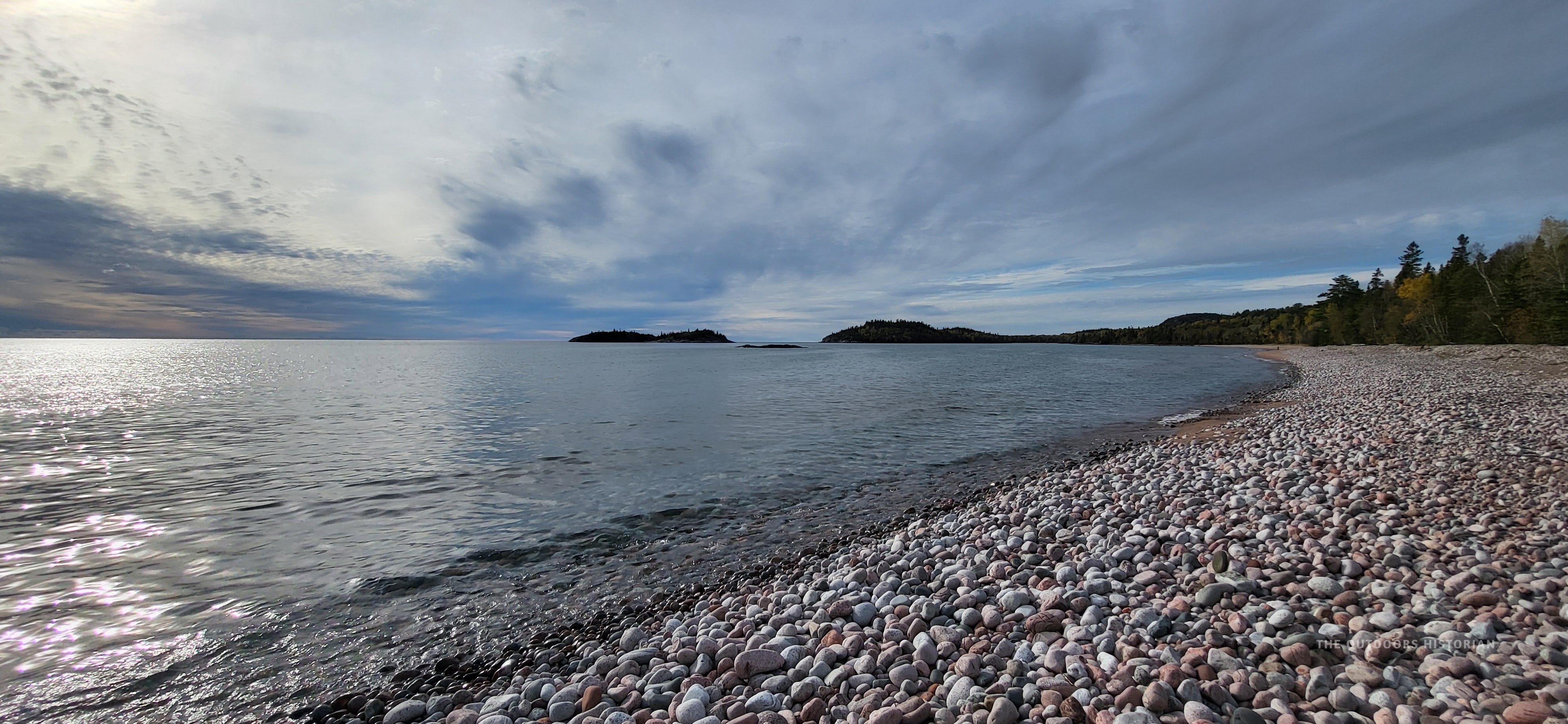
The narrow two-track was a scenic drive through the fall colors, and we received another distinct reward for our efforts: the cobble beach near the Gargantua trailhead was the most peaceful stop we found in the park. We didn’t have time for much exploring, but we enjoyed our break on the beach and took a quick along the Coastal Trail.
Like so many other spots, this was another place we’d need to return to in the future. In fact, at some point, I’m looking forward to planning an entire trip at Lake Superior Provincial Park to explore, camp, hike, and paddle.
The Specters of Extraction and the Road to Sovereignty
At the trailhead, the “stacked maps” of this landscape are visible in the signage alone. A faded Ontario Parks sign describes the harbor as “a place shrouded in fog and legend,” while another nearby panel notes the area is “steeped in history,” claiming that “to the Ojibwa, its first inhabitants, Gargantua was a sacred place.” This is the language of a finished story—one that romanticizes the past to the point of abstraction while relegating Indigenous connection to the past tense.
But just 20 feet away stands a bright, assertive new sign from the Batchewana First Nation. It identifies the area as Nanabozhung and explains that these are their active ceremonial and cultural grounds. It is a striking juxtaposition: one map treats the land as a mystery to be explored; the other reclaims it as a home that never stopped being sacred.


The Batchewana First Nation sign is a recent addition necessitated by the violent history of settler colonialism (a fancy way of refering to the process of settlers, or non-Indigenous peoples, asserting claims and a permanent presence on Indigenous lands). Long before fur traders arrived, Gargantua Harbor was a vital fishing site for Anishinaabe people. However, during the development of Lake Superior Provincial Park in the early 1940s, Batchewana community members were evicted from their ancestral fishing village. On both sides of the border, colonial practices have historically included evicting Anishinaabe people from traditional grounds and criminalizing the exercise of their guaranteed treaty rights to hunt, fish, and gather on ceded territory (a subject I explore in my previous post on Gishkiitawag, or Joe White).

The final two kilometers of the road we used to reach the harbor is itself an act of reclamation. In 2007, the Batchewana First Nation established road access to their harbor by constructing two-kilometers of gravel road over what the park had previously managed only as a walking trail. Their actions to assert sovereignty are the sole reason vehicle access to this shoreline exists today.3
East of the cobble beach was a natural harbor where a fishing and logging community was established in the late nineteenth century. The first lighthouse was established around 1899. During its existence, the village was accessible only by water; a boat brought supplies twice a year. The fish was stored in an ice house and shipped to Sault Ste Maries.
The settler community reached its peak in the 1930s and early ‘40s. The introduction of the sea lamprey essentially destroyed the commercial fishery and the community that depended on it. Gargantua—like Jackfish—is a ghost of industries past on Ontario’s North Shore.
Throughout the series, I’ve discussed the connection between Land, Water, and Sky. At Gargantua, we clearly see how People enter this relationship. When the ecology of the Water shifted, the community of recently arrived settlers couldn’t survive. Meanwhile, the Anishinaabe continued to fish the region as they had for millennia, until they were forced out by the provincial government’s goal to control Land. It is a lesson in resilience: while extractive systems are temporary and vulnerable, a landscape collectively stewarded as a permanent home can outlast even the most dramatic environmental shifts.
The remnants of settler communities on the shore are a reminder that systems built around extracting wealth for individual profit are inherently fragile. In the case of Gargantua, the community was rendered obsolete by a single biological shift like the sea lamprey. They stand in stark contrast to the stewardship of the Anishinaabe, who have collectively maintained a holistic relationship with these waterways for generations. While these industrial towns were abandoned the moment the ‘boom’ turned to ‘bust,’ the Anishinaabe presence remains a continuous thread of diplomacy and survival. It is a lesson in resilience: while extractive systems are temporary and vulnerable, a landscape collectively stewarded as a permanent home can outlast even the most dramatic environmental shifts.
Accesible and Popular Tourist Pullovers
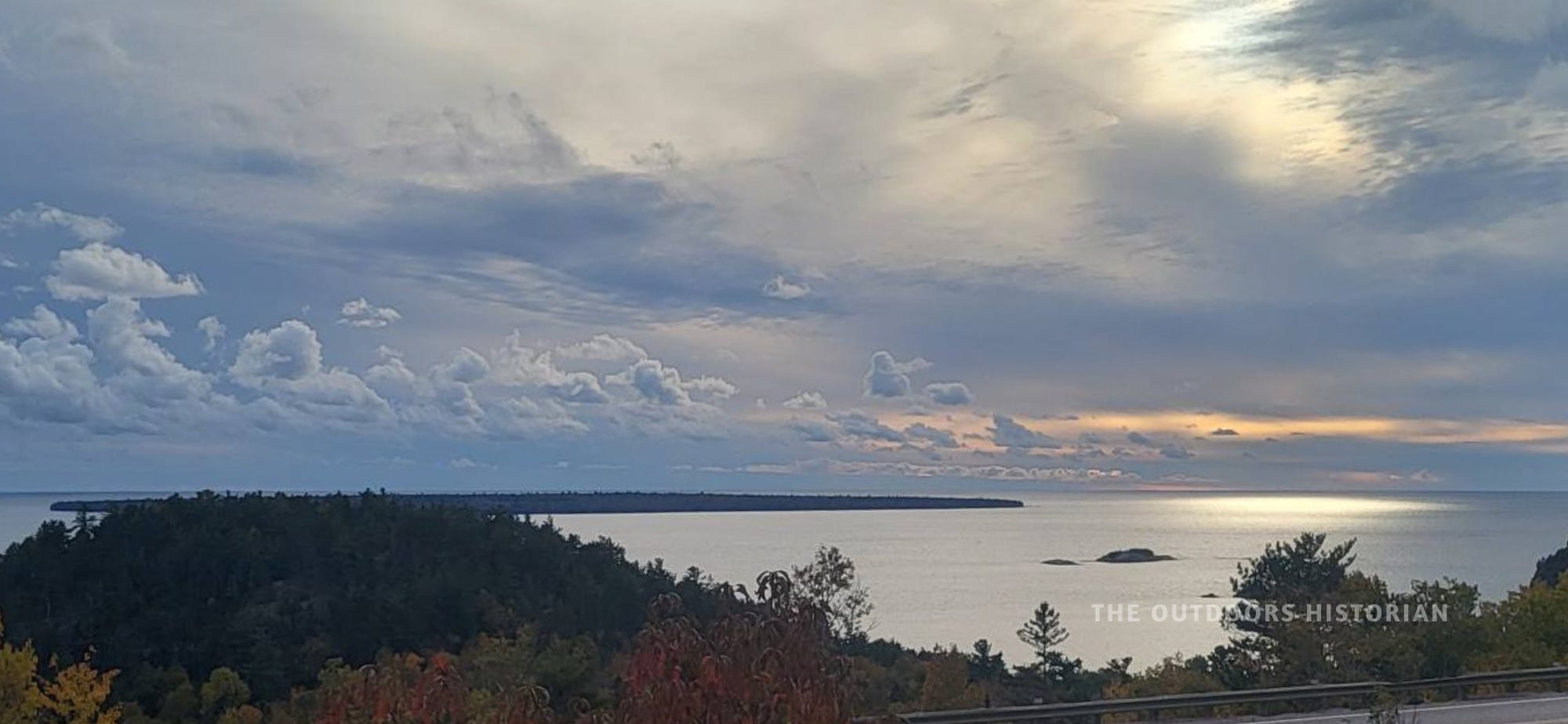
We left the ghosts of Gargantua and continued south to Katherine Cove and Agawa Bay. The scenery was still stunning, but the reality of the holiday weekend set in. For the first time on the trip, we had to share scenic overlooks with other tourists (most headed the opposite direction from us). After the profound quiet of most of the trip, Lake Superior Provincial Park felt busy. We were seeing the same lake, but we “weren’t in Pukaskwa anymore.” We were in the “Canadian Long Weekend.”
Katherine Cove is famous for its shallow, crystal-clear water and the “Bathtub” island just offshore. It is a stunning spot that’s great for a quick break to stretch your legs, but it was also the busiest stop in Ontario we experienced.
Then, we drove through Agawa Bay campground. It reminded us of our final night at Lake Marie Louise. Strong winds blew directly off the lake and at the sites. This is where we originally planned to camp, before extending our time at Neys and Pukaskwa. The weather reassured us of our decision to head on to Sault Ste. Marie and seek out a hotel room. Yes, lake front sites have a gorgeous view, but the trade off is there is no protection if the wind picks up! We’ve tent camped on Lake Superior getting hit head on by high winds before, and it’s a challenging situation we didn’t feel like tackling.
The Pictographs: A Missing Stop
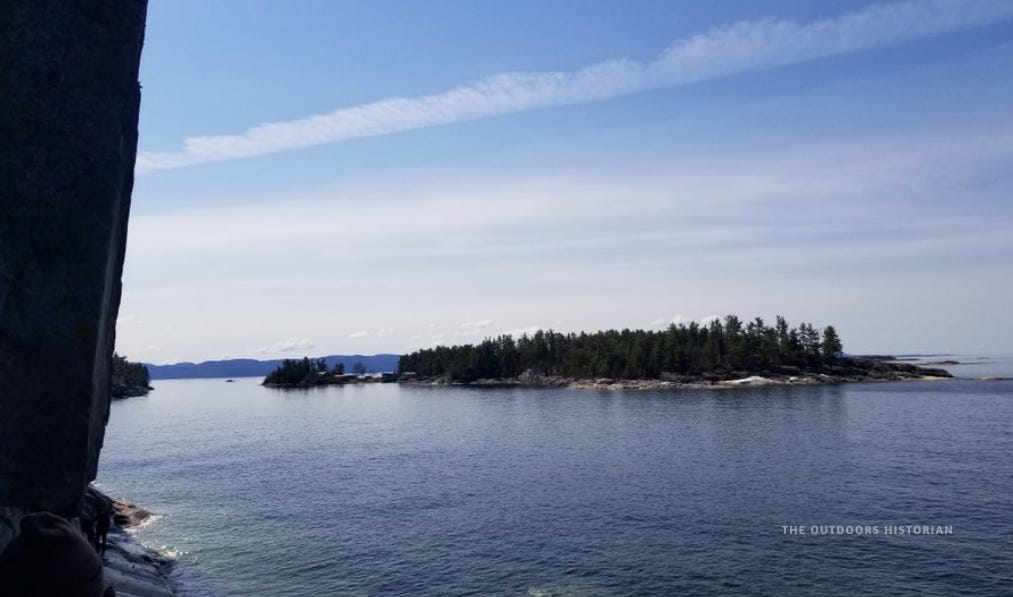
During our drive through Lake Superior Provincial Park, we didn’t stop at one of the most iconic sites: the Agawa Rock Pictographs. These red ochre images were painted on the sheer granite cliffs hundreds of years ago and are powerful expressions of Anishinaabe cosmology and history, and yet another reminder of Anishinaabe people’s long relationship with the watershed.
I’ve been lucky enough to visit them once, and I truly look forward to returning. However, if you’re planning a Lake Superior Circle Tour in the fall, you must account for the fact that the site closes to the public in mid-September. These seasonal closures ensure that Anishinaabe people can perform ceremonies in private at this sacred site.
Safety is the other driving factor for the closure. To view the pictographs, you must walk out onto a narrow, sloped stone ledge that drops directly into the deep water of the lake. While Lake Superior’s most dramatic storms usually come later in the season (the infamous “Gales of November”), fall weather in general is significantly more hazardous than the summer. Even a moderate swell can send waves washing over the ledge, making the granite incredibly slippery and the viewing area treacherous. It’s a reminder that even the most sacred and 'permanent' historical sites require a constant negotiation with the present moment; the Lake always gets the final word on when we are allowed to look.
The closure at the pictographs was a reminder that while the Ontario North Shore might feel wild, rugged, and isolated, this narrative relies on a convenient forgetting of the past. Anishinaabe people have called this place home for generations, and maintained a complex network of trade, diplomacy, and stewardship long before Europeans arrived.
And even when they are open, accessing the pictographs feels like a fleeting gift from the Lake. To stand on that ledge requires a dynamic balancing of elements: you need the water to be calm and the sky to be settled enough that no precipitation is produced.
Crossing the Border: From Permanent Rock to Shifting Sands
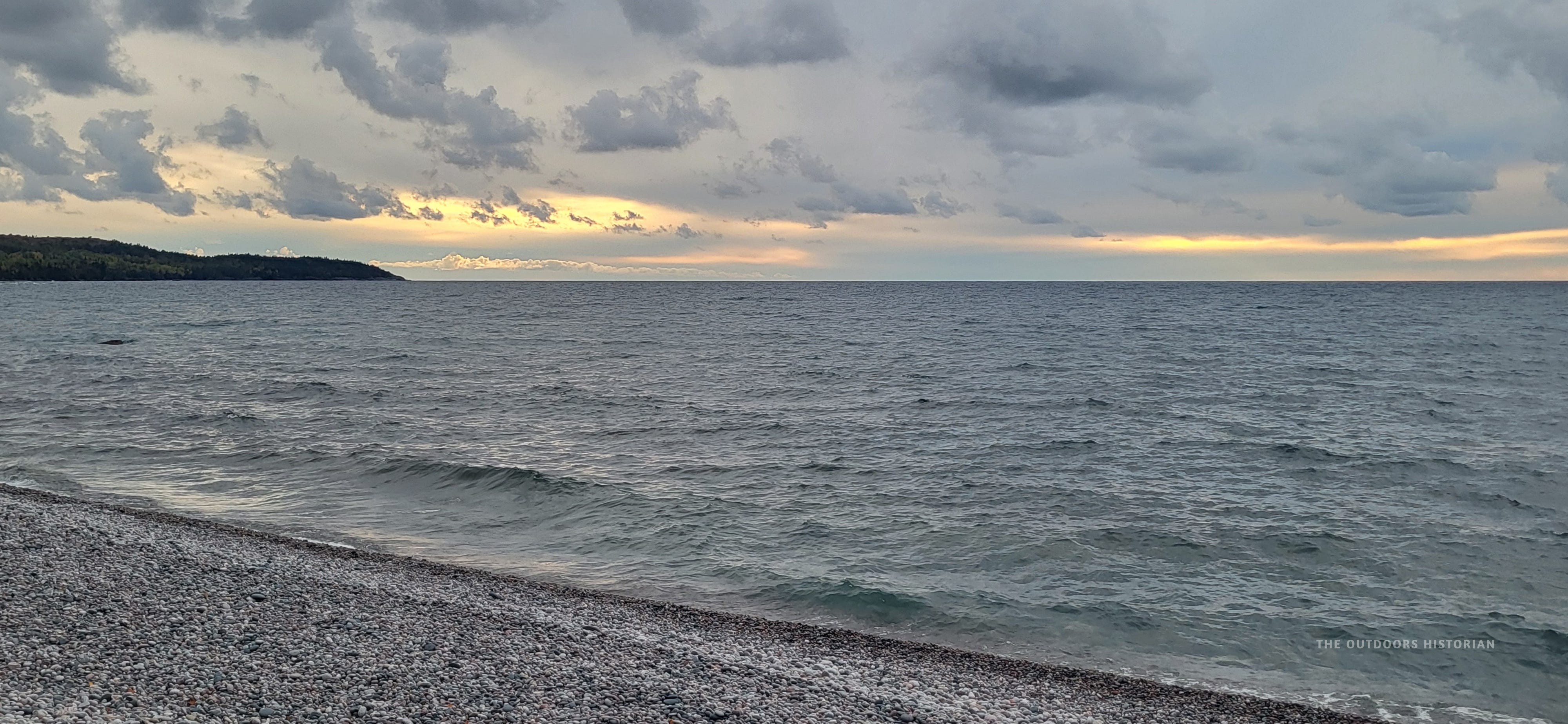
Our final stop after leaving Lake Superior Provincial Park was Alona Bay, a pullover on the side of Highway 17. There’s both an Alona Bay Lookout and an a pullover where you can hike down and access the shore. We chose the latter and said goodbye to the Ontario Shore while taking in the beauty of a moody sunset from our second cobble beach of the day.
This leg of the journey was so full of ‘stacked maps’ and hidden histories that I’ve decided to split the conclusion of this series into two parts. At 1,300 + miles, the Lake is too big to rush—and so is the story of how we find our way home when the systems we’ve relied on collapse. Next week, I’ll focus on the final leg our our journey: driving home through the UP.
In the meantime, if you’re ready to start mapping these nuances on your own Lake Superior Circle Tour itinerary, get my free Circle Tour planner!
Next week, in the series finale, we cross the International Bridge into the Michigan Soo. We’ll leave the stoic granite of the North Shore behind for the towering, shifting dunes of Pictured Rocks. It was there, standing on the edge of the Log Slide, that the final pieces of this puzzle fell into place: I realized that while I may have lost my classroom, I had finally found my syllabus.
Join me next week as we close the circle.
Have questions about how to plan your own ultimate Lake Superior Circle Tour itinerary?
Tourism is also complex. While there are positives, there are also drawbacks, including putting a strain on aging local infrastructure. I plan to write more about the complexities of tourism in the future.
The exact size of the provincial parks and their rankings can shift depending on whether only land or land and waterways are calculated in the totals.
https://web.archive.org/web/20160304113537/http://www.saultstar.com/2014/06/26/gargantua-harbour-matter-before-courts