
Welcome to The Circle Tour Series. In Fall 2024, my partner, Eugene, and I circled Lake Superior. We left our home in Bayfield, Wisconsin, and headed clockwise up the Minnesota North Shore, crossing the border into Ontario. Then we drove along the Ontario shore before crossing the border at Sault Ste. Marie and traveling through the UP to return home. Most of our time was spent between Sleeping Giant Provincial Park and Pukaskwa National Park.
Part travelogue, part history, this series explores the intersection of industrial ruins, boreal ecology, and personal transition. It is a journey to see how landscapes survive when the systems built upon them—including mines, railroads, and careers in higher education—fall apart. This is Part 7 of 7. You can read Part 1 here, Part 2 here, Part 3 here, Part 4 here, Part 5 here, and Part 6 here.
Over the last two months, I’ve shared the narrative of our journey on the Lake Superior Circle Tour. As an outdoors historian, I spend a lot of time looking at maps and archives, but I also spend a lot of time living out of a tent. This trip was born out of a specific moment in my life and a gap in my own experience. I needed time with Lake Superior while I processed major changes in my life. And while I had driven Highway 17 countless times and even taught college students there, I never took a personal trip where I had time to explore on my own terms.
During this series, we’ve talked about the history of extraction and its connection to geology and ghost towns, the spiritual weight of the deep boreal at Pukaskwa, the ‘stacked maps’ at Lake Superior Provincial Park, and my realizations on the South Shore.
But today, I want to get into the nitty-gritty and the logistics.
If you are looking to plan your own Circle Tour, or are just curious about how we pulled this off, here is the breakdown of our route, our gear, and the reality of traveling in the “Secret Season.”
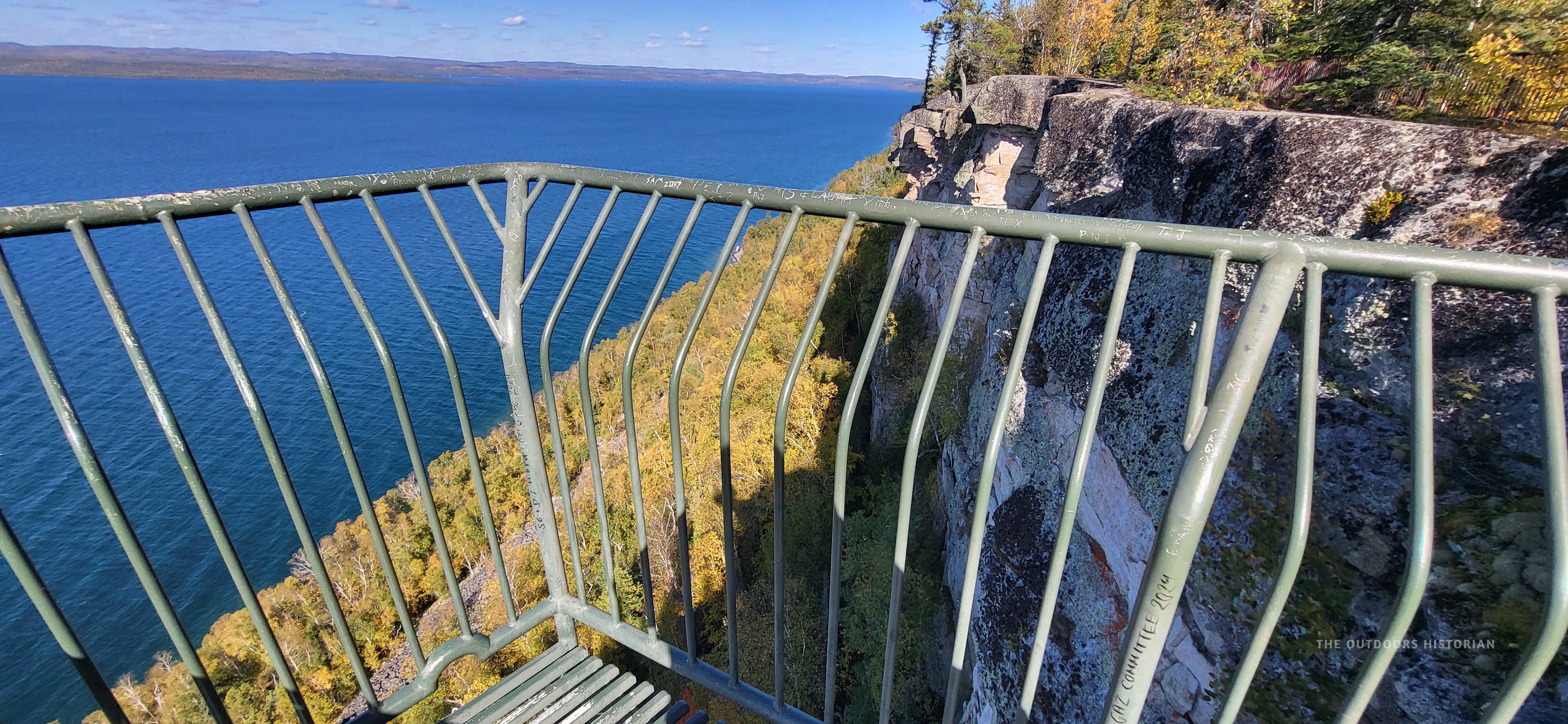
The Strategy: Why This Route?
For this trip, we made a conscious (and somewhat painful) decision to skip the Keweenaw Peninsula—which I absolutely love. The goal of this trip was to slow down in the Ontario sector and explore sites that we hadn’t visited before.
The Flexibility Factor
In the fall, flexibility is key. We booked the first half of the trip to ensure we had spots but left the return leg open. Because we loved Neys so much, we stayed an extra day. This was easy to adjust since our next stop was Pukaskwa, which is first-come, first-serve. Since we spent additional time at Neys and Pukaskwa, we decided to skip camping at Lake Superior Provincial Park entirely in favor of a hotel “reward” in the Soo.
The 15-Day Itinerary at a Glance
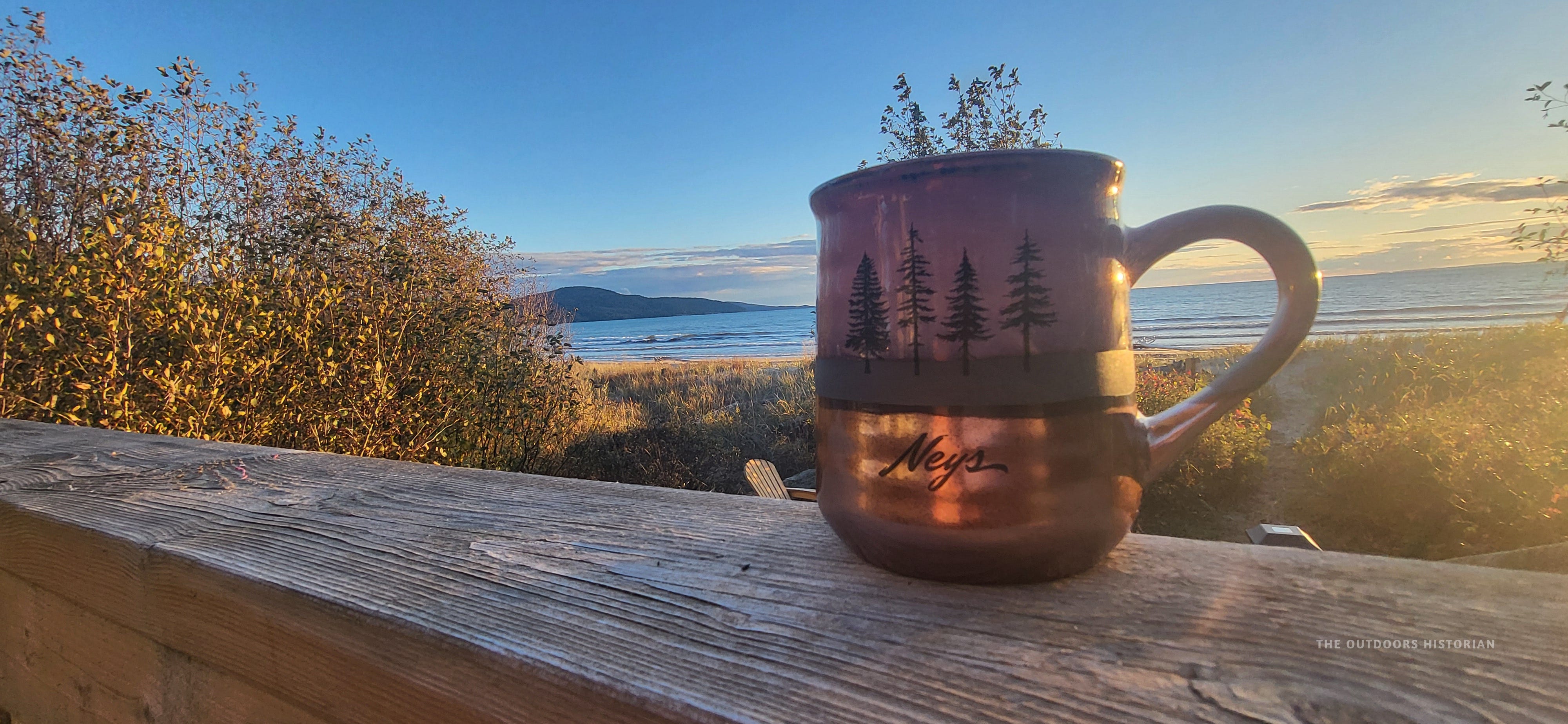
DAYS 1–4: Bayfield to Thunder Bay (Family, High Falls, Mt. McKay)
DAYS 5–7: Sleeping Giant (Thunder Bay Lookout, Marie Louise Lake, Sea Lion, Silver Islet)
DAYS 8–10: Neys Provincial Park (The Trapp Cabin, Jackfish Ghost Town)
DAYS 11–13: Pukaskwa National Park (Hattie Cove, Manitou Miikana, Dark Skies)
DAY 14: The “Signage” Run and the Scale of the Landscape (Wawa Goose, Old Woman Bay, Gargantua, Katherine Cove, Alona Bay)
DAY 15: The UP South Shore (Breakfast in Sault Ste. Marie, The Log Slide, Hurricane River, Home)


The “Best Of” Awards: Circle Tour Superlatives
If you have limited time, here are the standouts from our 1,300-mile loop:
🏆 Best Scenic Drive: Nipigon to Marathon (unmatched elevation), with Wawa to Sault Ste. Marie as a very close second.
🥾 Best Short Hike: Manitou Miikana at Pukaskwa. It is the perfect synthesis of land, lake, and sky.
🌅 Best Sunset: Neys Provincial Park. Watch the wet sand reflect the sky like a mirror.
🏛️ Best Hidden History: Neys Logging Boats. These hulls are the material culture of the pulpwood era, and a reminder of Canada’s history of internment. (Difficulty: Moderate; requires a hike and potentially slippery rocks).
🏛️ Best Accessible History: Silver Islet. A drive-in spot that illustrates the lake’s power over human industry. (Stop in the General Store for a cinnamon bun!)
⛺ Best Campsite for ‘Reading the Depths’: Hattie Cove. It offers the solitude required to process the history you’ve been hiking through.
The Camping Report: Where to Pitch Your Tent
Sleeping Giant (Marie Louise Lake): A "Mega-Campground" done right. Excellent plumbing and hot showers, but it still feels peaceful in the shoulder season.
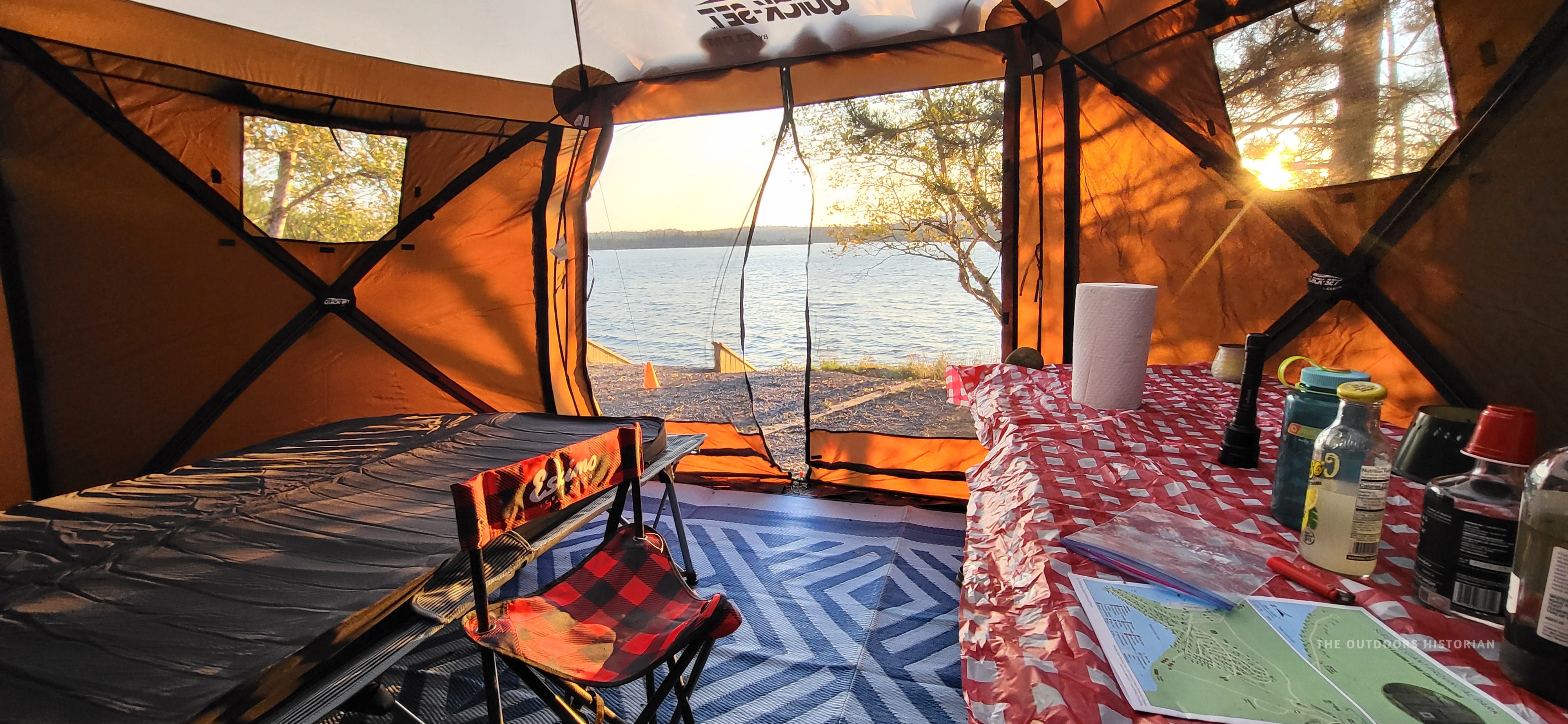
Neys Provincial Park: History meets scenery. The sites are large, private, and the beach is breathtaking.
Pukaskwa (Hattie Cove): The edge of the world. The vibe is inky, velvety blackness and the most profound quiet on the lake. Note: These sites lack lake views but have seclusion and dark skies.
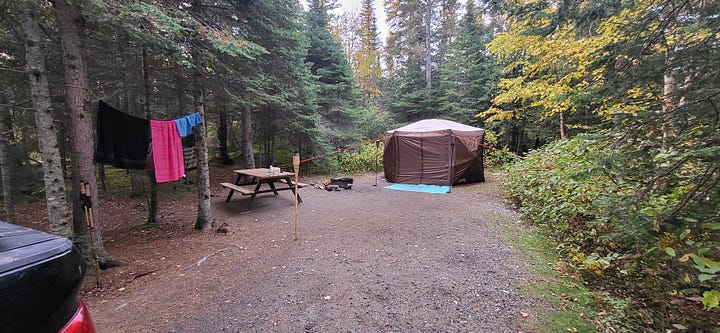
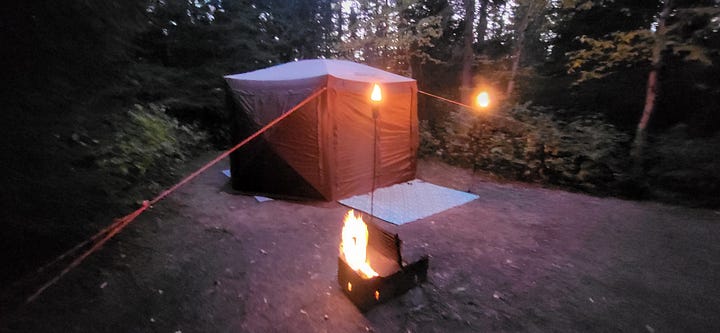
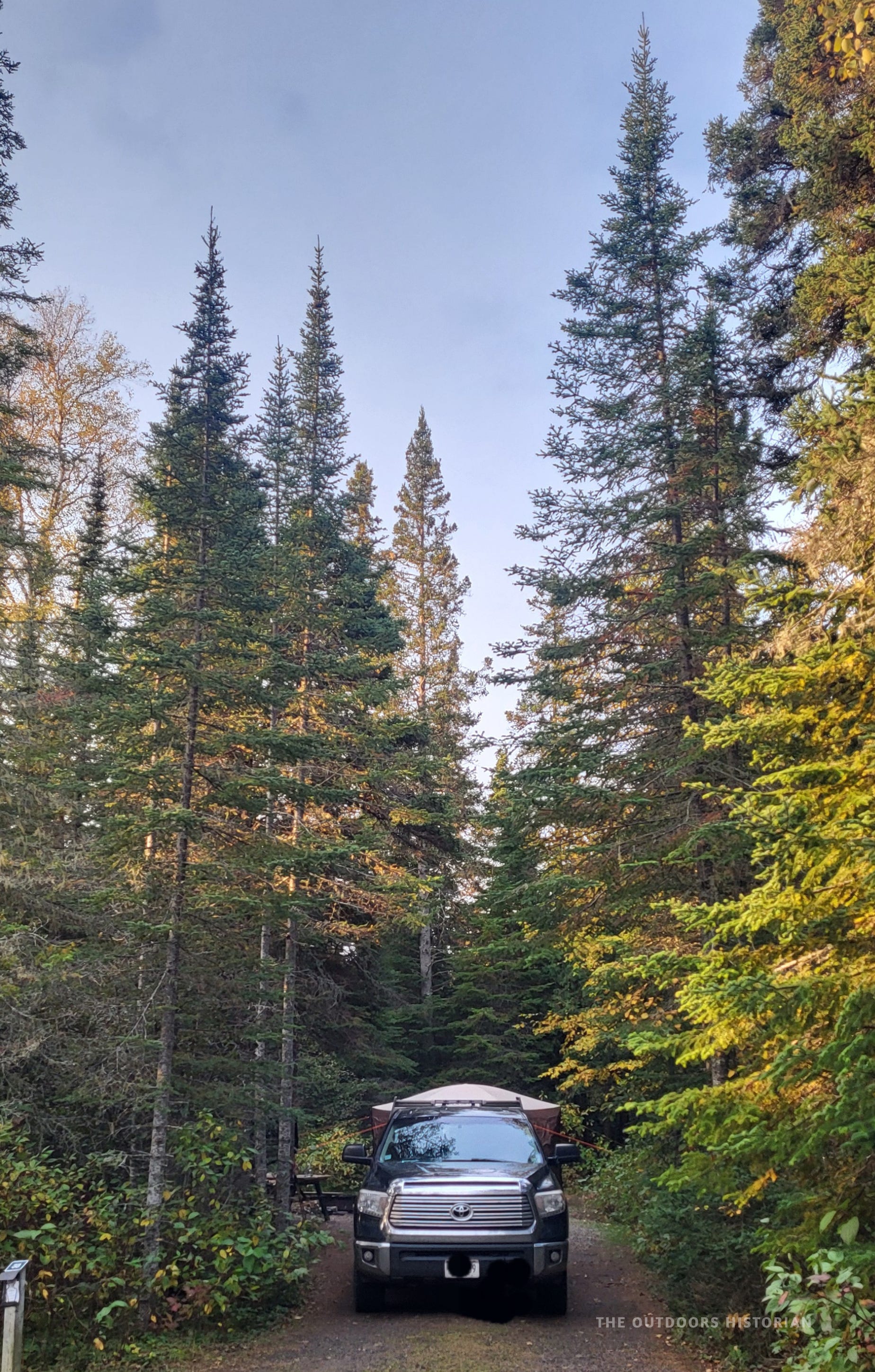
Our campsite at Pukaskwa in the day and the evening. We didn't need the tiki torches for bugs at this time of year, but we liked using them to add ambient lighting around the site in the evening (and darkness comes quickly in October).


Lake Superior Provincial Park (Agawa Bay): We had planned to stay here, but ended up just scouting it and moving on. Stunning beach, but very exposed to wind and highway noise.
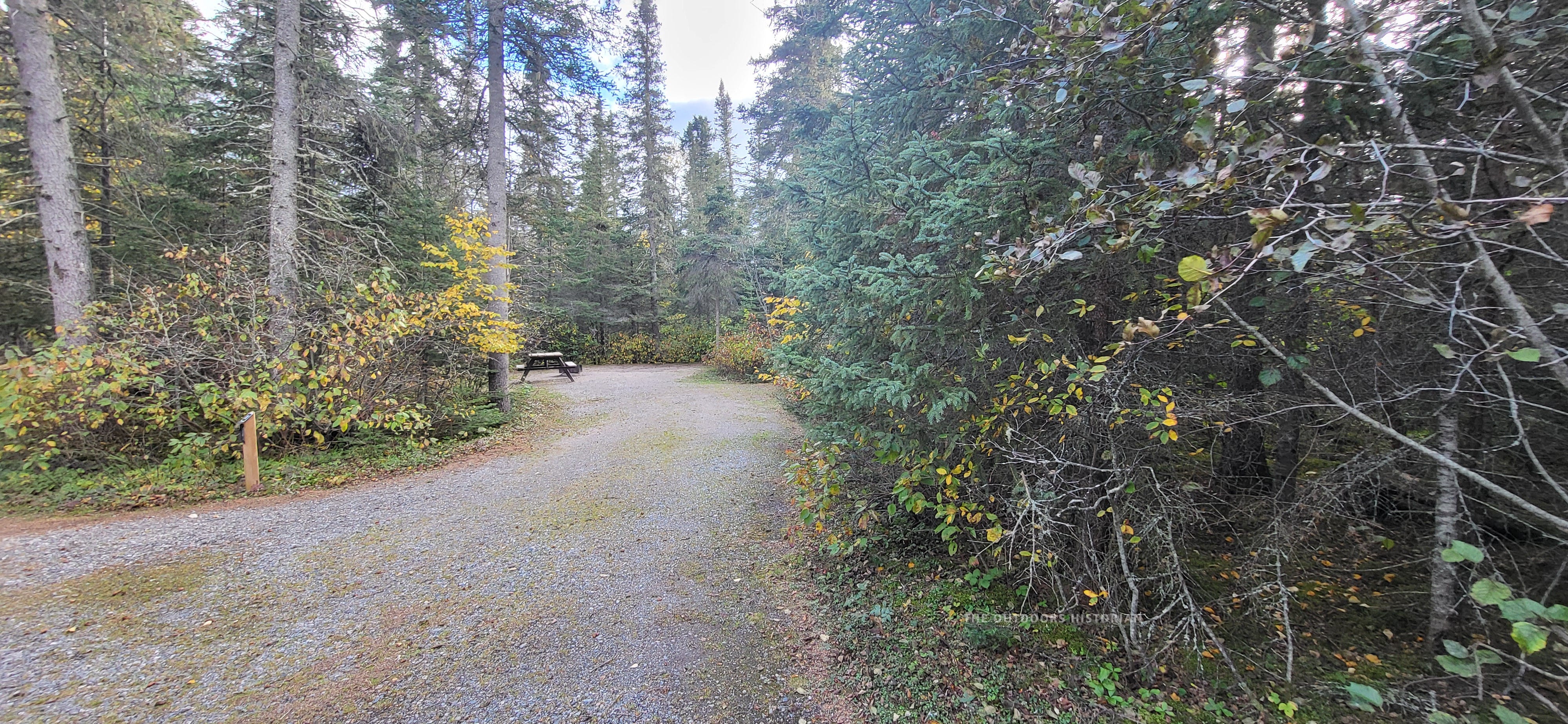
Favorite Campfire Meals


We treat camp cooking as a form of creative fieldwork. A few standouts from this trip:
🍳 Campfire Chicken Enchiladas: My biggest win. I prepped a rotisserie chicken in advance buy shredding it and freezing it. At the campsite, I assembled them with salsa verde and cheese. Method: Campfire. The Pro-Tip: Eugene used a blow-torch to finish the cheese to bubbly perfection.
🥩The Classic: Steak, pre-baked potatoes (wrapped in foil), and "salad in a bag." Nothing beats a steak cooked over open hardwood. Method: Campfire
🌭 The "Thunder Bay" Special: We picked up local Italian sausages in Thunder Bay and grilled them with sautéed peppers and onions. Again, the blow-torch made a cameo for the cheddar melt. Method: Campfire.
🍝 Cook Once, Eat Twice: I made a sausage and red pepper pasta one night, then repurposed the leftovers into a Pasta e Fagioli by adding broth and diced tomatoes the next day. Method: Whisperlite.
The Glovebox Essentials
Reading: Superior: Under the Shadow of the Gods (Chisholm/Gutsche) for the North Shore, and Impermanence (Sue Leaf) for the South Shore.
Listening: CBC Radio One is a must for “local flavor.” For podcasts, check out Points North or the Lake Superior Podcast.
Gear Wins and Fails
The Wins:
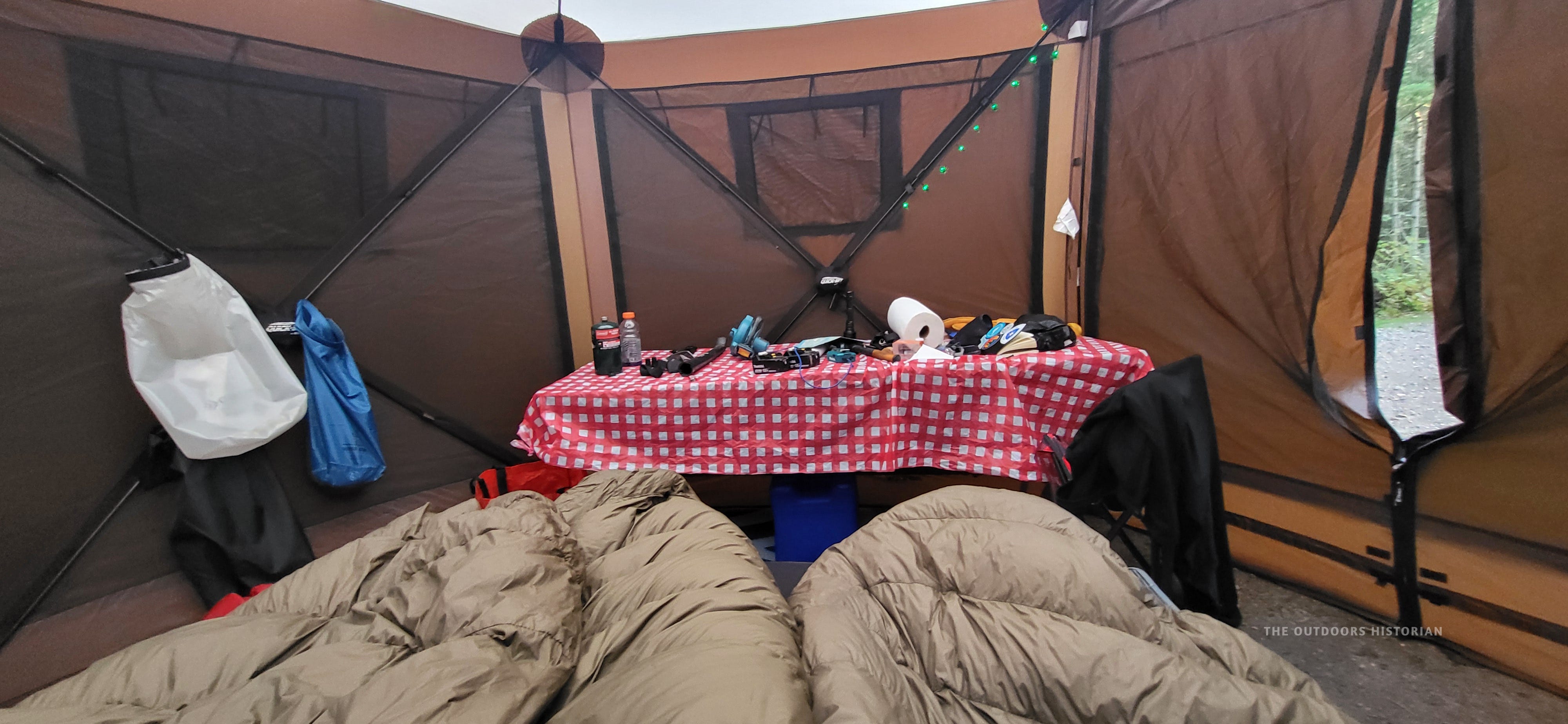
The “Mood” Lights: We bought battery-powered string lights at Canadian Tire in Marathon. In October, the sun sets at 6:30 PM; these saved our morale and turned the tent into a cozy library.
Our Sleeping Pad: Our Thermarest MondoKing pad (R-value 5+) was essential. The ground steals more heat than the air does.
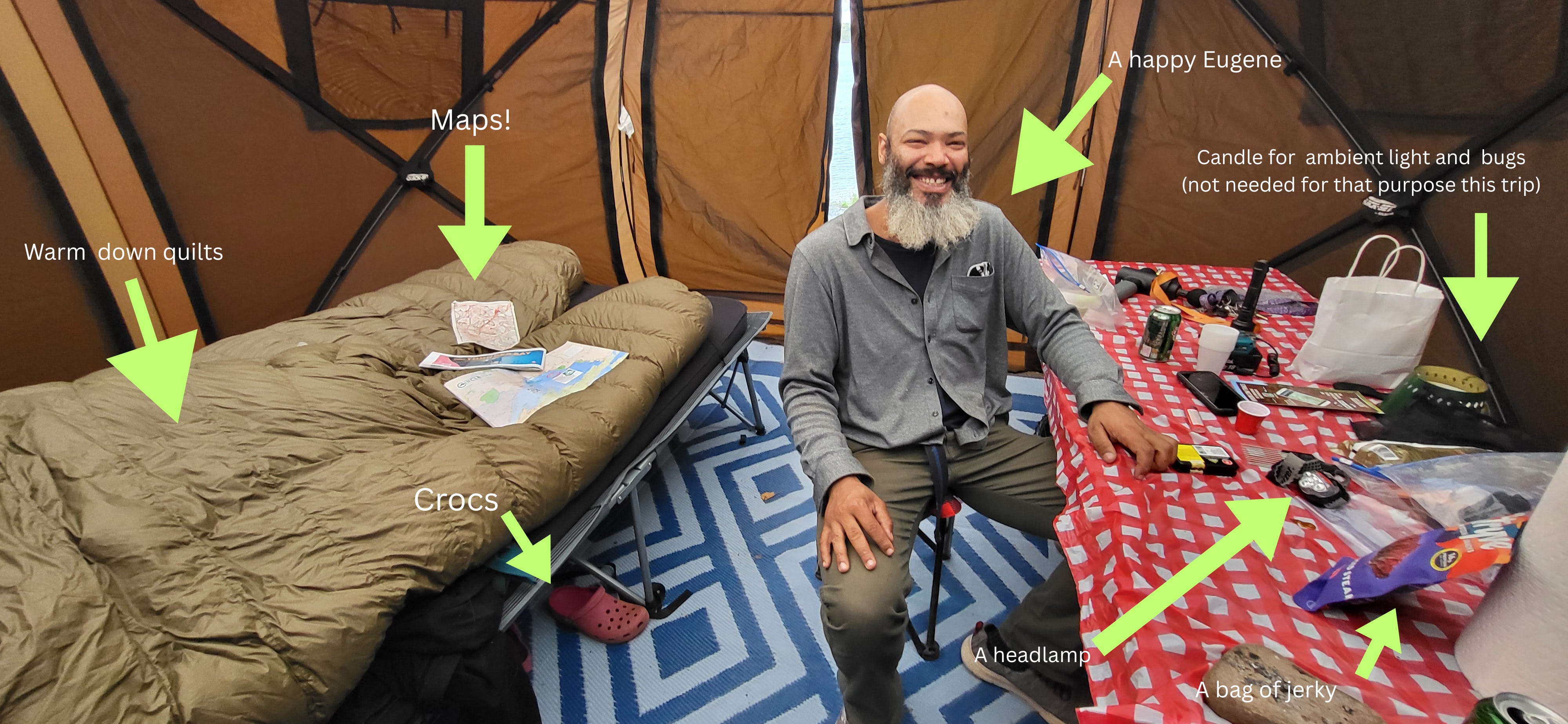
Our Quilts: We invested in Jack R Better quilts for our hammocks and they also work great with a cot. We used the Tahoe blanket from WoolX for an additional layer of warmth on extra cold nights.
The Tundra: Our truck handled the rough road to Jackfish and the 45mph windstorms without a rattle. Eugene’s organizational system in the bed made packing and unpacking a science.
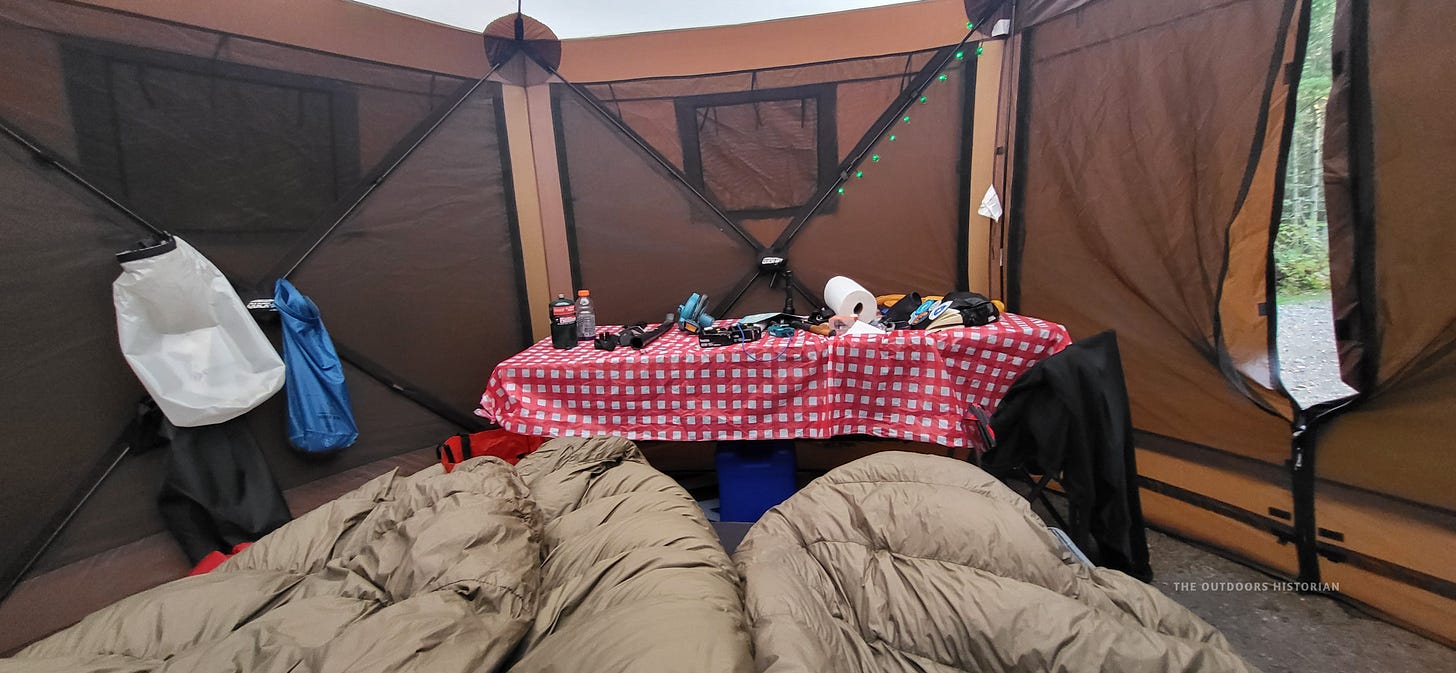
Snug in our tent with our zero degree quilts. Notice the green lights we purchased from Canadian Tire hanging from the tent wall. Since this trip, we’ve purchased a lot more battery-powered string lights.
The Fails:
The Kitchen Kit: We forgot the tongs. (Shoutout to the Canadian Tire in Nipigon for the assist).
The Hatchet: We brought a Sawzall for logs but forgot a hatchet for kindling. (Also resolved at Canadian Tire—our unofficial trip sponsor).


The Reality of the “Secret Season”
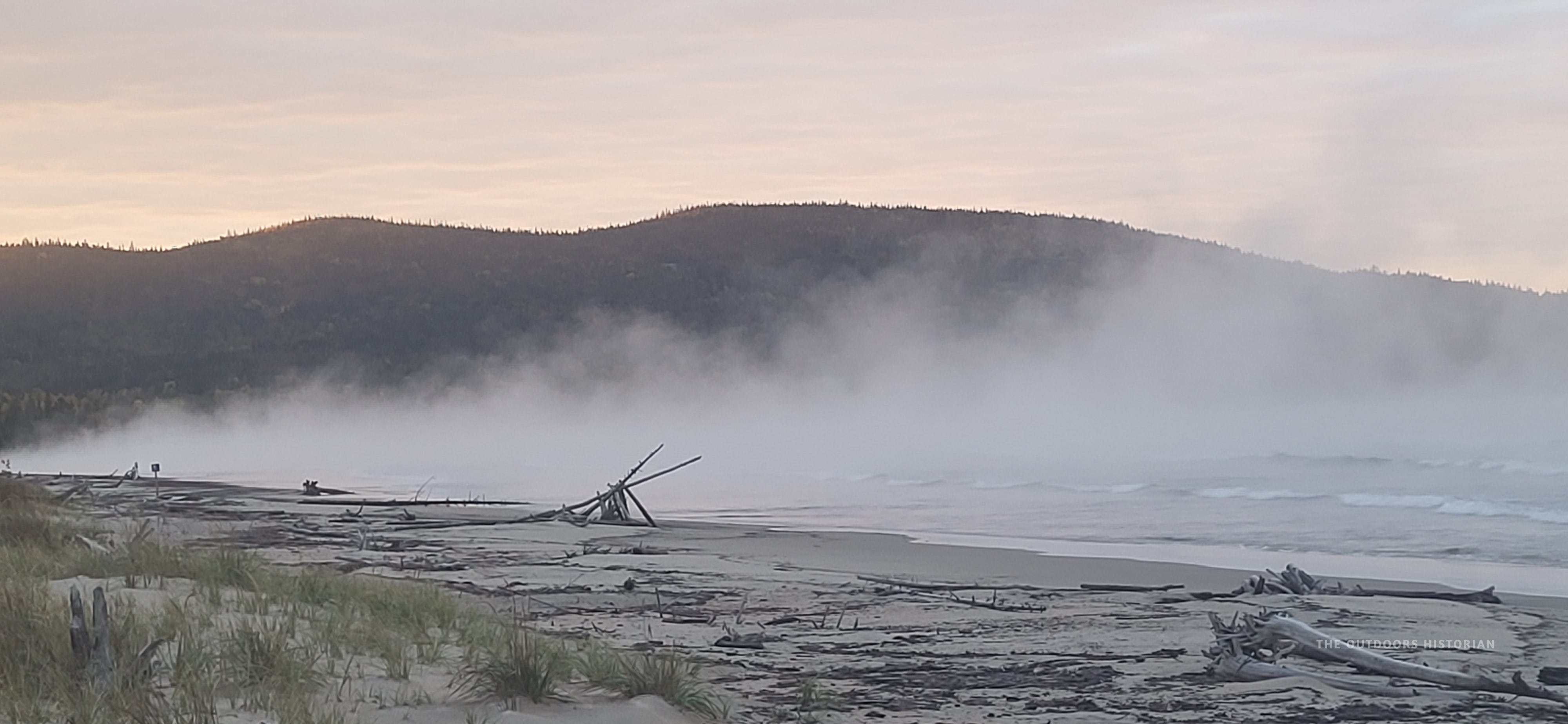
Traveling in October demands respect. You will experience “Sea Smoke” on the water and 30-degree mornings.
The Border Strategy: If you’re crossing at Pigeon River, buy your perishables in Thunder Bay. It supports the local economy, is a fun cultural experience (check out Canadian snacks and treats), and makes customs a breeze. My Rule: If it once had a heartbeat or a root, buy it in Canada to avoid agricultural restrictions.
Winds: We hit 45mph gusts. If you don’t know how to “guy out” your tent, the Secret Season will teach you the hard way.
Cold: We managed 30-degree mornings with zero-degree down quilts and high R-value pads.
Forgotten or broken gear: While specialized gear can be tricky to find on the Ontario North Shore, the Canadian Tire stores in Nipigon and Marathon are cultural landmarks in their own right and perfect to grab any basics you might have forgotten or to replace anything that breaks.


Places We Can’t Wait to Return To
Whenever we road trip in the Great Lakes, we cross things off our list only to find we've added even more! Here’s a sample of things that got added this trip
Sleeping Giant: From some of the longer hikes to boating adventures, there’s a lot left to explore.
Neys: From returning to the Trap Cabin, to paddling the Little Pic River, to experiencing the Visitor Center, to some of the trails we didn’t get to—there are so many reasons why we want to return!
Pukaskwa: I’d love to hike the Manitou Miikana Trail again, and I’d love to hike to the White River Suspension Bridge someday. I also want to paddle in Hattie Cove.
Lake Superior Provincial Park: There is so much I want to do and explore here still—from hiking to paddling.
Yes those were all of our main stops this. The route was that good.
Also, I’m not listing Pictured Rocks in this list, although it was technically part of this trip and I’m always up for another visit! For me, Pictured Rocks and the Keweenaw are two places around the Big Lake I’ll always return to.
Final Thoughts: Fieldwork for a New Vocation
This trip was more than a vacation; it was a re-introduction to the region I grew up in and that I call home. I realized that while I may have lost my traditional classroom, I haven’t lost my subject matter. My new syllabus is written in the land, the water, and the shifting light along Lake Superior’s shore.
If you found value in these stories, the best way to support this “classroom with no walls” is to grab the Circle Tour Field Guide. It contains the itineraries, “Historian’s Pivots,” and logistics I used to navigate these 1,300 miles. Whether you have 8 days or 21 days, there’s a Lake Superior Circle Tour itinerary for you!
Want more free tips on planning your own Lake Superior Circle Tour itinerary?
Have questions about how to plan your own ultimate Lake Superior Circle Tour? Let me know in the comments!