
Act 1
If sandscapes are the shifting forms of sand and resulting ecosystems on beaches, dunes, and barrens, then snowscapes are the result of a thick blanket of snow coating landscapes and waterways. Lakes and rivers. Creeks and streams. Ravines and bluffs. Grasslands and barrens. Bogs and fens. Cobbles and boulders. All coated. Enveloped. Encased.
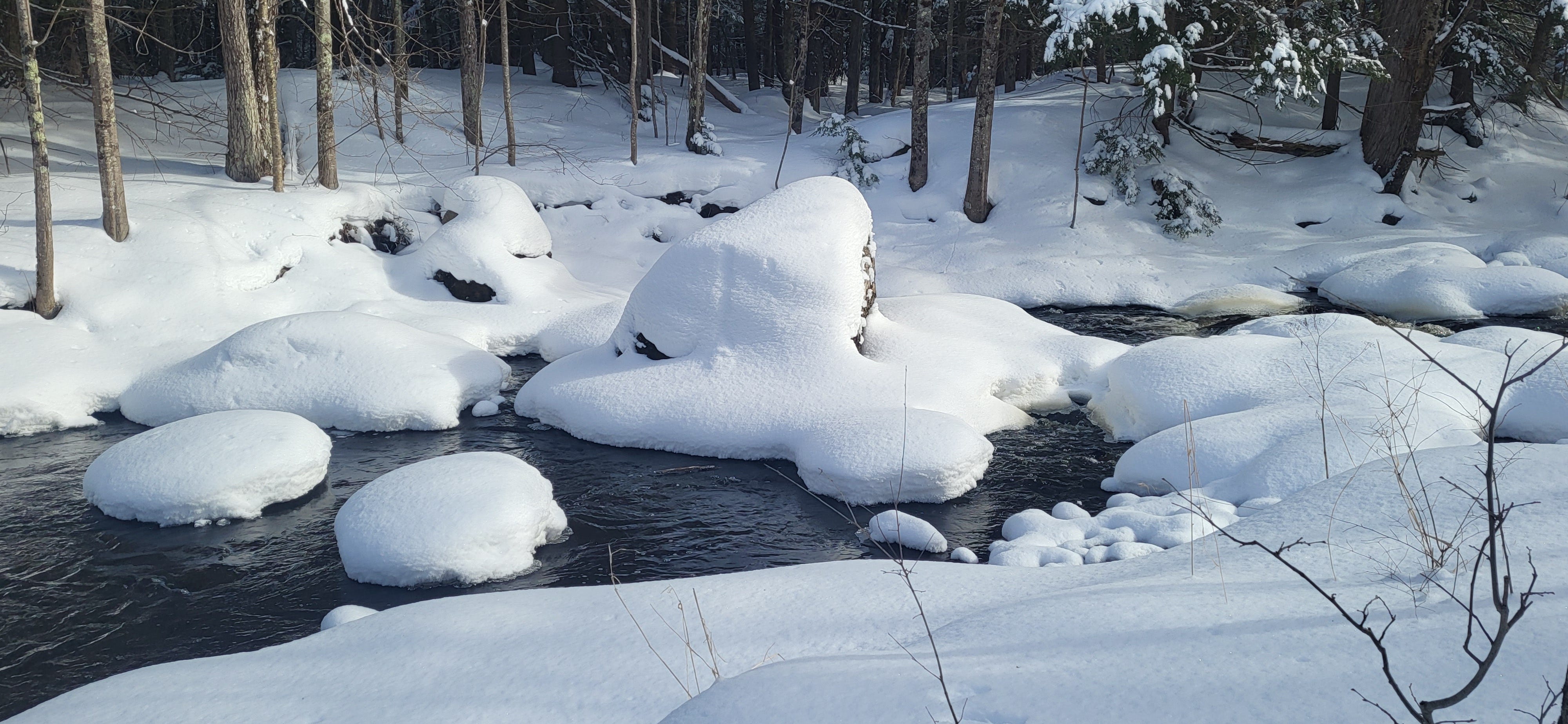
A fresh coating of snow on the Montreal River that borders northwestern Wisconsin and the western Upper Peninsula of Michigan.
If you walk among a forest that’s been freshly snowscaped, you feel a deep silence. The kind of silence that induces awe and wonder. It is like the world around you is lying under a thick, heavy blanket. Sinking with the weight. Sinking with comfort. Absorbing any sounds arising from the wind moving over the snow coated branches of reaching hardwoods and draping conifers.
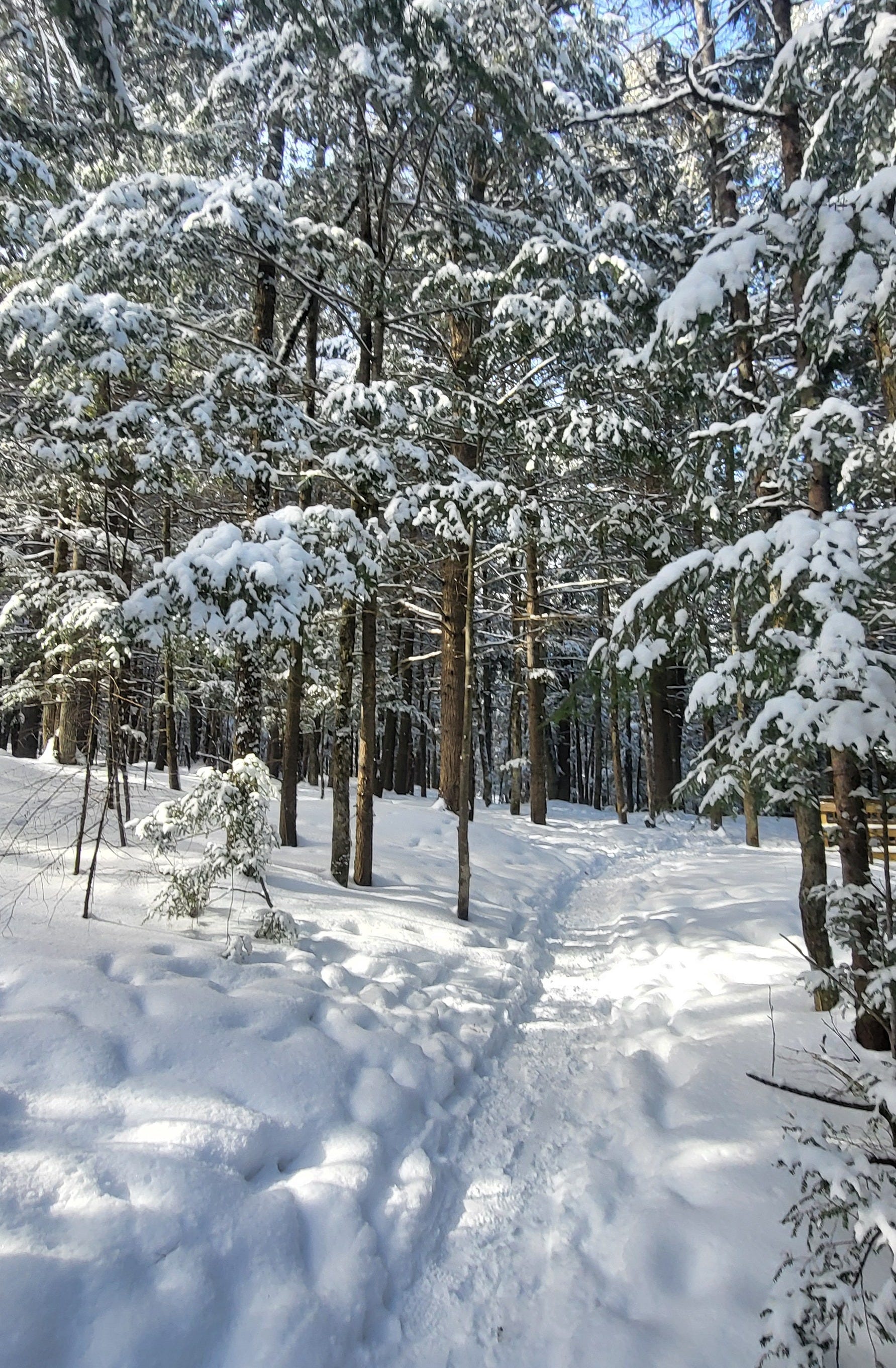
A trail through a snow covered woods.
There’s beauty in both. Hardwoods with their intricate web of bare branches encased in white reaching up and welcoming the snow as it falls. Or stretching into the brightness of a blue sky when the falling snow finally relents. Glistening in the light. Conifer branches bending and adapting to the snow's weight. Sinking and draping, like heavy skirts designed for a winter wonderland.
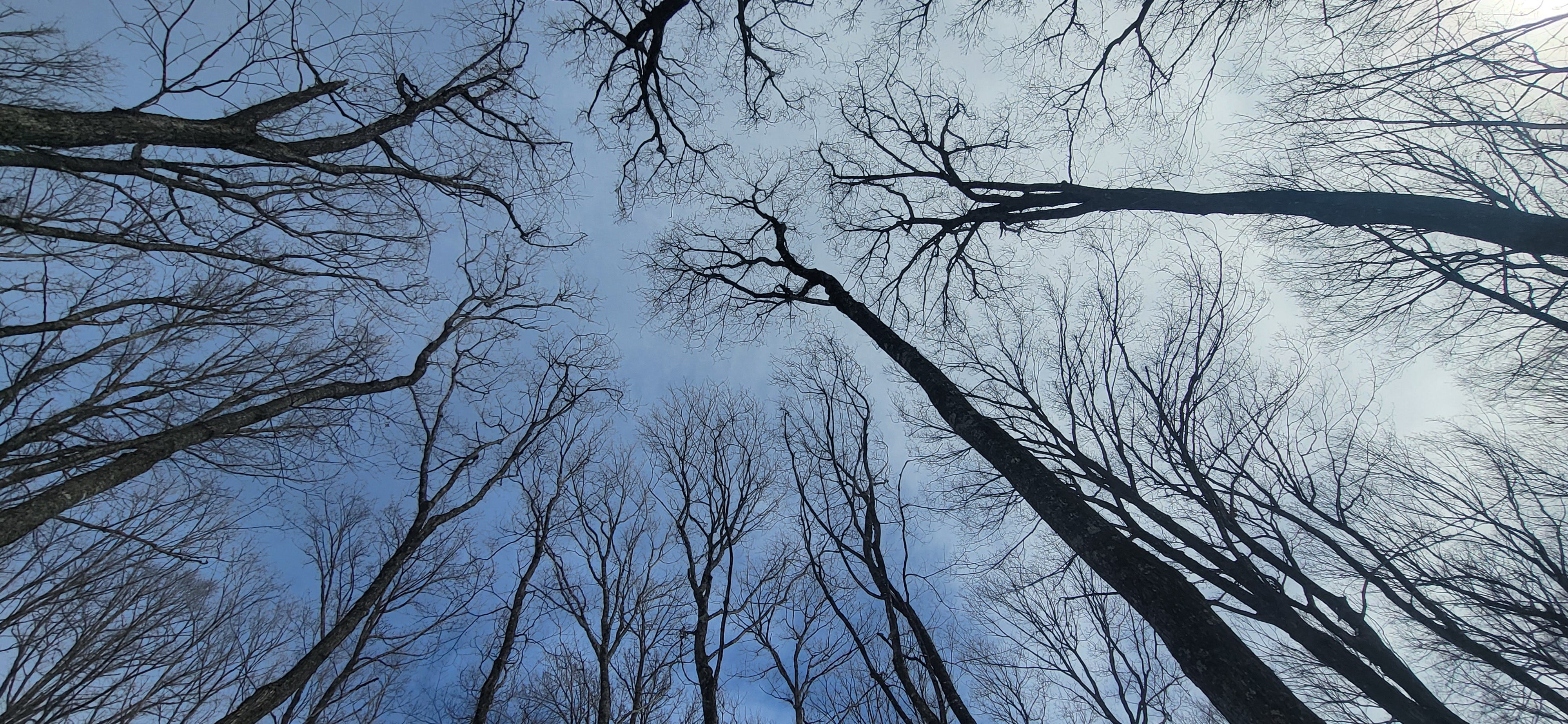
Hardwood branches reaching into the sky on a bluebird winter day.
This is a time for stillness. For contemplation and reflection. For gathering. For listening.
Historically it was a time to be inside. Around a fire. Telling stories. Listening. Learning. While so much of the world sleeps in hibernation, humans meditate on these messages, experiencing their own internal growth over the season.
When the snow falls heavily and winds cause whiteouts, these are snow days. Sometimes technology means we work remotely at home. But sometimes we might have the luxury to stay home and read a book or watch a movie—seemingly solitary pursuits. But maybe we are doing what humans have always done on days like this: slipping into another world, transported by the stories of others. The snowscape is a conduit for this transportation, absorbing the sounds of our reality and shuttling us to a different time and place.
The snow is magic. Both in its ability to provide us time for stories and to create a scene that activates our senses where we see magic in our everyday landscape. This is the power of a snowscape.
Act 2
Sometimes you wander through snowscape and sounds emerge from the silence.
The rustle of the wind through the conifer branches, lifting snowflakes into the air and swirling them around you. On a snowy day, these already-fallen snowflakes once again fly through the air, thickening the snow globe effect. On a post-snow day where the sun’s rays reach out from beyond the clouds and the snowflakes glisten as they dance in the air, sparkling and shimmering.
Or you trod along the packed snow path, through the silence of the woods to arrive at the gentle gurgling of a river, not fully frozen, cold winter flowing and bubbling over the smooth cobbles lining the shallow parts of the riverbed.
Or the low, deep groaning and rumbling that you hear as you walk across a frozen lake, the sounds created as the immense weight of frozen ice sheets shift, compact, and crack. You might be safe, but this sound of a snowscape, more than the others, is also a reminder of dangers.
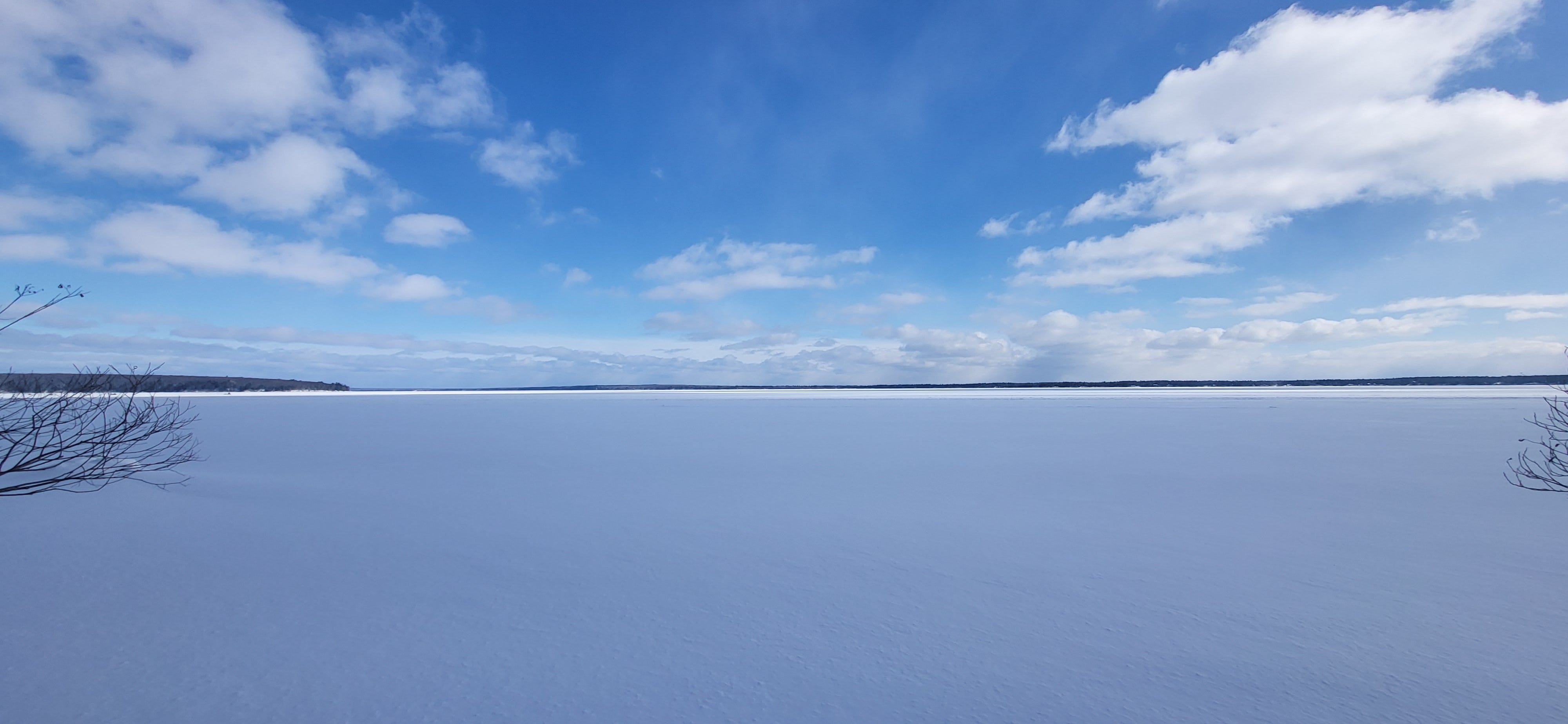
Looking across a snow covered expanse ice toward Madeline Island, Basswood Island, and the North Channel in the Apostle Islands.
A seemingly endless undulation of a thick sheet of white falling over topographic features of the land–hummocks, ravines, bluffs, swales–and frozen waterways. Snow can hide openings in the ice. Openings where cold water is not yet frozen. Deep cracks and crevices, formed by the massive weight of ice compacting into ridges and arches. Snow can hide dangers that can kill an animal. Or a human.
Those of us who live near frozen lakes, particularly frozen big lakes, or frozen REALLY big lakes (like the Great Lakes) know just how real these dangers are. People dying on the lake is not a fable. It’s a reality that happens often enough to be a continual reminder.
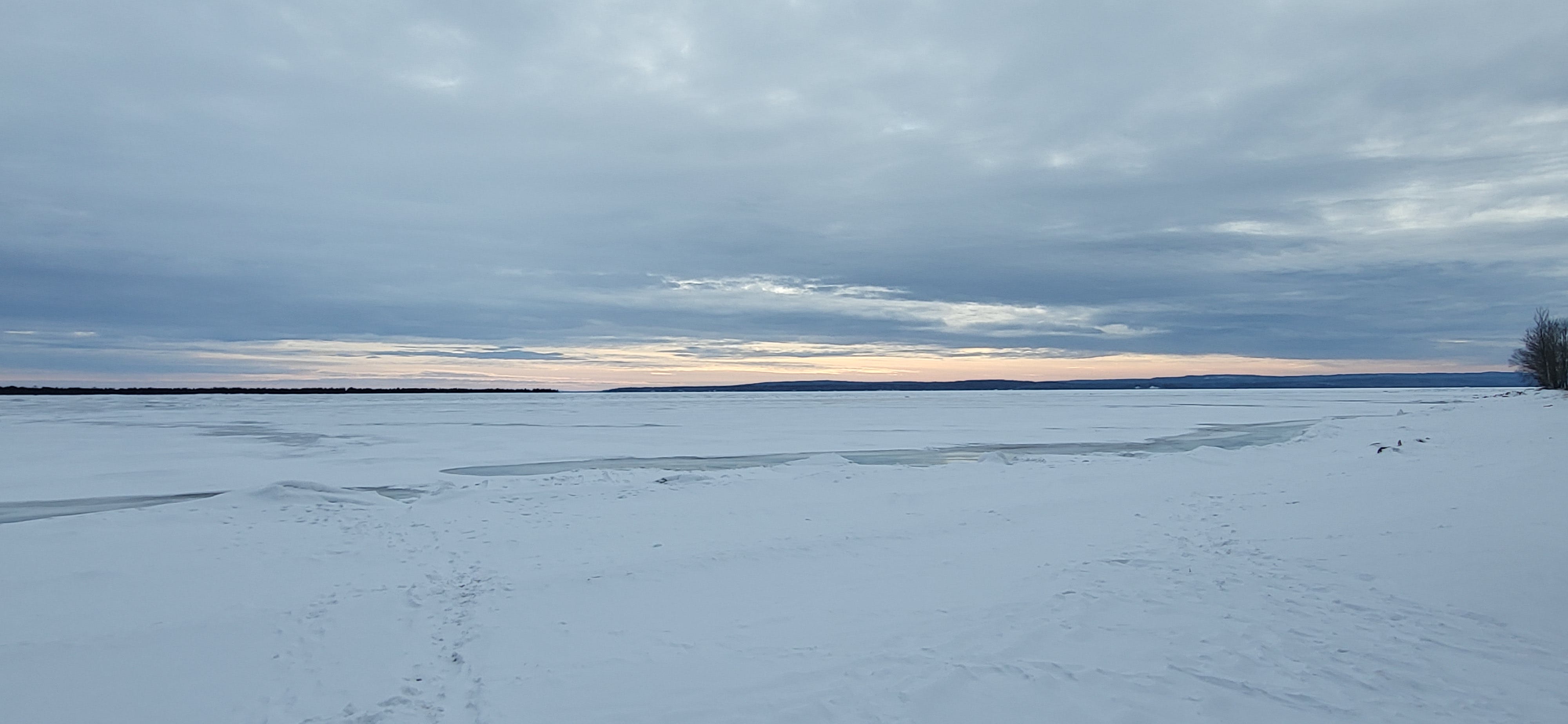
On Grant’s Point of Madeline Island looking at a snowscape covering unstable ice across the South Channel with Long Island and the Bayfield Peninsula in the distance.
The danger of the outdoors can remind us of the fragility of our humanity and our own life. But as a historian of the land and the people who have called it home and moved across it over the past few centuries, I remind myself that the immensity of nature must make the danger seem most urgent.
At least in our current century, systems created by humans–not nature—often create daily dangers that so many people must navigate. These dangers cause much more loss of life than frozen lakes.
Act 3
It’s been several years since there’s been a really good freeze of ice north of Bayfield, Wisconsin. There's usually decent ice in the shallow end of Chequamegon Bay, stretching from Ashland to Washburn. And for many decades (centuries?) the ice between Bayfield and Madeline Island froze regularly, allowing for a winter ice road spanning a couple of miles across Lake Superior.
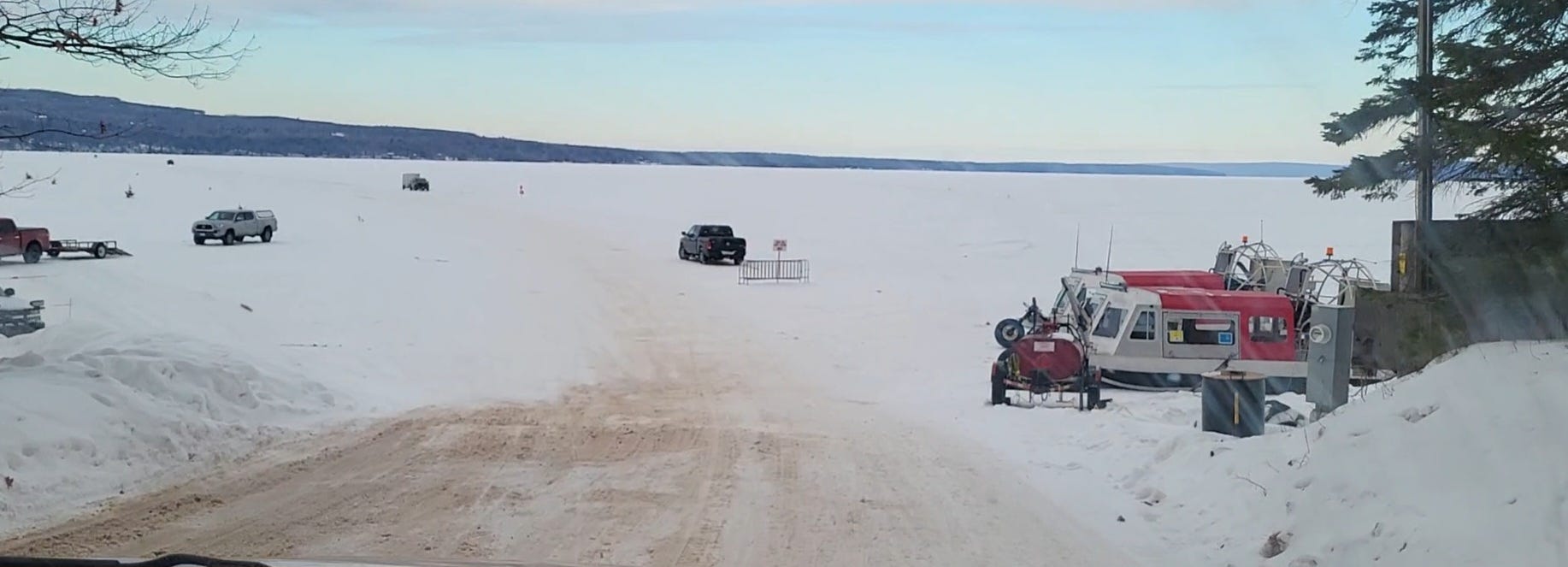
Entering the ice road from Madeline Island headed toward Bayfield.
The first year we moved to northwestern Wisconsin was 2017. It was a cold winter. There were frigid temperatures in December, January, February, and March. The lake froze in late December, and the ice road was open by mid-January. It lasted until early April, when ice breakers were finally called in to break up the thick coating of ice that still stretched between Madeline Island and the mainland. Needed utilities–like propane and gas–are banned from crossing on the ice road. So while the road is a convenience, it is also a challenge if it lasts too long.
The ice road has been inconsistent since the winter of 2017-8. Some years it has only been open officially for a day before massive pressure cracks made the Bayfield landing undrivable. Residents from the island would drive over and park before they reached the crack. Then, they’d walk over to Bayfield–boards spanned the cracks creating pathways. Other years there has been no ice road at all. A reminder of the reality of climate change. The impending collapse that our world seems to be careening towards at an accelerating rate. Now, more so than ever.
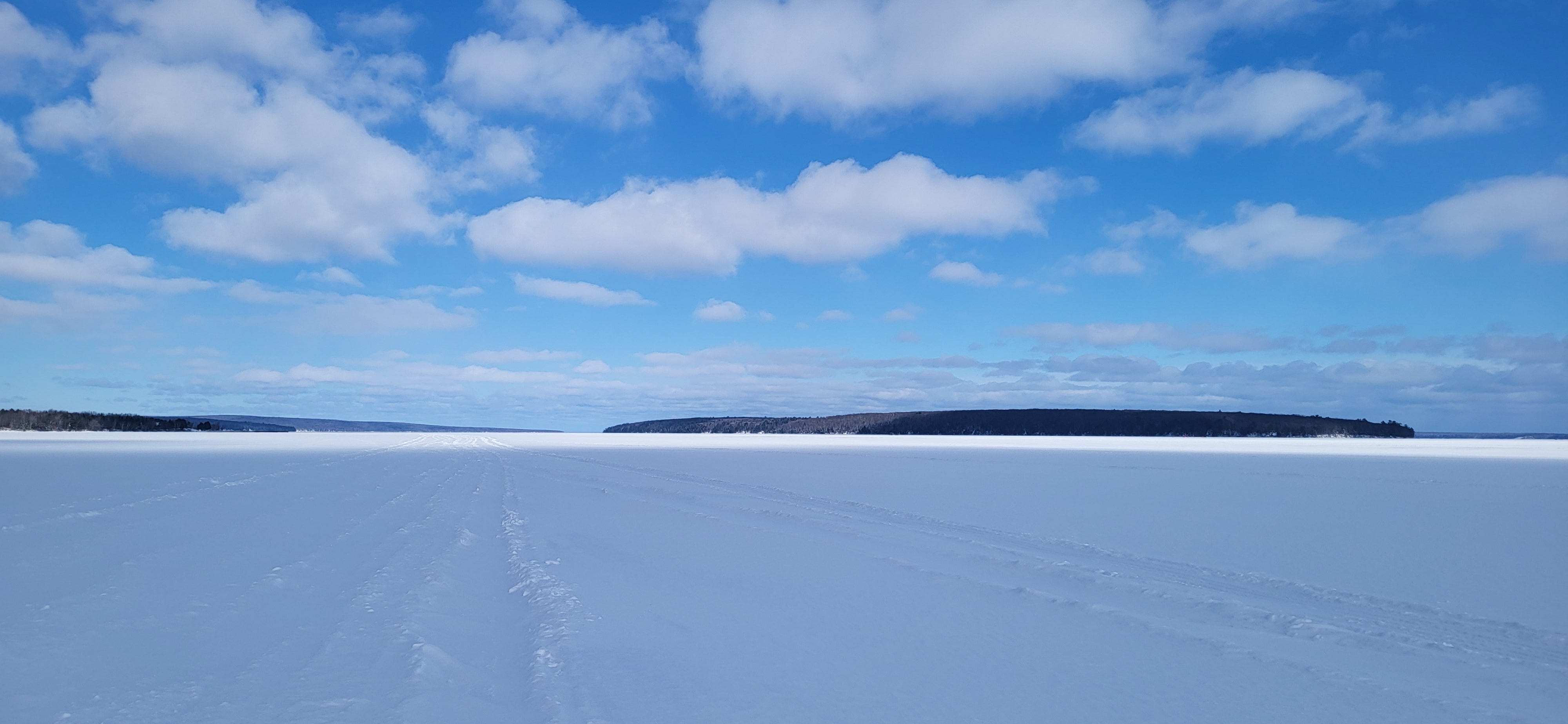
Looking across a snow covered expanse ice toward Basswood Island and Red Cliff in the Apostle Islands.
A few weeks ago, I stood on the ice, and in the distance, over a mile away, I saw the plume of snow from a plow clearing the path between the island and the mainland. A couple of days later, the ice road officially opened. It was longer than the past few years, but still a relatively short season of less than two weeks.
Act 4
I grew up near Lake Superior. The lake was a looming presence, overlooking the twin cities of Port Arthur and Fort William, amalgamated at the base of the bay. Sometimes, I oriented myself by the lake when traveling throughout the city, yet I didn’t spend time close to it.
I did walk on frozen inland lakes as a kid. And even though it’s something I’ve done in the winter for decades, whenever I walk out onto a frozen lake, something inside me is awakened. Or renewed. Refreshed. It intensifies when I’m on Lake Superior. The largest Great Lakes and the world's largest (by surface area) freshwater lake.
I might know it’s safe to stand on a frozen Lake Superior because I’m standing on ice that’s solid enough to hold machines powered by engines much larger than me, but there’s always an underlying sense of both awe and fear. They say no ice is safe ice. And while, logically, if ice can hold a parade of snowmobilers, it can hold me, my senses always seem heightened on the ice.
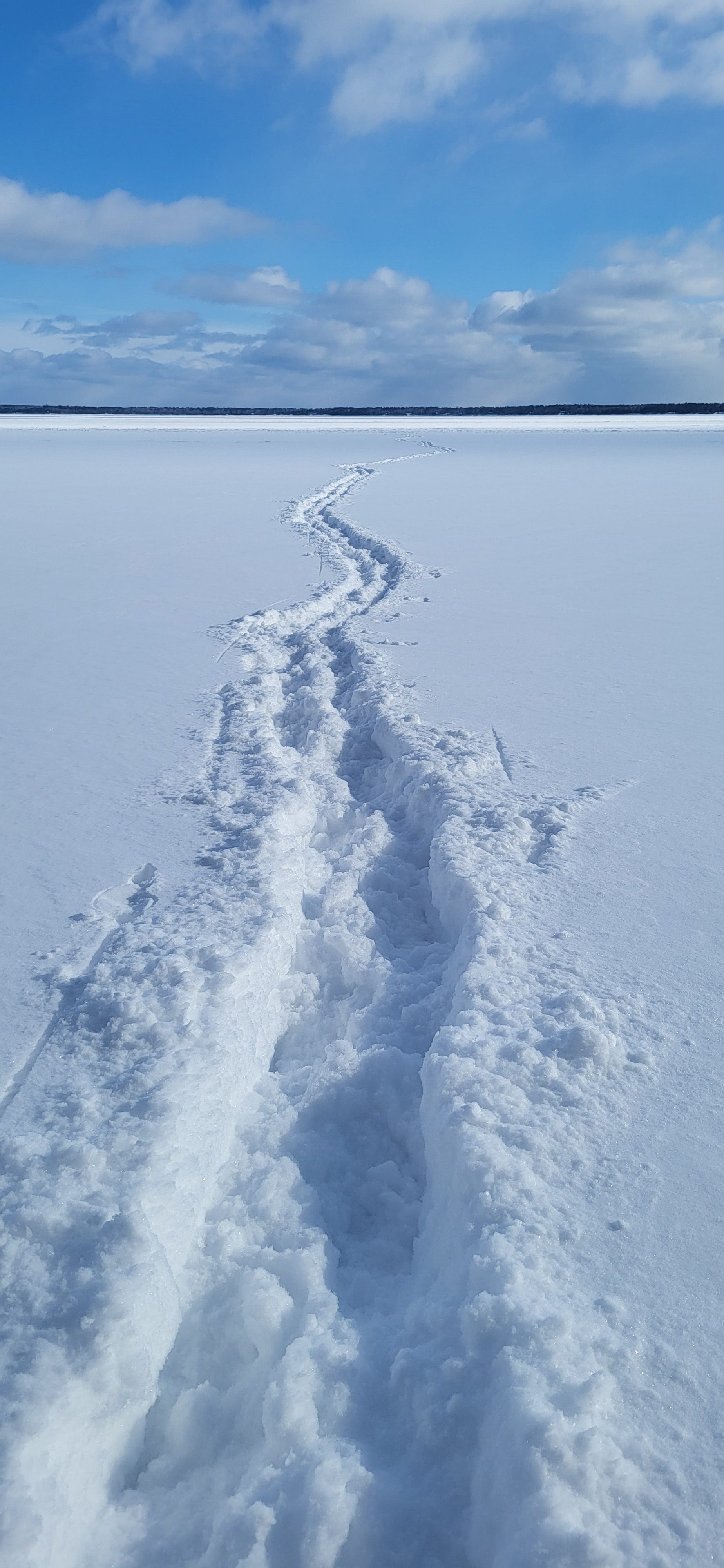
Looking back at my footprints in fresh snow over the ice with Madeline Island in the distance.
My ears listen for rumbles or cracks. My feet feel for any give, sinkage, or wetness. It's a disconcerting feeling when you’re on thick ice with a deep layer of snow that insulates and creates slush that you might sink into and even feel water, yet still be safe.
My eyes strain on a sunny day–weakened by the glorious blaze of the endless expanse of white–yet searching for potential warnings while taking in the sheer beauty of it all. The immensity. Knowing that a foot or so of frozen water stands between you and over a hundred feet of freezing cold liquid water. Suspended above it all.
This past February, the ice felt firm. A thick layer coated by several inches of light, dry snow. No slush. Instead it was like walking through an extra fine, fluffier and lighter than normal sand above what feels like solid ground. There is a cognitive and sentient dissonance of walking on the ice that always adds to my sense of wonder. To my feet, it feels solid. But in my mind, I know I am floating above the water. Walking on top of it. Accomplishing what would be a miracle in any other season.
That is the gift of snowscapes. To balance you between fear and awe. To connect communities. To suspend you above a liquid. To shuttle you between worlds. To make a miracle common for a fleeting period of time. The experience refreshes you to go back to reality. Something that's much needed these days.
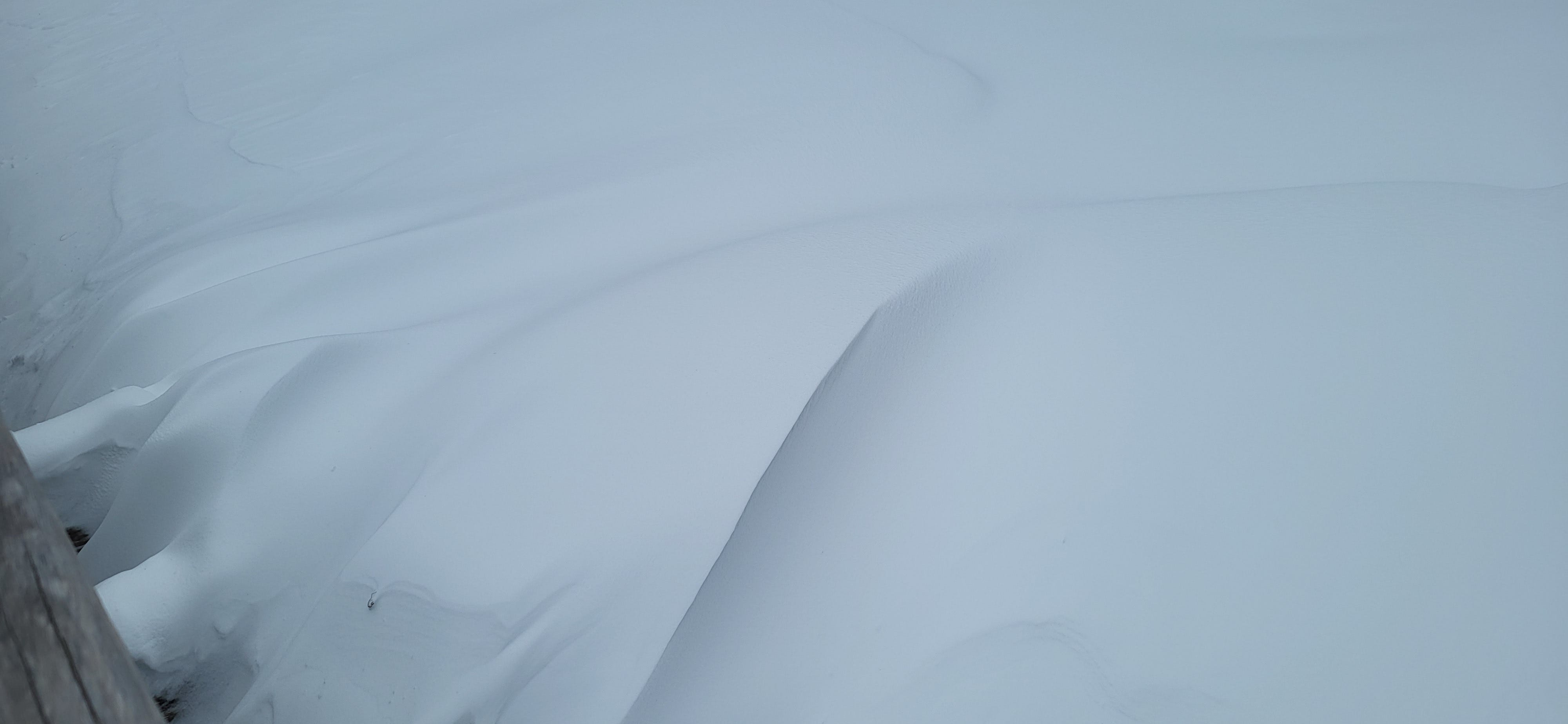
A close-up of a snowscape on a frozen river.
Two days felt like spring, but snow arrived last night. Wet and heavy. Like most late-in-the-year-snowfalls. Today, is a snow day.
That’s the reality of March or April. The return of snow is an ongoing possibility: laying a thick weighted blanket over the land. And while it’s more uncommon, snow can even arrive in May or later. It may not last long. In fact, it can vanish just as quickly as it can appear. Enriching the landscape with water in its wake.
Snowscapes. They sustain my hope months before the new growth of spring finally emerges in the Northwoods.