
It was October, my last year of grad school, and Eugene and I had driven up to the eastern UP for a few days — half research trip, half pretending we weren’t stressed about everything waiting for us back in Ann Arbor. Neither of us had been to Tahquamenon before. We’d heard about it the way you hear about most famous waterfalls: big, brown, worth seeing, check it off.
We got there mid-morning and found a line of cars waiting to get into the Upper Falls entrance. Not a small line. The kind where you sit there doing the math — how long until we’re actually parked, how long until we’re actually looking at water instead of bumpers.
We didn’t do the math for very long. We just kept driving.
Skipping the Line and Letting the Day Guide Us
I don’t remember deciding to skip it so much as deciding to keep driving and see what else was out there. That’s a very different feeling than “let’s find the second-best option.” It was more: well, we’re already up here, what else is around?
That’s how we ended up on the road to Crisp Point.
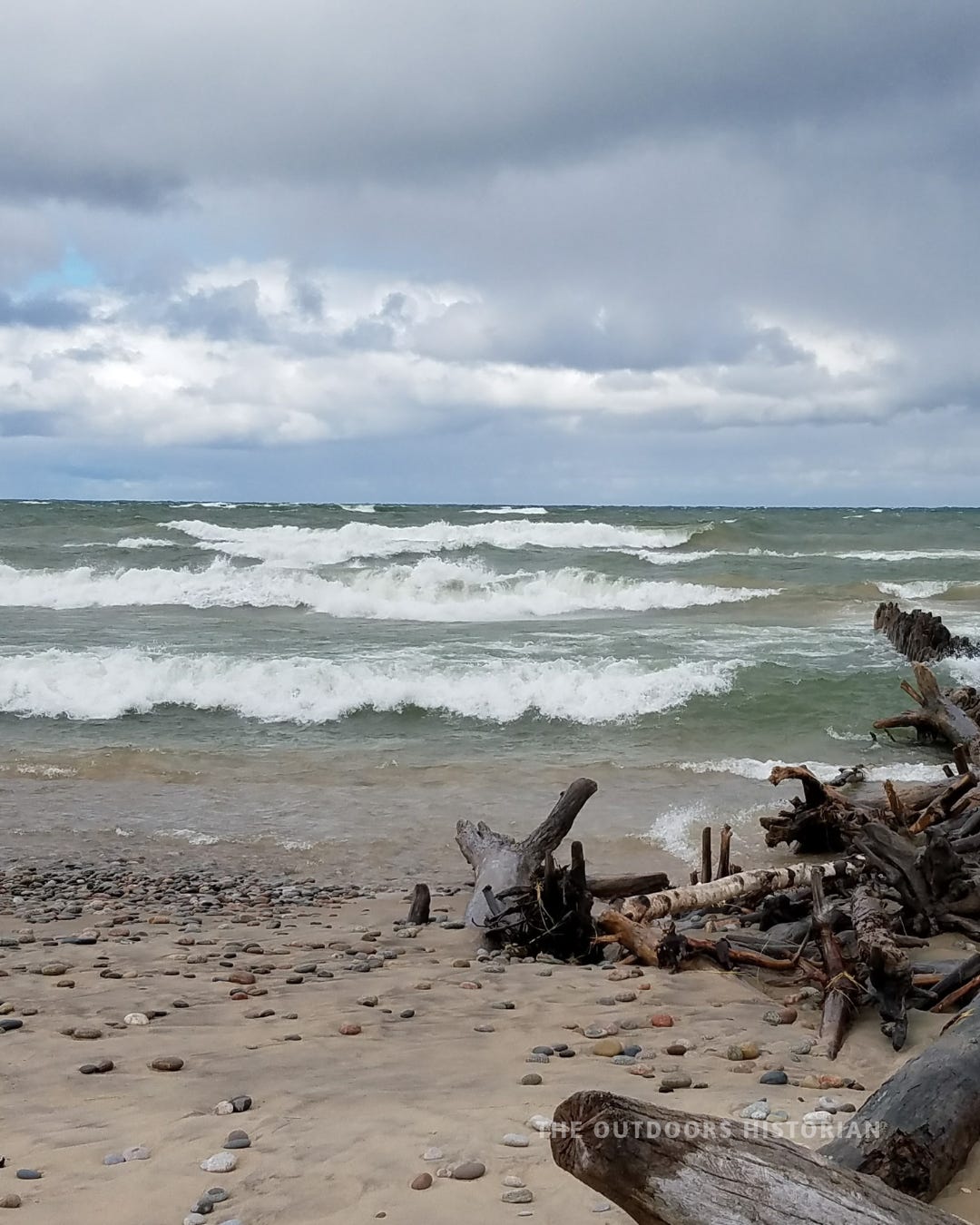
I had heard of it, but hadn’t made plans to visit. It’s not a hard place to find on a map, but there’s a bit of lore about the length of the drive on rougher, gravel roads. Eugene loves an adventure and when I expressed caution, it just encouraged him. But between my cell phone and the signs, navigation was fairly easy, and we took it slow on the road, but didn’t encounter any major obstacles. It was cold for October, low 40s, the kind of day where you keep your hands in your pockets between photos. It was a moody, fall day with the occasional rain shower and white caps on the lake.
When we finally got there, the lighthouse was standing alone against Lake Superior, the wind was doing what it does out on that shoreline in fall. There were about a half a dozen vehicles in the lot — a far cry from the crowds at Tahquamenon.
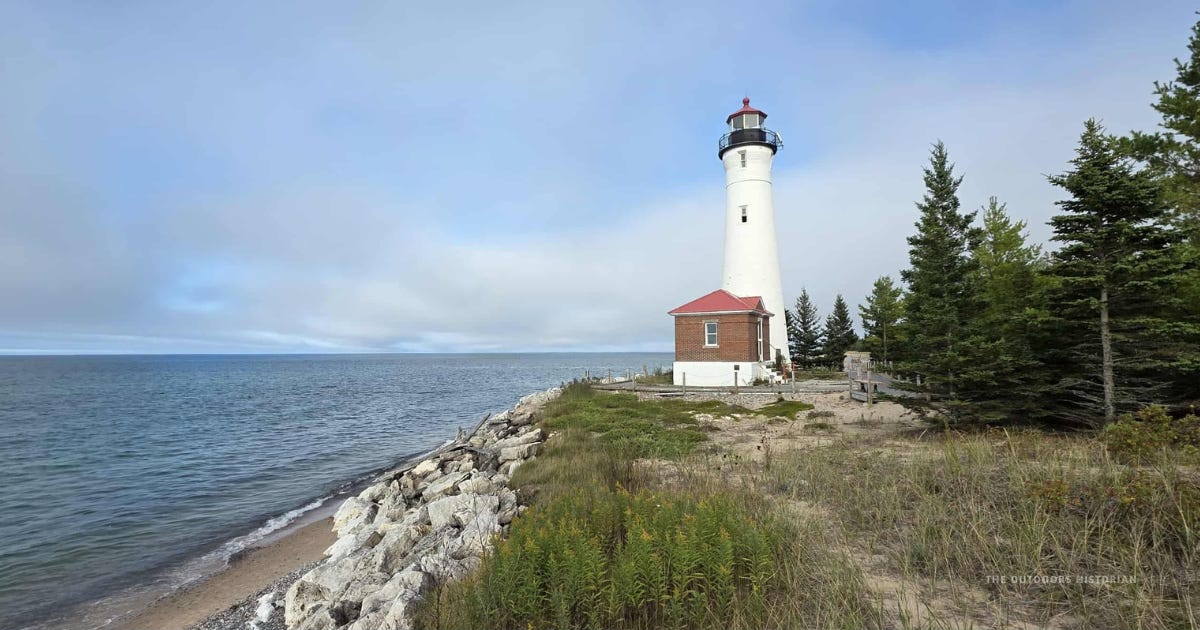
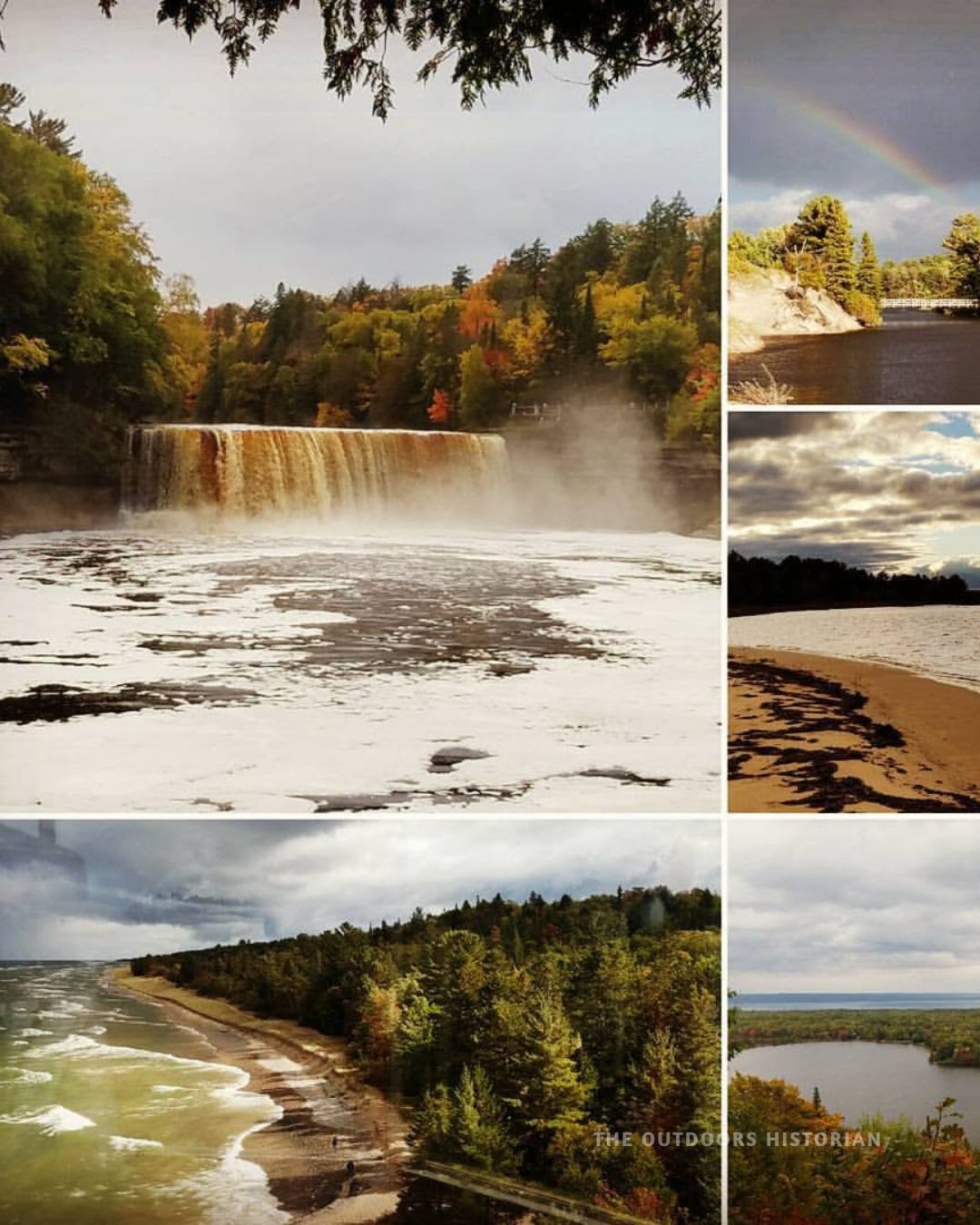
We climbed the tower for amazing views, and we spent time looking for rocks. On our drive back, we further detoured to the Mouth of the Two Hearted River. The campground was full, but the beach was almost empty. There were a few people picking rocks right at the mouth. We took a short hike through the burnt forest over the low dunes.
Then we drove back and caught Tahquamenon’s Lower Falls and Upper Falls in the late afternoon, once the crowds had thinned. It was a completely different experience than the one we’d turned away from that morning. Same waterfalls. Same day. Just a different hour.
Lessons from Crisp Point
I’ve thought about that day a lot since. Not because Crisp Point is some secret I’m protecting — it’s on the map, anyone can find it, and it’s become increasingly popular — but because of how we found it. We didn’t get there by knowing something other people didn’t. We got there because the version of the day we’d planned got congested, and instead of waiting it out, we let the day reroute us.
Here’s what I keep coming back to about that day: we didn’t find something better because we knew where to look. We found it because we stopped trying to force the day to go the way we’d pictured it.
That distinction matters more than it sounds like it should.
Most fall color advice is really just checklist advice wearing autumn colors. Find the peak week. Find the best overlook. Get there early, beat the crowds, get the photo. It treats a season the way it treats a landmark — something to arrive at, capture, and move on from. And when everyone is working from the same three “best of” lists, you get exactly what we saw outside Tahquamenon that morning: a line of cars, all of us converging on the same half-mile of road at the same hour, because we’d all been told this was the spot.
It’s not that the advice is wrong. Tahquamenon is worth seeing. Peak color is real. But treating a place as a checklist item is what creates the crowd in the first place — and the crowd is what pushes people to either wait it out, miserably, or give up and drive right past something like Crisp Point without a second look.
We didn’t skip the falls because we’re above waterfall tourism. We skipped the line. And skipping the line meant we had room to notice something else — a lighthouse we hadn’t planned for, a stretch of shoreline with almost no one on it, an afternoon that unfolded instead of one we’d scripted.
Then we went back. Same falls, several hours later. Same water, same rock, same drop — but almost no one else standing next to us. It wasn’t a different waterfall. It was a different way of being at it.
That’s the part I want to pull apart: it’s not really about avoiding people. It’s about not treating a season, or a place, like something to consume on a schedule set by everyone else’s itinerary. The unplanned hours were the ones where we were actually looking at what was around us, instead of looking at the back of the car in front of us.
A Fall Day, Almost a Decade Later
I don’t think that day in the UP was a fluke, either. A version of the same thing happened again last fall, on Madeline Island.
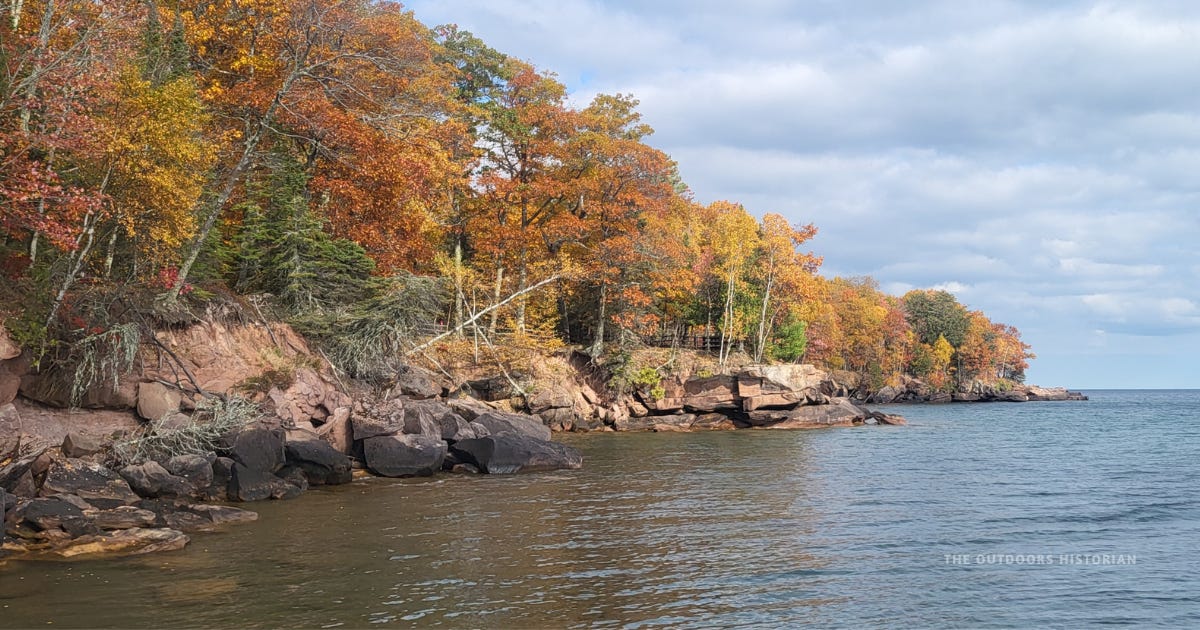
It was the weekend after Bayfield’s Apple Fest — the peak of the fall tourist season. We chose the weekend on purpose, not by accident this time. The colors were at a blazing peak, and it was Fall Fest on Madeline Island. But tourism was also winding down.
We enjoyed the activities of Fall Fest and had a short hike along the shore in Big Bay State Park. The temperatures were in the sixties and it was a beautiful, mild fall day with a completely reasonable number of people around. Not empty. Just unhurried.
It wasn’t luck this time so much as knowing the rhythm of the place. Crowds winding down, leaves still holding, mild weather, a festival we actually wanted to be at. This time, instead of stumbling into the right conditions, we got to choose them.
Put next to the Crisp Point story, this one makes a slightly different point. That day in the UP, we found the better version by accident — the congestion forced a decision we hadn’t planned to make. We made the most of the moody day. On Madeline Island, we found it on purpose, because we’d learned enough about how the place actually works to choose our moment.
Different mechanisms. Same underlying idea: the postcard version of fall color — the one everyone’s chasing at the same overlook during the same peak weekend — isn’t actually where the good version of the experience lives. It’s usually just off to the side of it, either because you got rerouted there or because you learned enough to route yourself.
Find Your Fall in the Northwoods
So what do you actually do with this, if you’re planning a Lake Superior fall trip?
Not “avoid Tahquamenon” or “skip the famous places.” That’s not the lesson, and it wouldn’t be honest advice anyway — Tahquamenon is worth seeing, Crisp Point is increasingly busy, and these stops and the overlooks are popular for good reason. The lesson is smaller and a little less tidy than that.
Build in room for the day to reroute itself. If you hit a line of cars, a full lot, a trail with crowds — that’s not a sign you’ve failed to plan correctly. It’s a sign you have a decision to make. Wait it out, or see what’s a few more miles down the road. Neither one is wrong. But the second one is the one that’s easy to forget you’re allowed to choose.
And when you can, learn a little bit about how a place actually moves before you go. Not a secret spot, not an insider trick — just a basic sense of where the attention in a place tends to concentrate, and where it doesn’t. Festivals pull toward their center. Hikes in state parks are often busy, since these parks tend to have particularly scenic features and well-built infrastructure. There’s only so many vehicle-accessible overlooks, and they’re understandably popular.
But there’s also plenty of other areas to explore. Consider:
Trails in national forests, state forests, county forests.
Trails on land owned by nature associations or land trusts.
Trails on lands managed as state natural areas or Crown lands.
The range of trails available means there’s almost always a nearby version of the same season, the same color, that isn’t absorbing all that attention at the same hour.
If you are visiting a state park or national lakeshore, consider choosing a less popular trail. Maybe you choose a trail that goes along part of a river, but that does not include the main waterfall overlooks.
If you’re out for a drive and an overlook is crowded, don’t feel obligated to stay — a shorter stop, or skipping it entirely, isn’t a loss. Lake Superior’s back roads run through beautiful forests in every direction; the overlook was never the only good part of the drive.
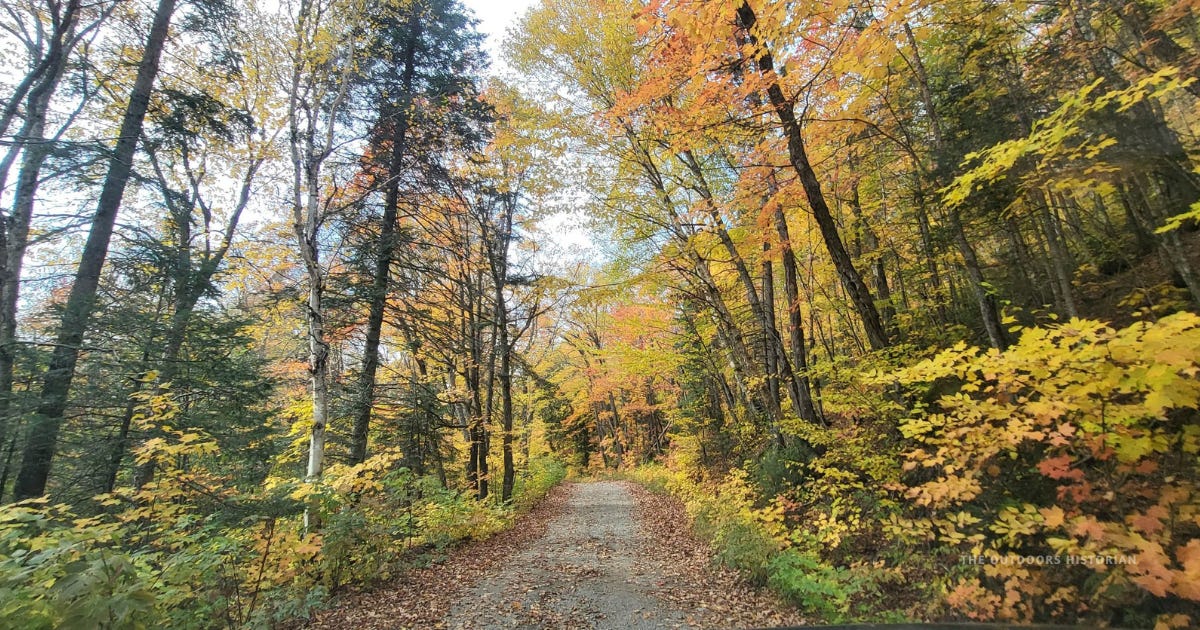
None of this is really about crowds, in the end. It’s about what you’re actually there for. If the goal is the photo everyone else is getting, then yes, you need to be exactly where everyone else is, exactly when they are. But if the goal is to actually notice the place — the way the light was moving that afternoon at Crisp Point, the particular quiet of Big Bay — then the schedule matters less than your willingness to let the day go somewhere you didn’t plan.
The postcard version of fall is always going to be crowded. It’s popular because it’s real. But it’s rarely the only version, and it’s almost never the most interesting one.
You don’t need to find a hidden road to see fall differently.
You just need to be willing to take the one you didn’t plan on.
Planning a trip to Bayfield this Fall? Check out my free 3-day itinerary!
Do you have a favorite unexpected fall adventure? I’d love to hear about it in the comments!