
Somewhere between Marathon and White River, the bars on your phone disappear. The Lake Superior shoreline is now far from view, hidden behind the vast spruce forests of Pukaskwa National Park. The next gas station is almost an hour away, and a cooler slides across the back of the truck every time you round a curve.
Trips around Lake Superior—which is big enough to create its own weather systems—have a way of rewarding preparation and exposing disorganization.
Around Big Lake, your vehicle becomes more than transportation. It’s your base camp, pantry, gear closet, and sometimes even your office for the day.
Over the years, through a lot of experimentation, Eugene and I have developed a simple system.
At first, I thought it was about staying organized.
But recently, I realize it’s really about something else.
I’ve learned that paying attention begins long before you arrive at the trailhead. Sometimes it begins in your driveway, while you’re deciding what deserves a place in the truck.
This applies whether you’re heading out on a two-week Circle Tour, spending a long-weekend in the Keweenaw Peninsula, or heading over to spend a week on Drummond Island in the St. Mary’s River.
A well-packed vehicle buys you cognitive freedom. When you aren’t worrying about where the flashlight is or whether you’re running on worn tires, your attention is free to drift toward the landscape outside your window.
And that’s the whole point—whether you are taking two weeks to do the full Circle Tour or taking a long weekend trip to the Minnesota North Shore.
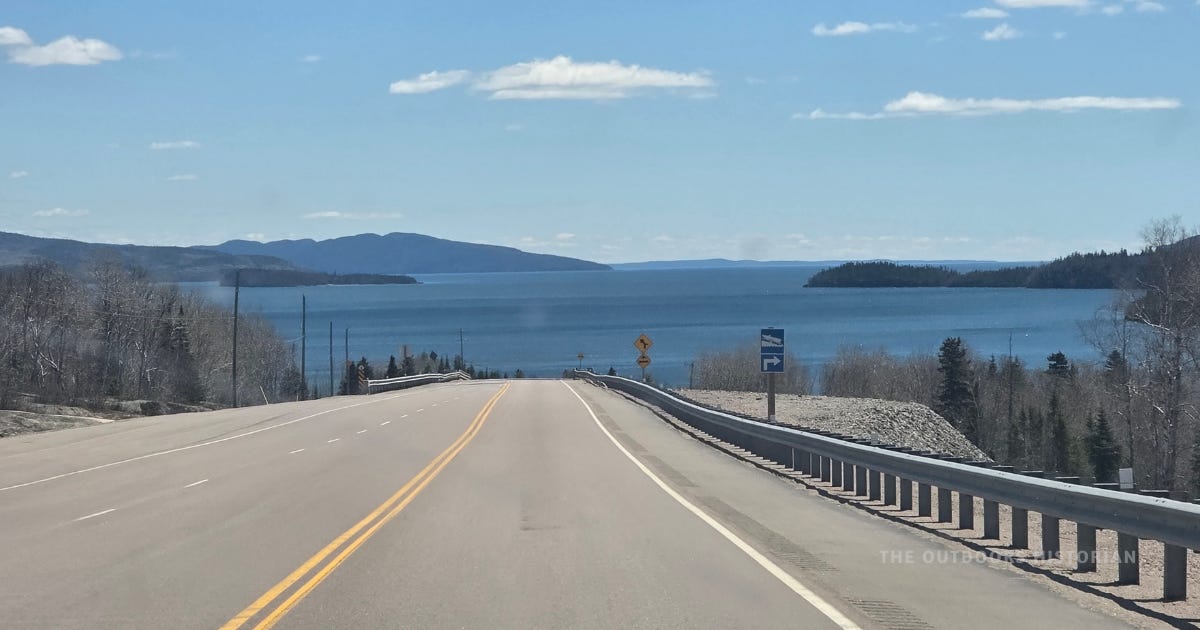
II. The Mechanical Pre-Flight Check
When you’re exploring around Lake Superior, especially if you’re planning to venture down forest roads or remote shorelines, your vehicle becomes more than transportation—it’s your lifeline. While unexpected breakdowns can happen to anyone, a little preventative maintenance before you leave home can save a lot of stress later.
Before every major road trip, I take a few minutes to check the basics.
Fluid and Filter Check
Make sure you're up to date on routine maintenance, especially your oil change. If you'll be spending time on dusty forest roads, it's also worth checking your engine air filter. A clean filter helps your engine breathe easier after a few days of chasing gravel roads and sandy two-tracks.
Tires
Check your tire pressure—including the spare—and take a look at your tread. If you’ve been telling yourself you’ll replace your tires “after one more trip,” I’d encourage you to do it beforehand instead.
Ask me how I know.
One year, while I was working at Northland College, we completed the Lake Superior Circle Tour in a Ford Transit passenger van with tires that had definitely seen better days.
Every rutted forest road—especially the drive into Estivant Pines—had us gripping the steering wheel just a little tighter than we’d have liked.
We made it home safely.
I don’t recommend testing your luck that way.
Know Where Your Tools Are
Finally, make sure you know where your jack and lug wrench are stored—and that you can actually reach them. The shoulder of Highway 17 is not the place to discover your spare tire tools are buried beneath every tote, cooler, and sleeping bag you packed.
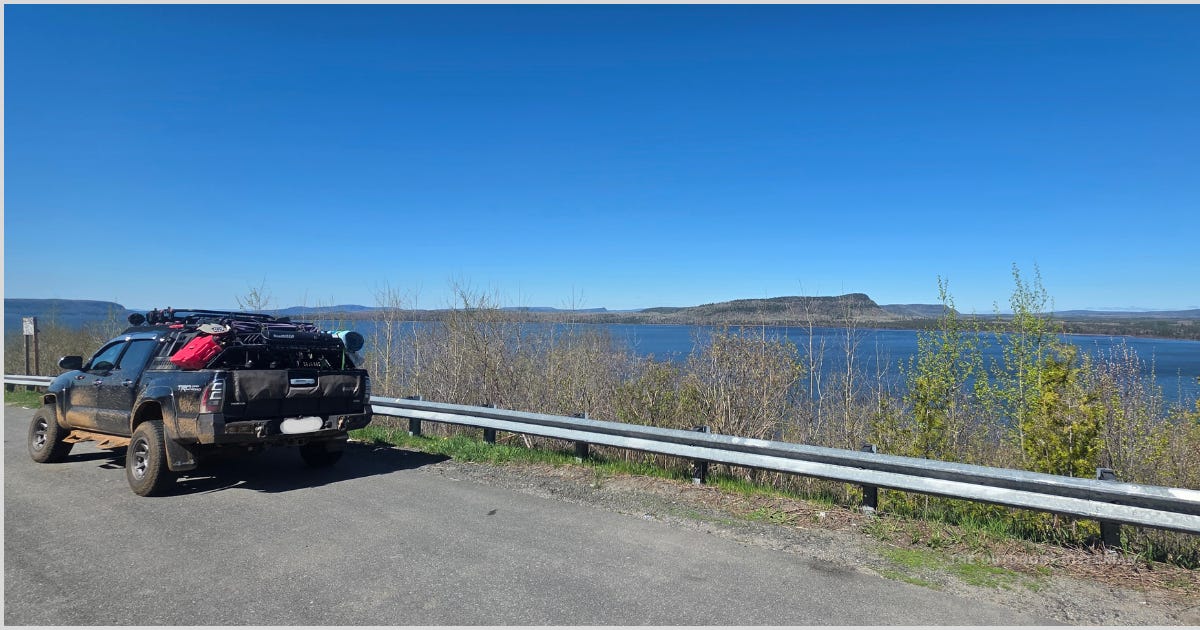
Hint: One of our favorite tools to store in the truck is a portable air compressor. If you end up with a leak somewhere, you can easily add more air so you can get to somewhere to make a more permanent fix.
III. The Cab & Cargo Architecture
The “Cab Essentials” Zone (Arm’s Reach)
Here’s what we keep up front for immediate utility while driving so we never have to fish through bags on the move:
Hard-copy regional maps: Essential for back-up when GPS inevitably cuts out on the interior roads.
The center console setup: Charging cables for our cell phones, a physical notebook for field logs, and easy access to sunglasses, headnets, and headlamps.
Door pocket snacks: It’s a pain to need a quick energy boost and have nothing accessible. Tucking a few granola bars and beef jerky packs into the door pockets keeps highway hangers at bay.
Glove compartment multi-tool and sewing kit: Because you never know when you’ll need to tighten a screw, cut a line, or do some mending (of gear or clothes) on the fly.
The Bed/Cargo Area
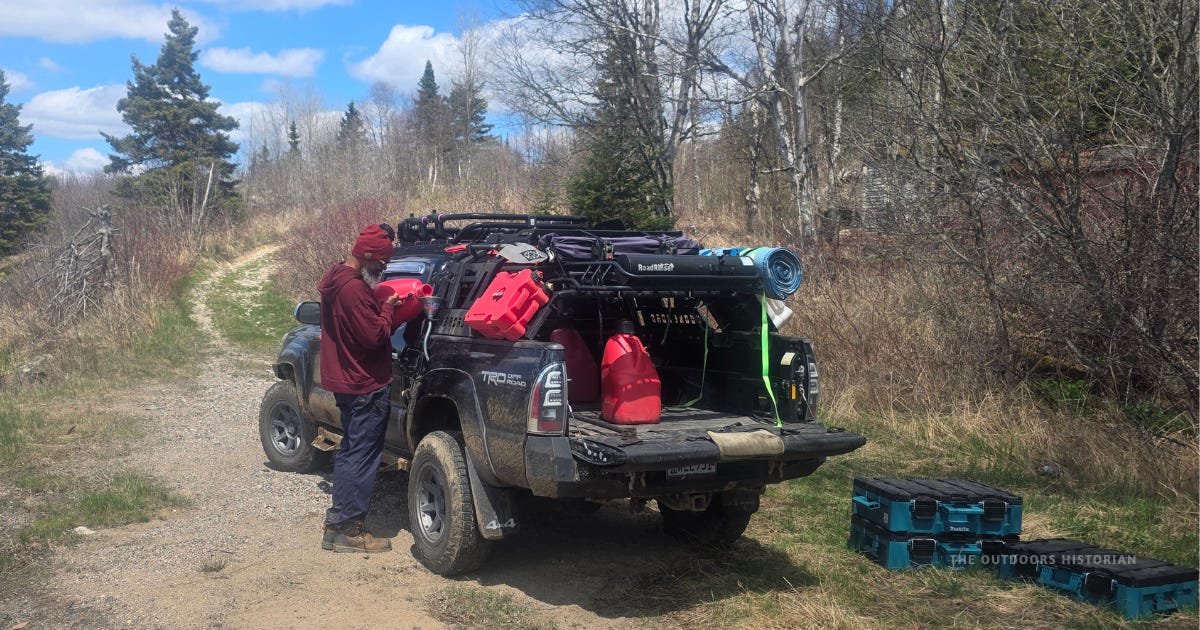
We’ve tried a lot of different organizing systems over the years, shifting away from loose bags and a mismatch of containers toward a structured, modular system.
The Heavy-Duty Tote System: We group our gear into distinct, weather-proof plastic bins labeled for specific jobs: a Kitchen bin, a Pantry & Snack bin, an Emergency MedKit, and a Camp Site Set-Up bin.
The Center-of-Gravity Rule: Pack the heaviest storage totes lowest and furthest forward against the truck cab. This keeps the vehicle’s handling tight and stable on winding, unpaved shoreline curves.
The Rattle Defeat: Use high-quality tie-down straps to secure everything. If a bin can slide, the washboard gravel will turn it into a missile or a constant, distracting psychological torture of plastic noises.
IV. From Experimentation to Efficiency
A well-packed vehicle doesn’t just keep you safe; it buys you cognitive freedom. When you aren’t fighting a cluttered cab or worrying about a mechanical glitch, your brain is free to look out the window and actually read the landscape.
Finding a system that works for you takes trial and error. That’s normal. It’s how you learn. As you figure out what gear is truly essential for your specific style of travel, you’ll naturally find the most efficient way to lock it down.
Over to You
What's one thing you've learned to pack—not because it's essential for survival, but because it makes your travels more enjoyable or more attentive?
For me, it’s my field notebook.
I don’t fill it every day, but having it within arm’s reach reminds me to slow down and write down questions before they disappear.
I also bring at least two books about the area we’re visiting—usually one history book and one field guide.
And if you’re looking for inspiration for your next epic road trip, check out my free Lake Superior Circle Tour Planner.
Or, check out my free 3-day Bayfield Itinerary (perfect if you’re staying downtown or at a rustic campground in the Chequamegon National Forest).