
Ozhaawashkodewekwe (also known as Ozhaguscodaywayquay and Susan Johnston) was born into an esteemed Anishinaabe family in the early 1770s. She spent her childhood in the western end of the Lake Superior watershed, moving between the Chequamegon Bay and hunting grounds northwest of the lake.
Her family included influential Anishinaabe ogimaag (civil leaders), like her father (Waubojiig) and her grandfather (Mamaangizide, also known as Ma-mongazida and Ma-mong-e-se-da). She inherited the Caribou doodem (clan) from her grandfather and father. Anishinaabe societies are patrilineal, and fathers pass on their doodemag (clans) to their children. Each doodem is associated with a being—usually an animal or fish—like crane, catfish, loon, bear, marten, and moose. Specific doodemag were responsible for lands and waterways in the Great Lakes and assigned specific responsibilities. Historically, doodemag shaped marriage and alliance patterns, facilitated long-distance travel, and facilitated the negotiation of community resources. Caribou doodem responsibilities included providing food and provisions for their families and council fires, which are reflected in Waubojiig’s hunting abilities.
In 1820, Ozhaawashkodewekwe was living at Bawating, also known as Sault Ste. Marie, the eastern door of Lake Superior. The community was the eastern door of Lake Superior, connecting the most northern and largest Great Lake with Lake Huron and the rest of the lower Great Lakes. Ozhaawashkodewekwe raised her children with her husband, John Johnston, an Irish fur trader. She played a key role managing the family’s trading business and she also managed a large and prosperous sugar bush.
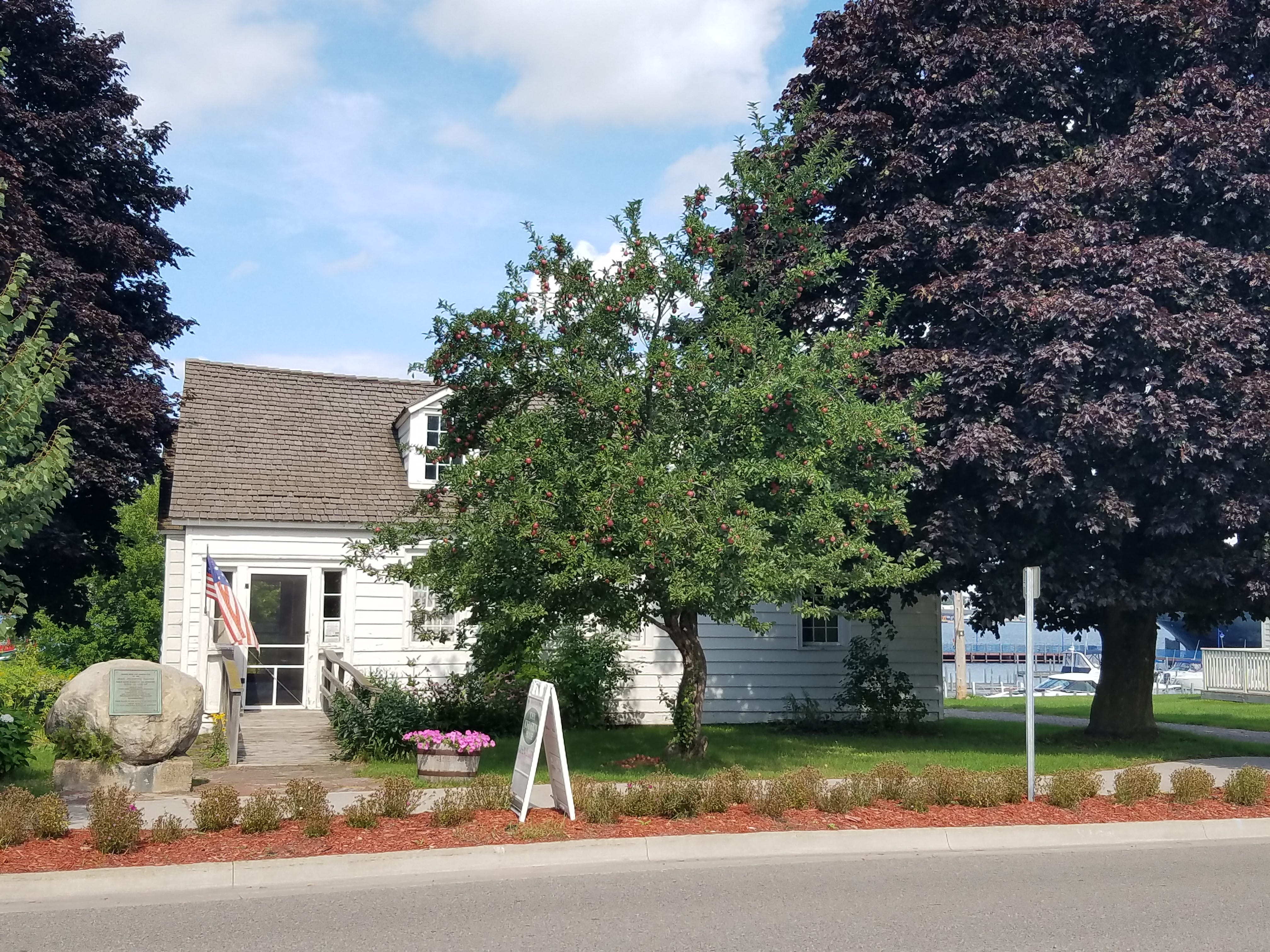
Ozhaawashkodewekwe and John Johnston’s house on Historic Water Street in Sault Ste. Marie, Michigan. In 1820, the house would have been located closer to the river. Photo taken by The Outdoors Historian in September, 2016.
In this post-War-of-1812 era, Lewis Cass, the governor of Michigan Territory, arranged an expedition exploring the northern Great Lakes in an attempt to extinguish Indigenous title to land at political hubs like Bawating, Prairie du Chien, and Green Bay. Cass believed Indigenous peoples were doomed to disappear when faced with the presumed cultural and social superiority of Anglo-America.
Cass arrived at Bawating on June 15, 1820. Over a decade after Lewis and Clark reached the Pacific Ocean, Lewis Cass was the first American official to reach the south shore of Lake Superior. John Johnston, who was seeking compensation for his losses from the War of 1812, was overseas in Britain. However, Ozhaawashkodewekwe was at home with several of their children.
Young Anishinaabe ogimaag responsible for dealing with outsiders arrived at Cass’s tent the day after his arrival. The ogimaag were adorned with British clothing and gifts to signal their preexisting political alliance. Cass made small gifts of tobacco and informed the ogimaag that the United States needed a tract of land to build a fort. The ogimaag ignored the gifts and voiced concerns about the fort’s proposed location on a burial ground. The meeting ended when an ogimaag named Sessaba left the tent and hoisted a British flag above his lodge. As part of the Crane doodem, Sessaba came from a lineage that traditionally governed the land and waterways at Bawating. However, he also had personal reasons for his unhappiness with Cass’s arrival: Americans had killed his brother during the War of 1812. Cass responded by storming over to the British flag and tore it down.
George Johnston, Ozhaawashkodewekwe’s son, informed his mother of the news. She told him to go and summon the elder ogimaag. George departed to gather Shingwauk, a rival of Sessaba and relative of Ozhaawashkodewekwe through her grandfather Mamaangizide, and other ogimaag for a council at the Johnston house. Ogimaag respected Ozhaawashkodewekwe’s connections to Waubojiig and her Caribou doodem kin. Eventually, the ogimaag decided to allow an American presence in the area and agreed to another meeting with Cass. Ozhaawashkodewekwe, George Johnston, Shingwauk, and ogimaag assembled at the Johnston house to meet with Cass. The Anishinaabeg agreed to sell the Americans the tract along the Saint Marys River that Cass initially requested. However, they also maintained hunting and fishing rights in the region in perpetuity.
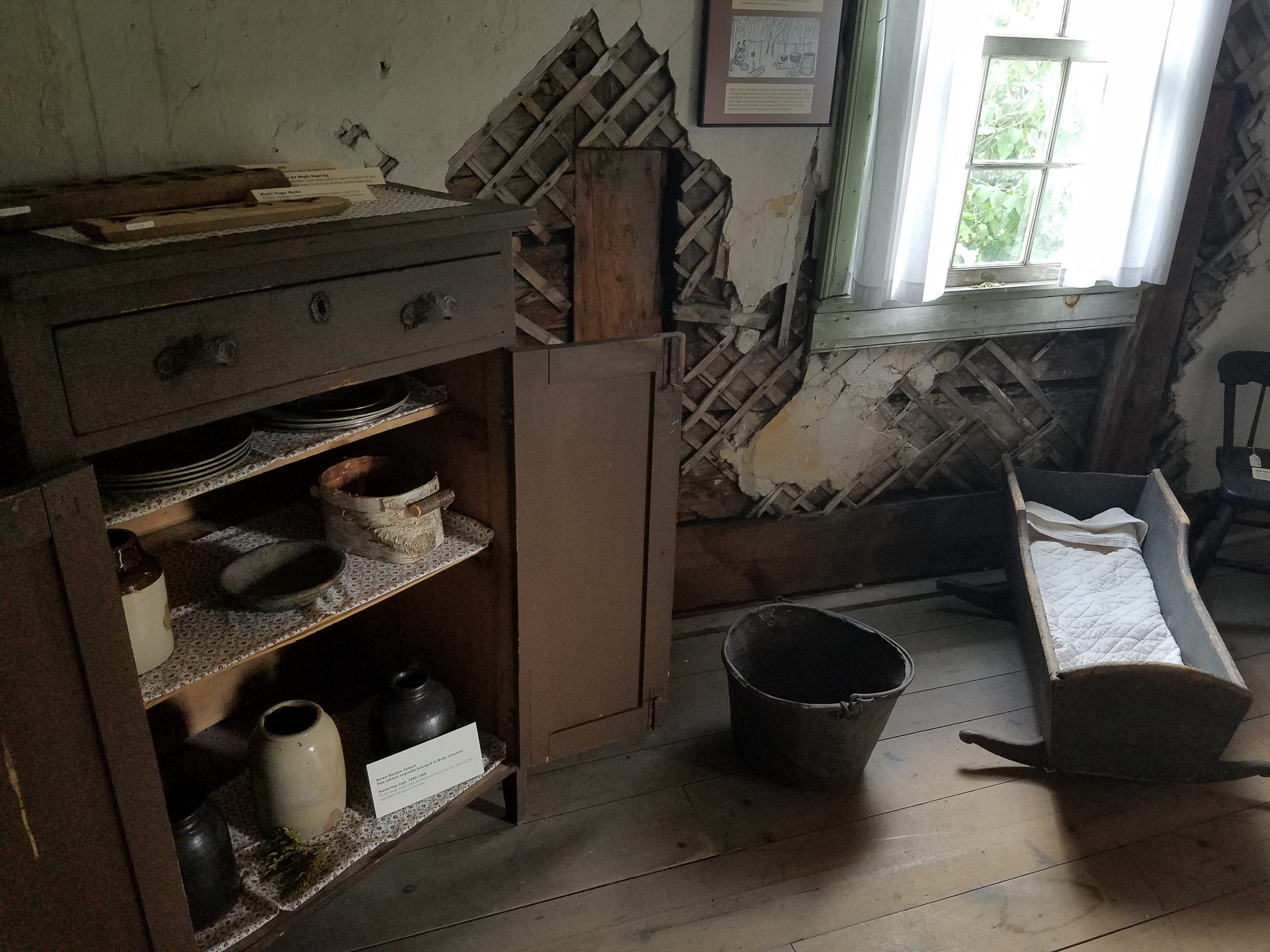
Inside Ozhaawashkodewekwe and John Johnston’s house on Historic Water Street in Sault Ste. Marie, Michigan. Photo taken by The Outdoors Historian in September, 2016.
At this moment in 1820, Ozhaawashkodewekwe wielded her political authority to smooth over the tense negotiations between the Anishinaabe and American officials, preventing the conflict from escalating. Ozhaawashkodewekwe and Sessaba had radically different views on how to deal with the arrival of American officials at Bawating. Sessaba was a young warrior. He was responsible for dealing with outsiders through conflict. He also had a personal vendetta against the Americans from the War of 1812.
Ozhaawashkodewekwe’s actions were consistent with Anishinaabe political customs. As an Anishinaabe woman from a paternal lineage of ogimaag, Ozhaawashkodewekwe learned from a young age the importance of incorporating newcomers into council fires. She modeled this practice throughout her life. As a member of the Caribou doodem, Ozhaawashkodewekwe was connected to important ogimaag who oversaw land along the Saint Marys River and adjacent waterways, even though members of the Crane doodem primarily held leadership roles at Bawating. By facilitating an agreement between the Anishinaabe at Bawating and Lewis Cass, Ozhaawashkodewekwe upheld her responsibility as an Anishinaabe woman to educate newcomers and incorporate them into Anishinaabe political systems. In other words, she continued using marriage to form alliances just as her ancestors had for generations.
While the Treaty of Sault Ste. Mare in 1820 only contained a small land cession, in the decades that followed, the entire shore of Lake Superior would be ceded to the United States or British Canada. Like the Treaty of Sault Ste Marie, these treaties included clauses that allowed Anishinaabe people to hunt, fish, and gather on ceded territory in perpetuity. In the decades following land cession treaties, the iron and copper mining industries and the logging industry reshaped the lands and waterways in the region. The effects of these environmental changes are still felt. And Anishinaabe people also continue to exercise their rights to hunt, fish, and gather in the present.
The Treaty of Sault Ste Marie on June 16, 1820, further intertwined the complicated histories of Anishinaabe and American peoples on the south shore of Lake Superior.
This piece is based on an excerpt from an article I wrote:
Emily Macgillivray, “From Sugar Bush to Treaty Councils: Ozhaawashkodewekwe’s Career in the Nineteenth Century Borderland Upper Great Lakes,” (Journal of Ethnohistory 71:4; October 2024, 471-96)
Important primary sources for this piece include:
George Johnston. 1887. “Reminiscences by George Johnston, of Sault Ste. Marie, 1815.” In Michigan Pioneer Historical Collection, vol. 12, 605–10. Lansing, MI: Robert Smith. Originals of G. Johnston’s “Reminiscences” are in George Johnston Papers, Bayliss Public Library, Sault Ste. Marie, MI, Box 1.
Thomas, McKenney. 1827. Sketches of a Tour to the Lakes, of the Character and Customs of the Chippewa Indians, and of Incidents Connected with the Treaty of Fond du Lac, 1827. Baltimore: Fielding, Lucas, Jun’r.
If you need help accessing any of these sources, please contact me!
This is a good article Emily. A better understanding of the treaties between the Americans and/or British Canadians and the indigenous people need to be shared. I think this is a great place for our collaboration to start with.