
Author’s Note: This story has been on my mind since I first learned about the Italian Hall Tragedy in the fall of 2017, but it feels particularly heavy this December. Following the closures of Northland and Finlandia Colleges, I have found myself thinking deeply about what it means for a community to “make do” and the human cost when systems that have shown plenty of warning signs of failure finally give out. This essay is a reflection on the 1913 strike in the Copper Country, and the tragedies that ensued including the Seeberville murders, the Painesdale murders, and the Italian Hall disaster. It is also a tribute to the the resilience of the Copper Country. Thank you for walking this path with me on such a somber anniversary.
The Architecture of Winter
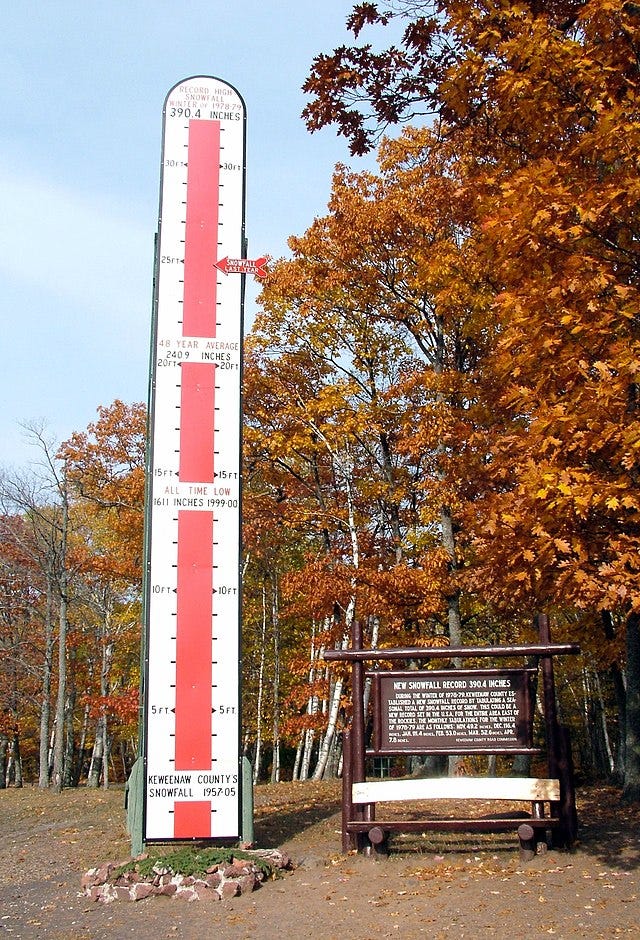
It is a cold mid-December Sunday in Calumet, Michigan. The high temperature hovered around 10°F and windchills dipped well below zero. Lake effect snow started Friday night, and fell in rhythmic waves over the thirty-six hours. In the Keweenaw, snow is not just weather. It is the architecture of winter. To the north, the giant snow gauge on US-41 illustrates just how much snow this region gets.

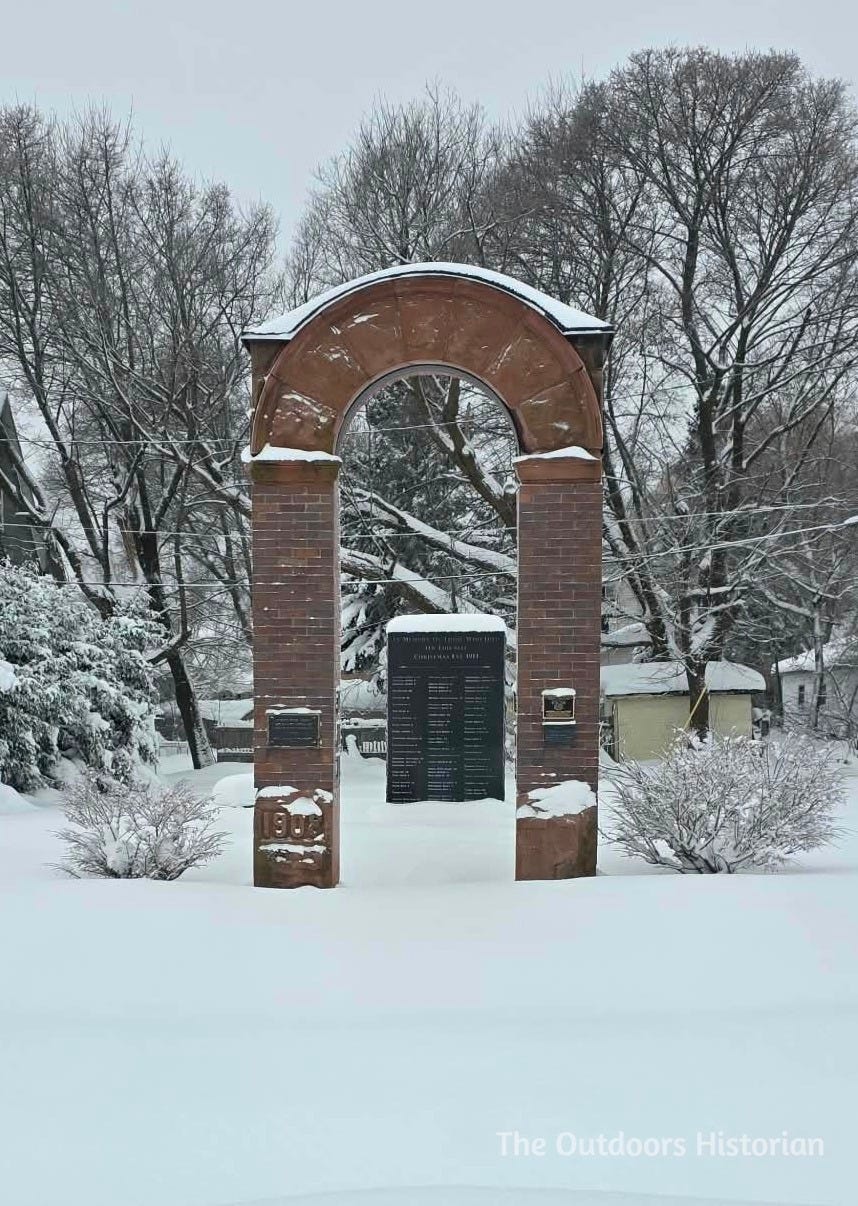
I trudged through the plowed mounds and stood quietly before a lone sandstone archway in a snow-covered lot that used to be the site of the Italian Hall. I remembered visiting this site in May 2021 with a close friend and fellow professor. Unlike the gray December day, that day was sunny and clear. We were co-teaching a class about the human histories of the Lake Superior watershed, and he read “On the Scrap.” It is a poem by M.L. Liebler about the copper miners’ strike in 1913. It was an emotional moment we shared with our students. Hearing the poem at the site of the Italian Hall made the history feel visceral in a way no reading could.
Northland College, where we taught together, closed in May 2025. Finlandia College, just south of Calumet in Hancock, met the same fate a few years earlier in 2023. Like Northland, it was a small, private liberal arts college with a rich history grounded in social justice. Finlandia was founded as Suomi College in 1896 as a Finnish language seminary for the children of miners. Northland began as the North Wisconsin Academy in 1892 with the commitment to teach students of all backgrounds how to live a deeper life on lands that used to be forested but were now cutover in the wake of the logging industry.
Visiting the Keweenaw in the winter, I thought of Carolyn Dekker’s North Country and her chapter “How We Make Do.” Dekker was an English faculty member at Finlandia and she wrote about the school’s struggle to survive and maintain its mission before the closure, noting: “This year we all live with the ghost-town feeling of broken windows and dust and the promise of renewal just around the corner.” I remember making dark humor jokes with my friend about the eerie similarities to Northland’s postponed repairs. My friend had a hole in his office ceiling that leaked and was never fixed. It turns out neither college was able to make do, despite their deep histories and service to the Northwoods.
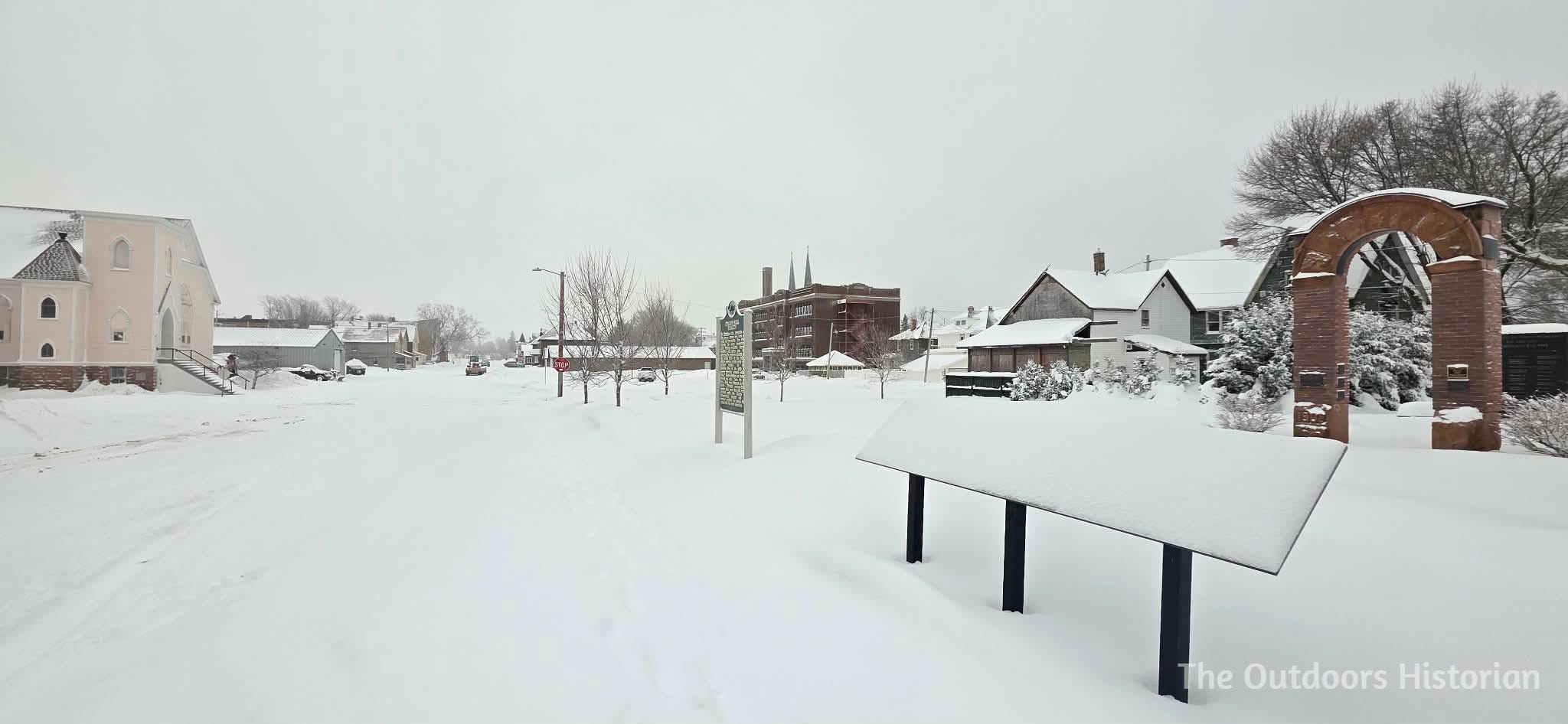
This December was my first time visiting Calumet in winter. Eugene was keeping warm in the truck, so I stood alone. The stillness was heavy. The streets were quiet and the snowflakes fell. When a wind gust kicked up, it was the loudest sound on the street. As I listened closely, I could still hear the lines my colleague read lingering on the gusts of the wind:
74 people, mostly children, lay buried in a twisted heap Of bones, blood, skin, and hair. A Working-Class Nightmare in the Home of the the Brave.*
*The poem says 74 people, but the National Park Service and other accounts list the total as 73
This Substack is supported by readers. If you like what you are reading, please consider subscribing! There are free and paid options.
The Heart of the Copper Boom
One hundred and twenty-five years ago, these streets never slept. To understand the stillness of modern Calumet in the winter, you have to understand the noise that came before it.
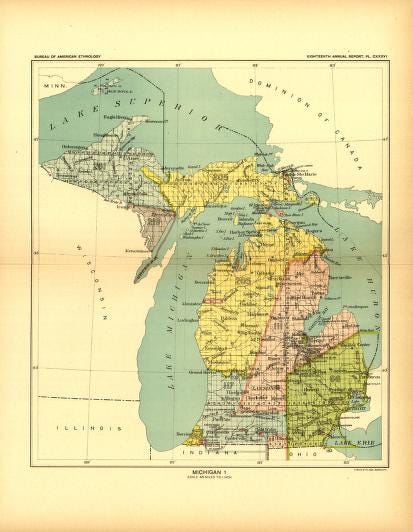
The Treaty of La Pointe in 1842 transferred this land from the Anishinaabe to the United States. Often referred to as The Copper Treaty, it was the legal mechanism that transformed Indigenous homelands into industrial assets. It marks the beginning of a manufactured scarcity where the region's vast natural wealth was funneled into corporate profit while the community on the ground struggled to "make do."
The Keweenaw copper boom was fueled by the inventions of the Industrial Revolution and the demand for raw materials as the nation expanded. For almost a century after the land was ceded to the United States, copper was the heartbeat of the peninsula’s economy.
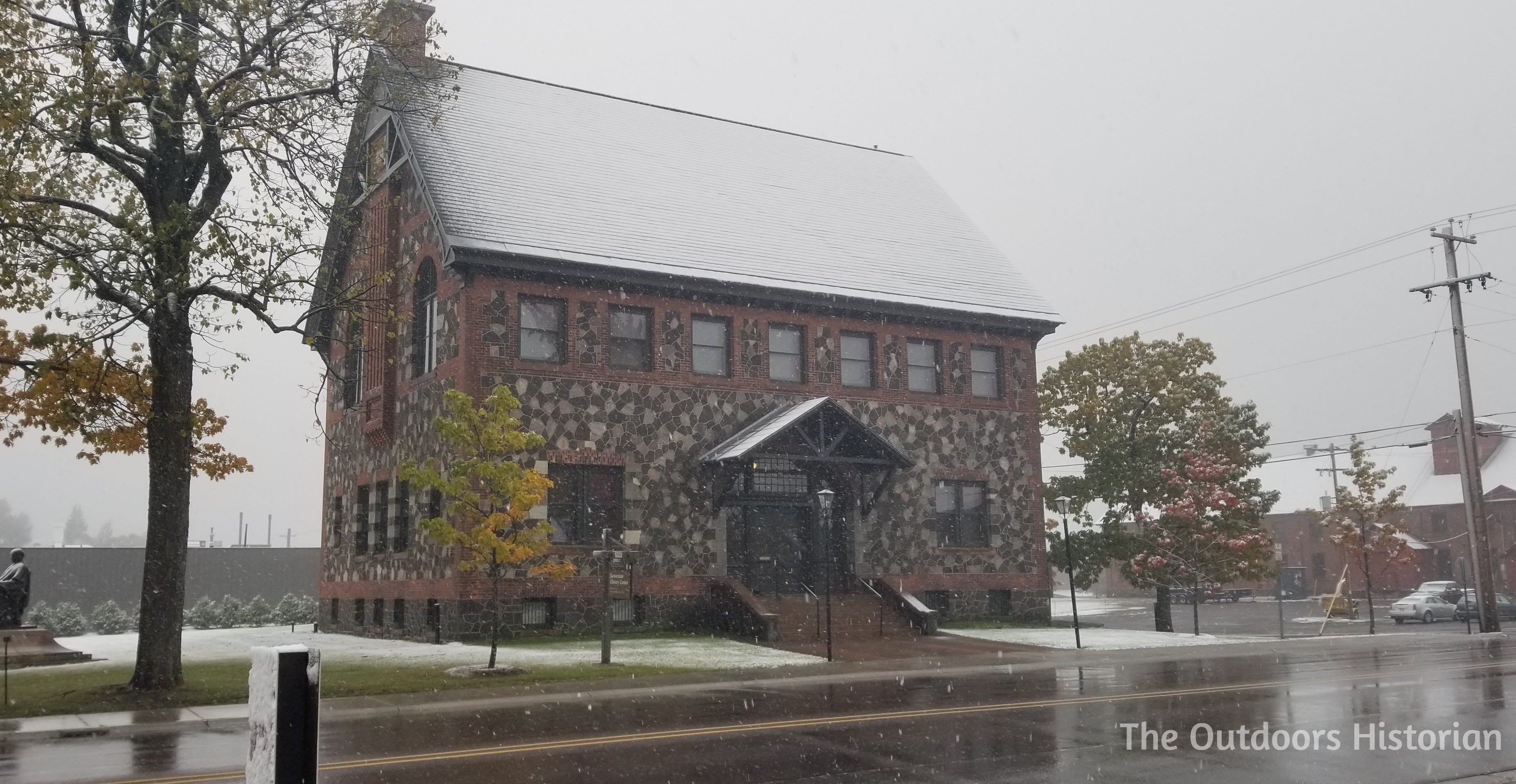
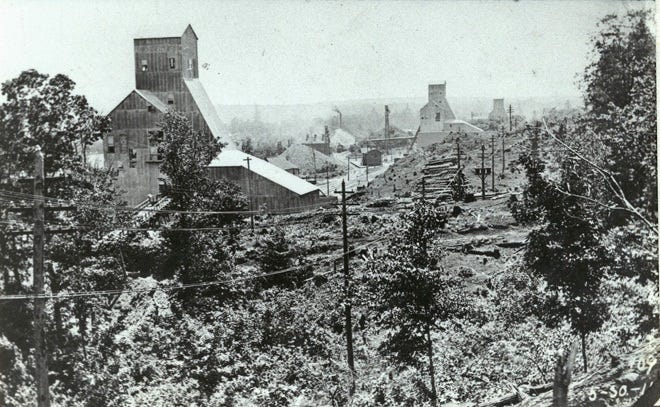
Known at the turn of the twentieth century as Red Jacket, Calumet was the undisputed hub of the copper world. It was home to the Calumet and Hecla (C&H) Mining Company. C&H did not just operate a mine. They built an entire world, which included grand stone buildings like the C&H Public Library and local schools. For many families, “making do” meant accepting these company-funded amenities in exchange for their labor and their silence about the working conditions.
Electric streetcars clanged 24 hours a day to shuttle a global workforce to and from the pits. Trains roared into the depot, bringing families from across the globe. First, the families came from Cornwall. Later they also came from places like Finland, Sweden, Austria, Greece, Hungary, Ireland, Poland, Croatia, Lithuania, Italy, Armenia, Russia, and China. They were all ready to build a life in the rugged landscape surrounded by the cold waters of Lake Superior. At its height in 1910, Calumet had a population of almost 40,000 people.
It was a landscape of deafening industry. Church bells from dozens of denominations competed with the relentless pounding of stamp mills. There were no dark or quiet nights. There was only the glow of the furnaces and the “Company Town” reality where C&H owned the mines, the houses, and the very air the miners breathed.
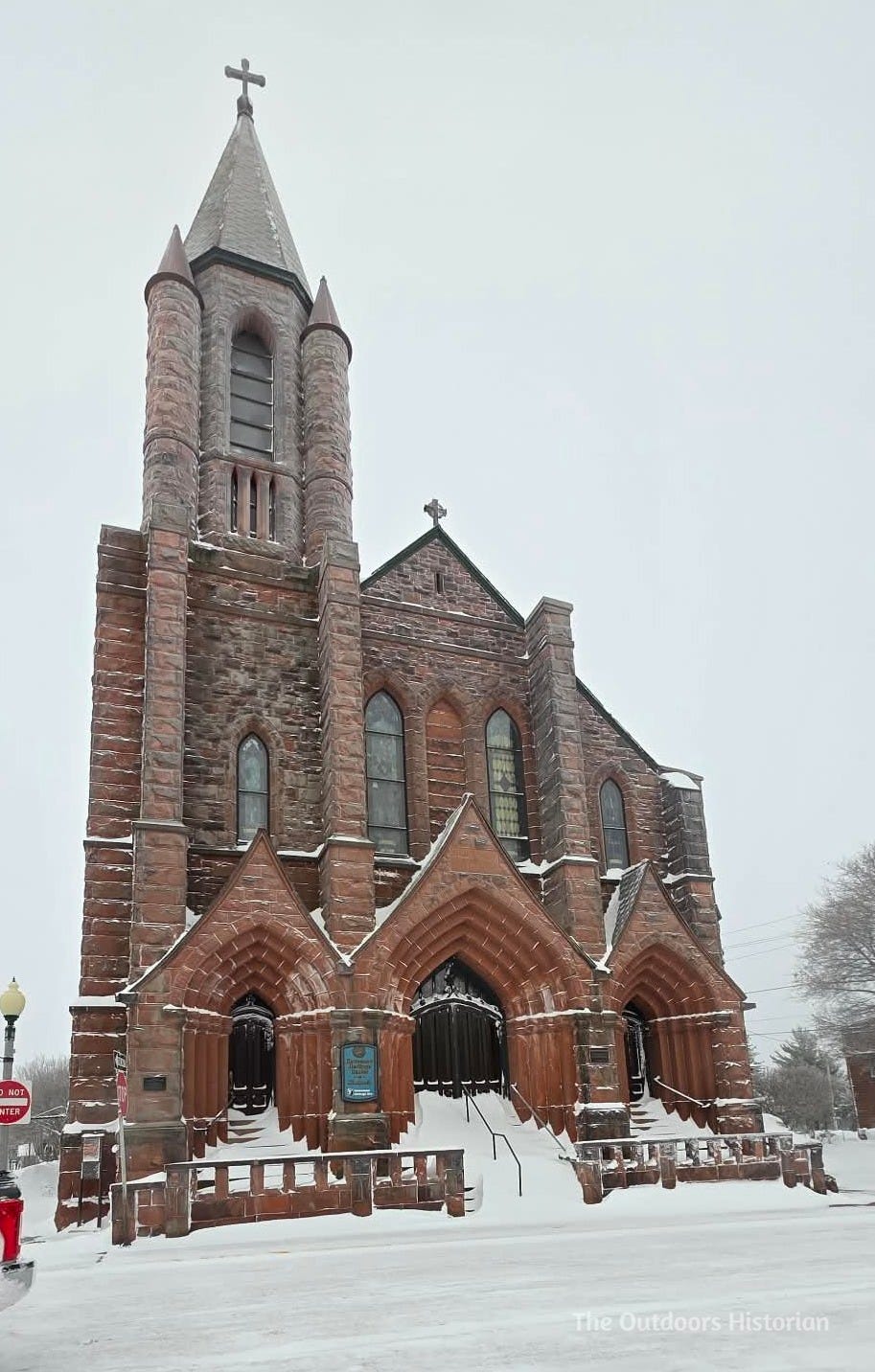
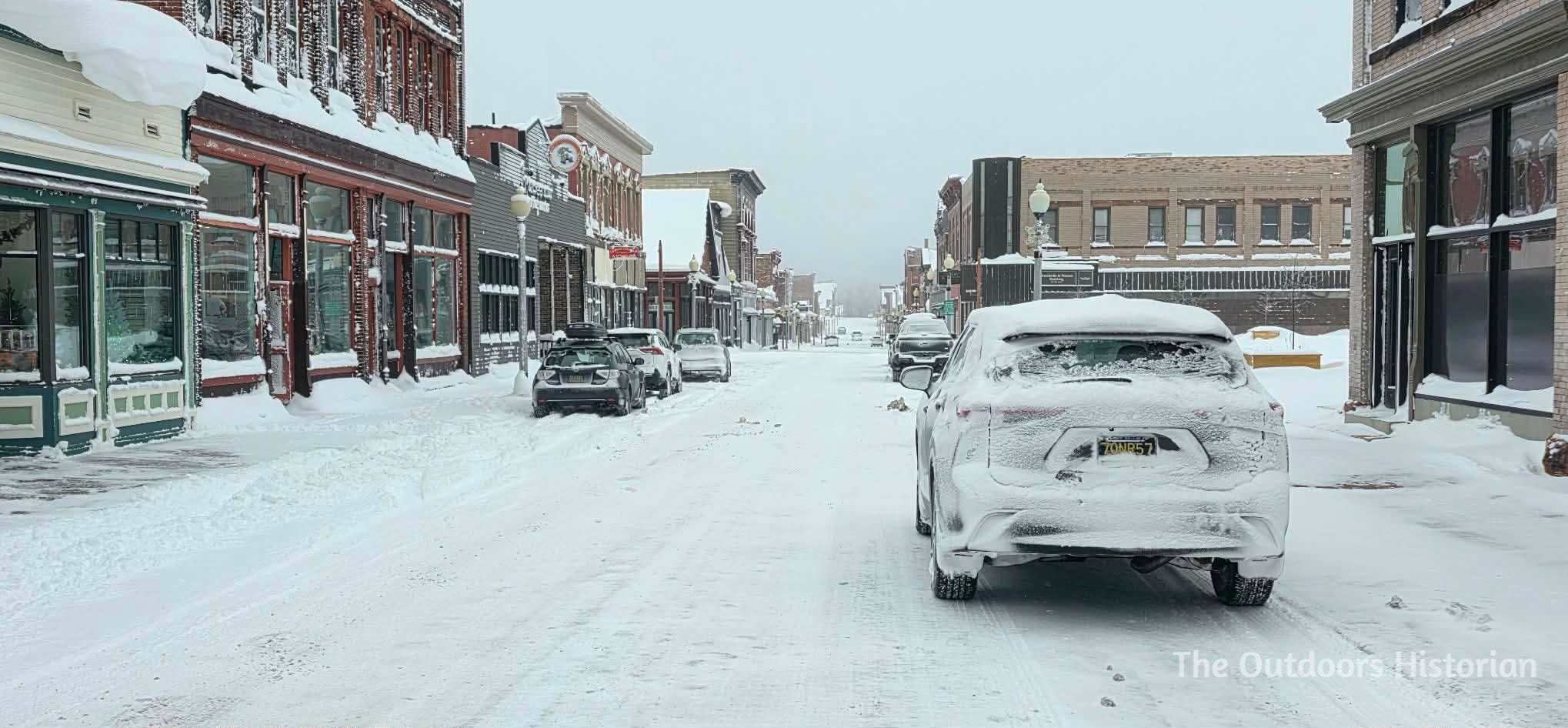
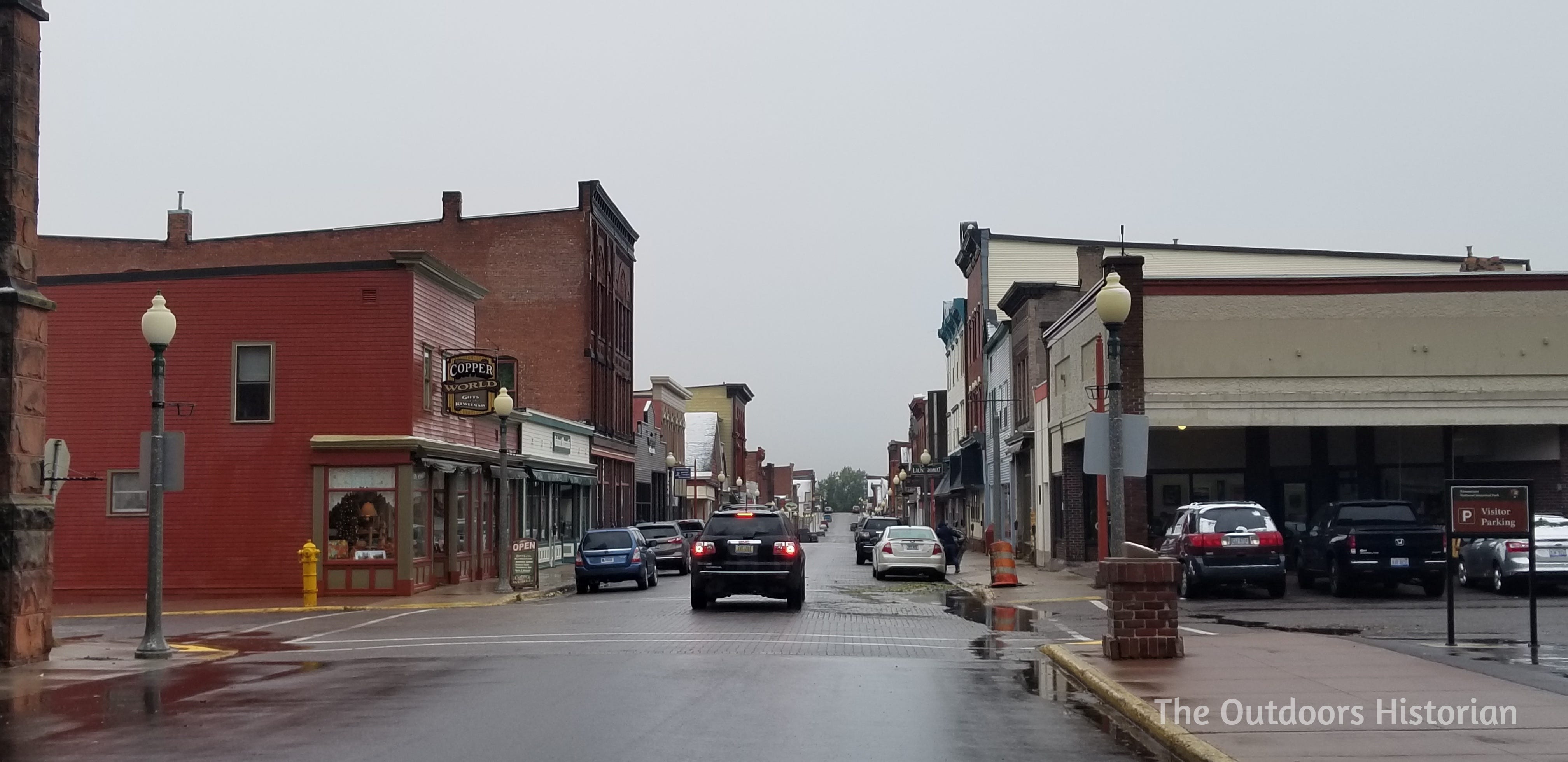
Today, Calumet is a small community of approximately 700 people. Its downtown stores, cafes, bars, and historic sites draw tourists. The village also serves as a satellite to Houghton and Hancock. While Finlandia closed, Michigan Tech University in Houghton continues to fuel the regional economy. In my experience, cities and villages in the Lake Superior watershed that are located inland and don’t have any waterfront have particularly quirky personalities, and I think Calumet demonstrates that pattern.
In the summer and fall, Calumet pulses with life. But in the winter, it seems to catch its breath. It slips into a quietude that lets the past feel a little closer to the surface. No matter what season I visit, I’m always reminded that the legacies of the copper industry remain etched in the ground I’m standing on.
The Strike of 1913
By the summer of 1913, the noise changed. The machinery’s thump was joined by the rhythm of marching feet. The miners were striking for an eight-hour day and a three-dollar wage. Most of all, they were fighting the “widow-maker.” This was the nickname for the one-man drill. This technology cut costs but left miners alone in the dark. If a rock fell, there was no partner to call for help.
At the front of these marches was Annie Klobuchar Clemenc, often known as “Big Annie.” Standing over six feet tall and carrying a massive American flag, the 25-year-old Slovenian immigrant became the face of the resistance. She was a key leader of the Women’s Auxiliary Local No. 15. This group was formed to support the strikers and bridge the gaps between the town’s many ethnic groups.
The tension turned bloody quickly. C&H manager James MacNaughton refused to negotiate with the strikers. Instead, he brought in the Waddell-Mahon detective agency. These were armed strike-breakers that the locals called “Waddies.”
In August 1913, some Waddies and sheriff’s deputies followed John Kalan to the boarding house in Seeberville where he lived. They planned to arrest Kalan for “trespassing” on company property while taking a shortcut home. Kalan resisted arrest and fled inside the boarding house. In response the Waddies and deputies fired inside and killed two men, Alois Tijan and John Bezic. Their gunfire even grazed the face Antonia Putrich’s baby, who was held by her mother.
The violence did not break the strike. On September 13, Big Annie led over 1,000 strikers through Red Jacket. When confronted by deputies and Waddies, Annie was knocked down and a horse stomped her flag. She continued to hug the fabric to her chest even as a cavalryman tried to rip it away.
Annie was arrested three times and spent a total of ten days in jail. One of these times was on November 8. Annie was arrested along with ninety-nine others and incarcerated in the Calumet and Hecla jail.
Arrests of the strikers were common. In fact, over 400 strikers were arrested between October 23 and November 15. Usually, they were released in a few days or even a few hours. In contrast, only four people were ever sent to jail for violence toward the strikers: two Waddies and two Sheriff’s deputies. All four were eventually convicted for the Seeberville murders.
A Harsh December
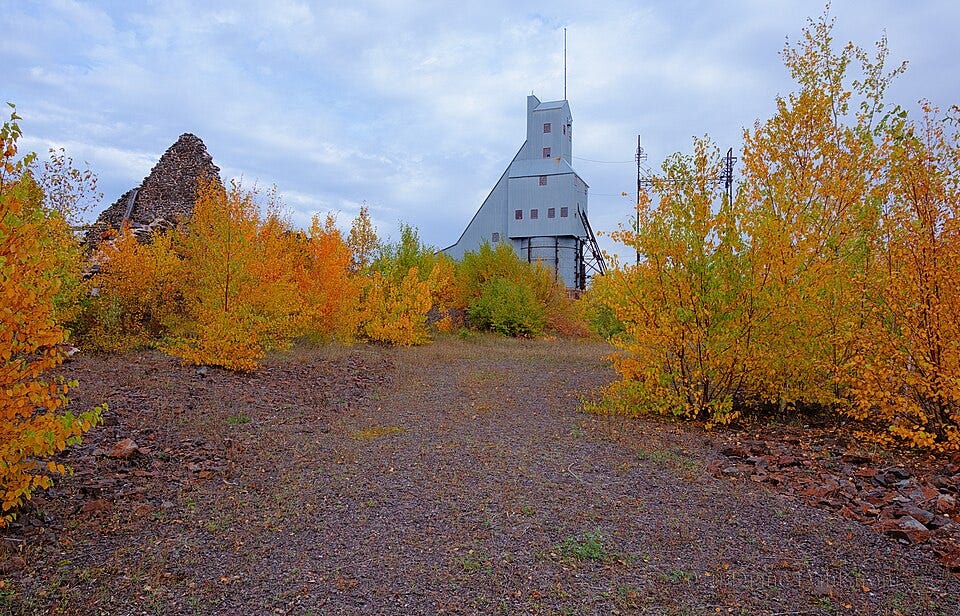
As the winter deepened, the violence in the Copper Country increased. On the dark morning of December 7, 1913, shots were fired from the woods into a boarding house in Painesdale, a mining community focused on the Champion Mine about 20 miles southwest of Calumet. The bullets killed Thomas Dally and two English immigrant boarders who were brothers, Arthur and James Jane. The men were shot in their beds as gunfire pierced the thin walls of the house.
Bullets were also shot into the Nicholson household that was attached to the boarding house. Two bullets struck thirteen-year-old Mary Nicholson; one grazed her head while the other inflicted a more serious wound in her shoulder. The two other Nicholson children narrowly escaped injury or death when bullets hit the pillows they were sleeping on.
While the Seeberville murders were an act of company-led violence against strikers, the Dally-Jane murders were widely believed to be a retaliatory strike against those who crossed the picket lines. This event sent a new shockwave of fear through the region. It led to an even heavier presence of the National Guard and a sense that no one was safe, regardless of which side they stood on. Men who continued to work for the mining companies during the strike were caught in an economy that forced impossible choices upon them. Their deaths are a tragic reminder that in a landscape defined by extraction and strike lines, ‘making do’ was often the only option left. It is a sobering reality that this survival strategy could also prove fatal.
The Italian Hall Tragedy
The Copper Country was frayed by months of cold, hunger, and the constant threat of gunfire. Strike funds were nearly empty and communities across the Keweenaw were increasingly divided. It was this desperate atmosphere that motivated Big Annie and the Women’s Auxiliary to organize a Christmas Eve party. They wanted to provide a flicker of joy for children who had spent months watching their parents struggle. The women spent weeks sewing scarves and mittens and making little bags of candy. The party would be held on the second floor of the Italian Hall. Because money was so low, the Christmas trees were decorated with crepe paper and just ten cents worth of tinsel.
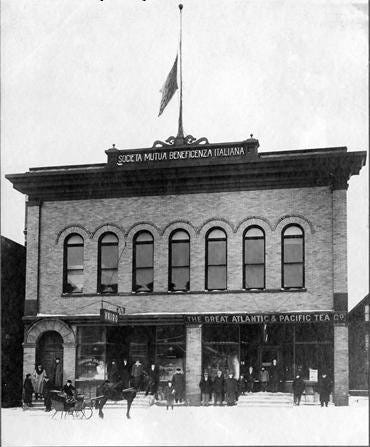
Over 400 people, mostly children, crammed into the hall. They sang carols and watched a Mother Goose play. For a few hours, the bitter strike was forgotten. Then, at the height of the festivities, a man shouted “Fire!” Some reports claimed he wore a Citizens’ Alliance button, which was an anti-union organization.
Annie and other adults realized there was no smoke and screamed from the stage that there was no fire. However, the panic was beyond control. The crowd surged toward the steep and narrow staircase. Someone tripped. Within seconds, the stairwell became a death trap as hundreds pushed from behind and people suffocated.
When the screaming stopped, 73 people were dead. 59 of those were children. Doctors said most of the deaths were instantaneous.
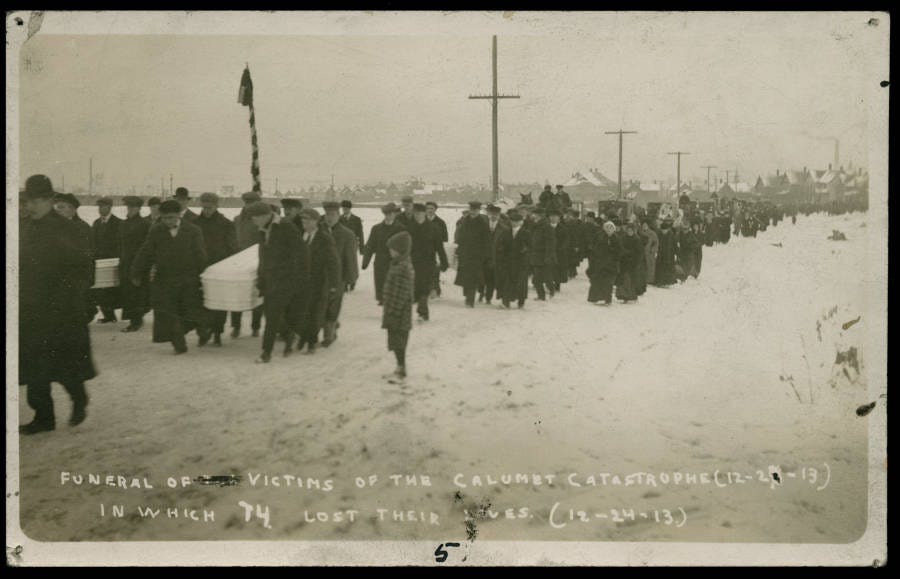
The community did not celebrate Christmas. Instead, it prepared for a mass funeral. On December 28, Big Annie picked up her flag once again and led a line of 73 coffins toward Lake View Cemetery. Tears streamed down her face and her flag was draped in black crepe.
From Land Cession Treaties to Company Towns to Tragedies
The strike ended in defeat in April 1914. As described in “On the Scrap” by M.L. Liebler:
The Calumet newspapers reported that miners won Nothing of significanceduring the Great Strike. They went back to work without their babies, Without a raise, without better working conditions, and without Recognition for their union. All of that was buried In 1913 in the cold Michigan earth.
The Italian Hall was controversially torn down in 1984 and only the sandstone archway remains. There is also a memorial listing the names of the people who died along with interpretive signs by the Michigan Historical Society and the Keweenaw National Historical Park that give an overview of the strike and the tragedy.
Earlier this month, I wrote about the murder of Giishkitawag, also known as Joe White. He was an Anishinaabe leader in Wisconsin who was killed by state game wardens. That murder is a clear example of how the state used violence to target Anishinaabe communities as they established American control of the northern Great Lakes after the land cession treaties.
The strike in the Copper Country in 1913 is another example of that same era. The extractive economies that developed such as logging and mining depended on violence to maintain control. These systems targeted recently arrived immigrant communities whose cheap labor was integral to the profits of mining and logging stockholders. The murder of Joe White was a state sanctioned act of violence to enforce conservation laws while the murders at Seeberville were company sanctioned acts to enforce industrial order. Both demonstrate how violence was used to protect the interests of the powerful in this watershed.
The infrastructure the United States needed for westward expansion relied on two things: access to Indigenous lands through treaties or force, and cheap labor provided by (depending on the region) recently arrived immigrants and Black Americans. The Copper Country shows how viewing this history in simple terms of “White people” misses the complexity. There were European-descended people who profited greatly from these mines, and they relied on the exploitation of other European-descended immigrants to do so.
A Living Legacy in the Snow
The Italian Hall might be a historic site, but it is not dead. It is a piece of living history. Every year, the Calumet-Laurium-Keweenaw Rotary Club places 73 luminaries in the snow. These stretch from the archway into the empty lot. Each flame represents a life lost.
There are still questions about what happened on Christmas Eve in 1913. Some academics who have studied the event in the twenty-first century describe it as Michigan’s largest mass murder. The Keweenaw National Historic Park takes a more cautious stance and explains that the details are still up for debate.
But what I know is that “making do” has its limits. The miners made do with the “widow-maker” drills until they could no longer bear the risk. The families made do with ten cents worth of tinsel, intending to give their children a moment of joy. And over a century later, our colleges made do with drafty, leaky buildings while those with power postponed repairs and meaningful plans for financial sustainability until the doors finally had to close. It felt like a modern echo of that earlier era, where the communities that provide the labor and the life of this region are the first to suffer when the institutions they rely on are managed toward a breaking point.
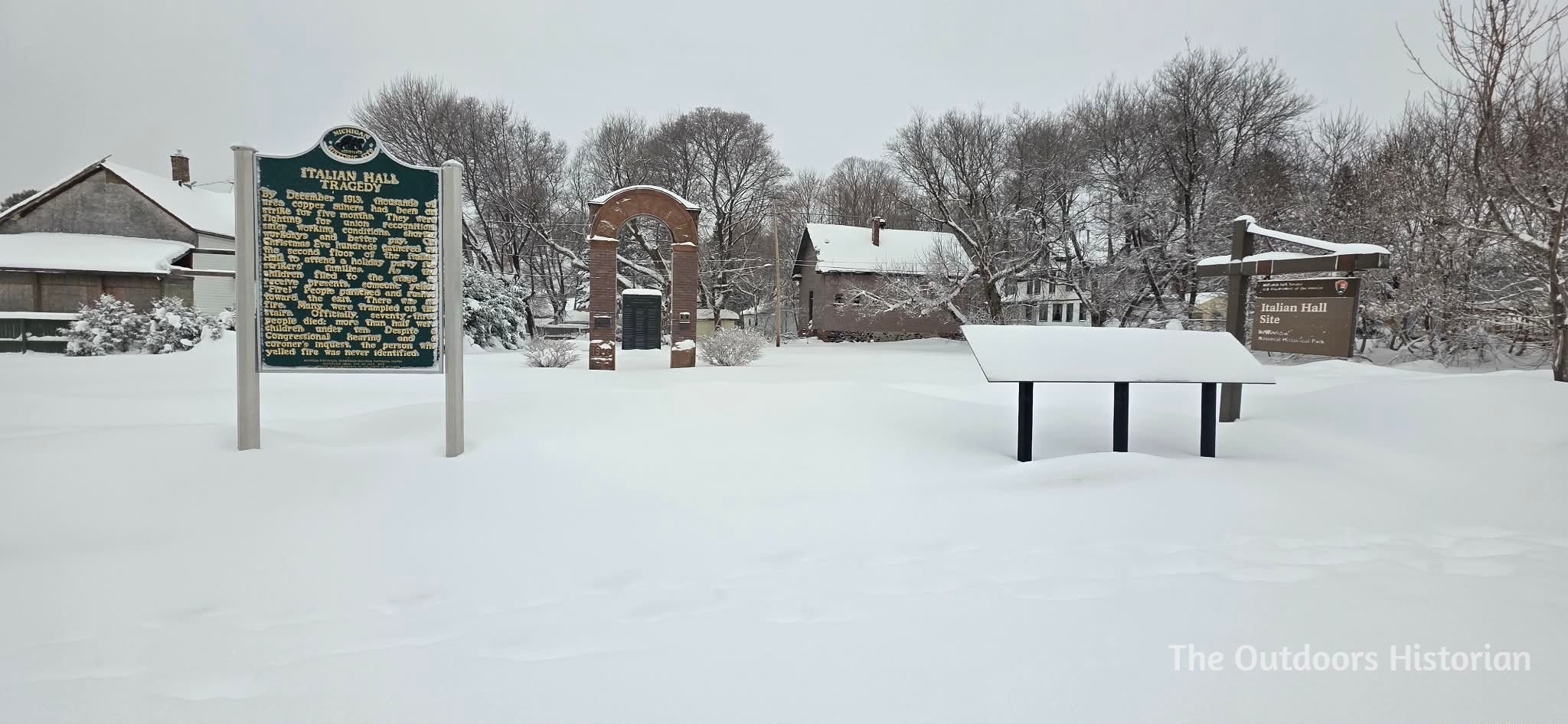
There are no easy answers for why some things survive and others do not. But as I stand looking at the archway with the wind whipping off the lake, just like I can hear my friend reading “On the Scrap,” I can hear the echoes of Woody Guthrie’s song, “1913 Massacre”:
And the town was lit up by a cold Christmas moon,
The parents they cried and the miners they moaned,
"See what your greed for money has done."
I hope to see the luminaries reflect off the snow one day. In the meantime, I do my best to visit the doorway whenever I am in the area to pay my respects. Remembering the tragedies that shaped this land and honoring those who died is the least I can do as a visitor who enjoys the communities of the Keweenaw today.
If you have family roots in the Copper Country or stories passed down about the 1913 strike, I would be honored to hear them in the comments below. Similarly, to former students, staff, and faculty from Northland and Finlandia: I would love to hear your memories of this landscape and the moments we shared in these historic places. Remembering is an act of community. Thank you for being part of mine.
For more information on Big Annie, the Italian Hall Tragedy, and life in the Keweenaw Peninsula see:
Jerry Stanley, Big Annie of Calumet: The True Story of the Industrial Revolution.
An accessible and engaging overview of the growth of the copper industry during the Industrial Revolution, the 1913 Strike, and Big Annie’s involvement.
Lyndon Comstock, Annie Clemenc & the Great Keweenaw Copper Strike.
This is a great book if you are interested in taking a deeper dive into the life of Annie Clemenc. It includes plenty of historic photographs and primary source excerpts.
Mary Doria Russell, The Women of the Copper Country: A Novel.
A deeply-researched historical fiction novel that brings the work of the women of the 1913 Copper Strike and the greed of James McNaughton to life.
Carolyn Dekker, North Country: A Pedagogical Almanac.
A beautiful reflection on teaching and living in the Upper Peninsula that helped me process the closure of Finlandia and Northland.
Ronald Reikki (editor), And Here: 100 Years of Upper Peninsula Writing.
An edited anthology of writing from authors in the Upper Peninsula in a range of styles covering a range of topics, including life in the Keweenaw. This is the collection where “On the Scrap” is published.
Please consider visiting any of the Keweenaw National Historical Park sites during your visit to the region!
Follow The Outdoors Historian on Facebook and Instagram for more photos and field notes from the Lake Superior watershed. You can read more about my experience in the Keweenaw here.
My husband and I visited the Keweenaw last September. We heard about the Italian Hall tragedy during a tour of Quincy Mine. I find Copper Country and its history fascinating. Thank you for the views of winter up there!
I didn’t know. Thank you. These stories need telling, often, quietly, well. Honestly.