
While November is Native American Heritage Month, the work of understanding Indigenous history and sovereignty is a year-round responsibility. However, the Thanksgiving holiday can serve as a spark for us to pause, reflect, and ask deeper questions about the narratives we’ve been taught.
To help with that, I’ve pulled together a collection of beginner-friendly resources divided into five categories:
The Indigenous histories of Thanksgiving
Indigenous cookbooks and foodways
Indigenous peoples of the Great Lakes
Indigenous peoples of the United States
Tools to identify whose land you live on
My goal is to provide multiple pathways into the subject. Learning about Indigenous politics and history can feel overwhelming, often because the material is unfamiliar or contradicts what we learned in school. For many non-Indigenous people, this can trigger feelings of guilt or shame.
However, we must push past that discomfort. You simply cannot tell the history of the United States (or Canada) without Indigenous peoples. To understand our own political science, civics, and nationhood, we must understand the Indigenous nations that shaped—and continue to shape—this continent.
A crucial distinction: We have a responsibility to learn the history and political reality we share with Indigenous peoples. This is different from feeling entitled to access all forms of Indigenous cultural knowledge. Too often, settler engagement involves extracting cultural practices while ignoring treaty responsibilities.
This list is designed to help you engage respectfully with the history, the land, and the political reality of the nation around you. Most resources are focused on the United States, however, some resources also look at the Canadian side of the border. Let’s dive in.
This Substack is supported by readers. If you like what you are reading, please consider subscribing! There are free and paid options.
Resources to Learn About Thanksgiving
Free Resources
If you are looking for immediate context before dinner starts, these free articles and podcast episodes are the best starting points.
Philip Deloria, “The Invention of Thanksgiving: Massacres, Myths, and the Making of the Great,” The New Yorker.
The Gist: A concise breakdown of how the holiday went from a local harvest feast to a national myth involving “massacres and myths.” I reread this every Thanksgiving.
Ben Tumin, “Professor David J. Silverman on the Thanksgiving Myth,” Skipped History Substack.
The Gist: An accessible interview with the author of This Land Is Their Land, covering the Wampanoag perspective often left out of common renderings of Thanksgiving.
Matika Wilbur. “ThanksTaking or ThanksGiving?” All My Relations Podcast.
A dynamic discussion on how Indigenous people navigate the holiday today, balancing family gatherings with the reality of historical trauma.
Books
For a deeper dive into the specific history of the Wampanoag, the Puritans, and how the “First Thanksgiving” was constructed, these books are essential.
David Silverman, This Land Is Their Land: The Wampanoag Indians, Plymouth Colony, and the Troubled History of Thanksgiving
Why read it: If you only want to read one history book about Thanksgiving, make it this one. It is the definitive account of the Wampanoag side of the story, dismantling the “friendly meal” narrative.
Lisa Brooks, Our Beloved Kin: A New History of King Philip’s War
Why read it: Brooks re-maps the history of New England, showing how Indigenous networks and geography shaped the conflict that nearly destroyed the colonies.
Christine Delucia, Memory Lands: King Philip’s War and the Place of Violence in the Northeast
Why read it: A fascinating look at how we remember (and misremember) violence through monuments and plaques, and how those physical markers shape our understanding of the past.
Jean O’Brien, Firsting and Lasting: Writing Indians Out of Existence in New England
Why read it: O’Brien explains the intellectual mechanics of erasure—how 19th-century New Englanders convinced themselves that local Indigenous people had “vanished” so they could claim the land and history for themselves.
Resources to learn about Indigenous peoples of the Great Lakes
As a historian living in the Great Lakes, this is the region where my work is grounded. It is a landscape defined by fresh water, wild rice, and the enduring sovereignty of the Anishinaabe, Haudenosaunee, and other nations.
Too often, popular American history skips over the Midwest, focusing instead on the colonial East Coast or the “Wild West” of the Plains. This erases the complex treaty history and modern political power of Great Lakes nations.
Below, I’ve compiled my previous writing on regional treaties, followed by the best free resources and books to help you understand the history of this specific land.
My Free Substacks
These Histories are Intertwined
An introduction to why we simply cannot tell the history of the Great Lakes (or the United States) without understanding Indigenous history by focusing on the Treaty of Greenville in 1795.
Ozhaawashkodewekwe and the Treaty of Sault Ste. Marie
How a powerful Anishinaabe woman leveraged her diplomatic connections to shape the outcome of the 1820 negotiations.
The 200 Year Anniversary of the Treaty of Prairie du Chien
A look back at the massive diplomatic gathering in 1825 that established borders between Native nations and laid the foundation for future land cession treaties.
The Treaty of Fond du Lac and Ojibwe Leadership in the Lake Superior Region
Examining how Ojibwe leaders navigated American demands for mineral rights just a year after the Prairie du Chien agreement.
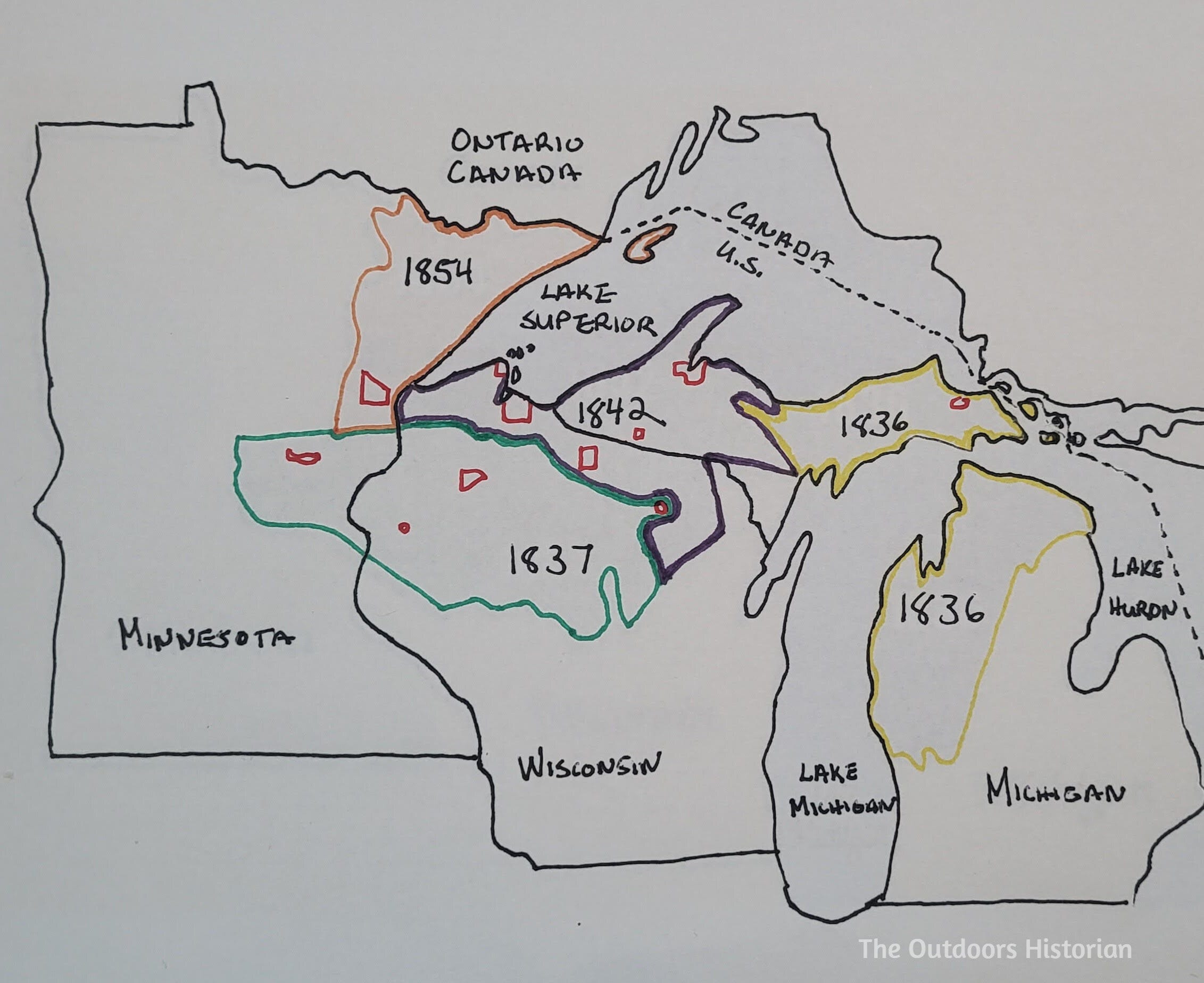
How this 1836 agreement paved the way for Michigan statehood while retaining the crucial hunting and fishing rights still exercised today.
The Pine Treaty: A Turning Point in Wisconsin History
Exploring the 1837 cession driven by the insatiable American hunger for timber
The Copper Treaty Demonstrates the Present-Day Impact of Treaties
A breakdown of the 1842 treaty focused on mineral wealth and why its legal provisions remain relevant today.
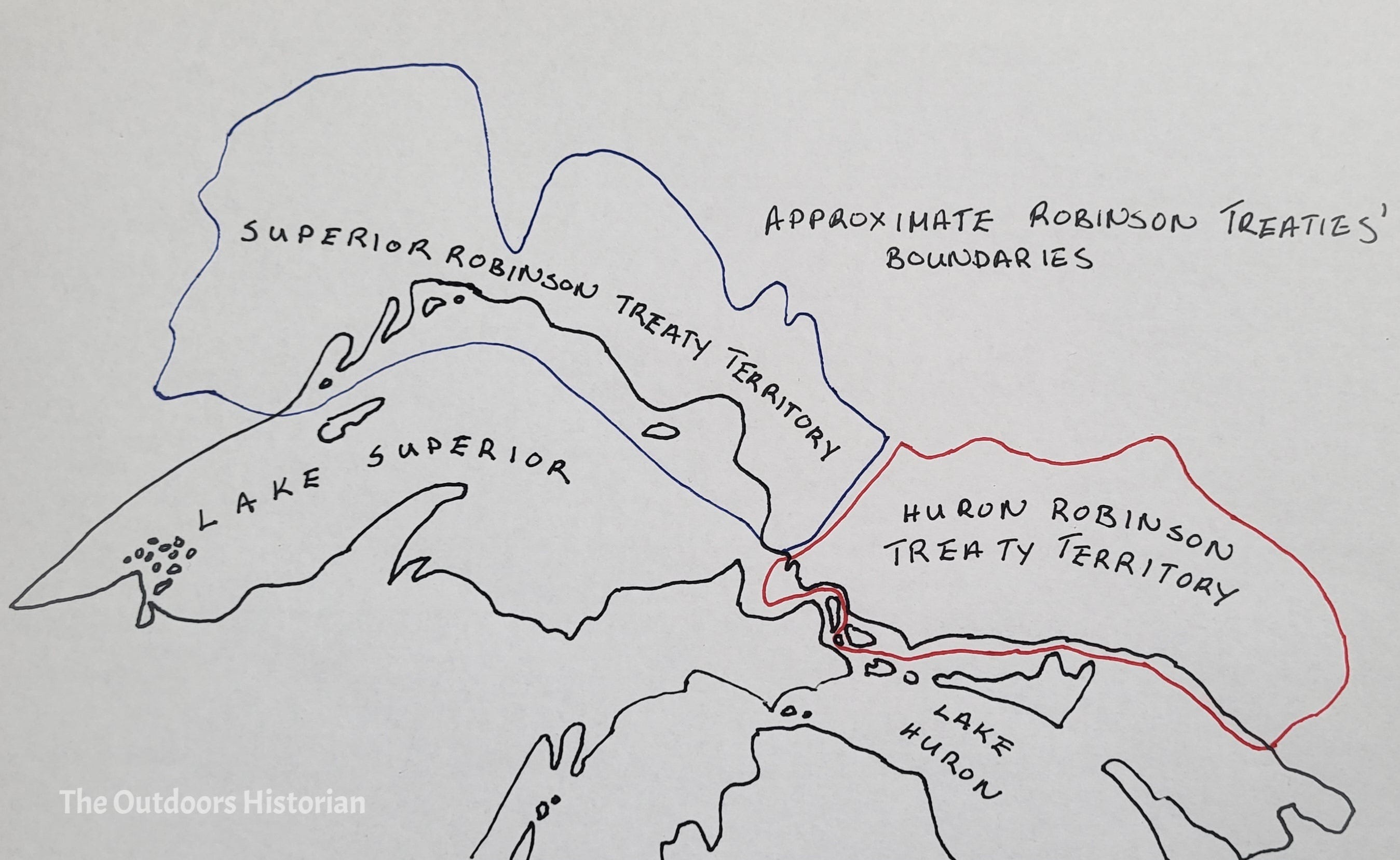
Understanding the Robinson Treaties in Past and Present
Discusses the historic 1850 treaties in Ontario and the ongoing, multi-billion dollar legal battles over unpaid annuities.
The Treaty of La Pointe in 1854: A Landmark Moment for the Western Lake Superior Watershed
The pivotal moment when Ojibwe bands secured permanent reservations in Wisconsin and Minnesota, effectively ending the U.S. government’s policy of removal in the region
Free Resources
The Ogichidaa Warrior series on the Great Lakes Indian Fish and Wildlife Commission YouTube Channel
What it is: A short documentary series chronicling the fight for Ojibwe treaty rights in the late 20th century.
Why watch: If you want to understand the legal reality of hunting and fishing rights—and the intense racism Ojibwe people faced during the “Wisconsin Walleye Wars”—this is the essential history.
Dr. Alan Ojiig Corbiere’s YouTube Channel
What it is: Deep dives into Anishinaabe history by one of the region’s leading historians and language experts.
Why watch: Dr. Corbiere is a master at explaining wampum belts and treaty councils. He takes complex primary sources (like old letters and belts) and brings them to life.
Kai Minosh Pyle’s Land Body Mind Substack
What it is: A newsletter exploring Métis and Anishinaabe history, language revitalization, and Two-Spirit identity.
Why read: It provides a crucial look at Two-Spirit history in the Great Lakes and challenges the erasure of Métis people in the Midwest.
Dustin Dwyer, “Look about you. What ideas do you see inscribed on the land of Michigan?” Michigan Radio.
What it is: A short article focusing on Indigenous histories of Michigan.
Why read: It features historian Michael Witgen (whose book is on the list below) and offers a clear, accessible explanation of how Indigenous and settler concepts of “land ownership” clashed to shape the state of Michigan.
What it is: A collection of high-quality short videos on contemporary Native culture and language.
Why watch: It breaks down stereotypes by showing modern Indigenous life in the Great Lakes, covering topics ranging from traditional wild rice harvesting to modern hip-hop.
Books
Brenda Child, Holding Our World Together: Ojibwe Women and the Survival of Community
Why read it: History often focuses on men and war; this book centers the women who held the communities together through labor and leadership.
Louise Erdrich, Tracks (Fiction)
Why read it: While this is a novel, Erdrich accurately captures the emotional and community impact of allotment and land loss in a way that non-fiction sometimes cannot.
Mary Siisip Genuisz, Plants Have So Much to Give Us, All We Have to Do Is Ask
Why read it: A perfect bridge between history and science, teaching the botanical and cultural history of the region.
Susan M. Hill, The Clay We Are Made Of: Haudenosaunee Land Tenure on the Grand River
Why read it: A crucial look at the Eastern Great Lakes and the deep history of Haudenosaunee land rights.
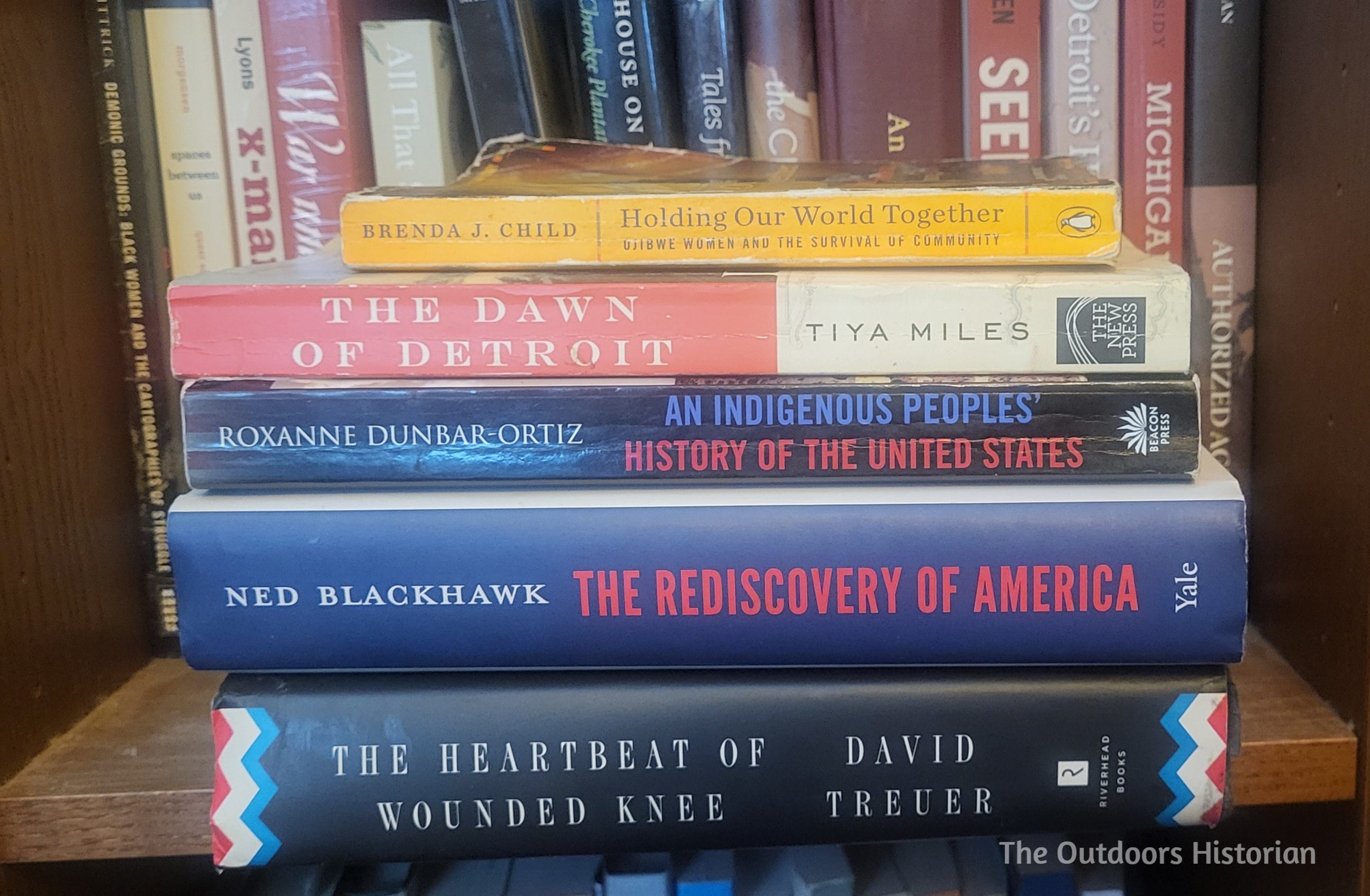
Tiya Miles, The Dawn of Detroit: A Chronicle of Slavery and Freedom in the City of the Straits
Why read it: It challenges the idea that slavery was only a southern issue and highlights the complex history of Black-Indigenous relations.
Looking to go deeper? Consider these scholarly deep dives!
Heidi Bohaker, Doodem and Council Fire: Anishinaabe Governance Through Alliance
Why read it: Essential for understanding that Indigenous nations had (and have) complex political structures and governance systems long before European contact.
Erik Redix, The Murder of Joe White: Ojibwe Leadership and Colonialism in Wisconsin
Why read it: A griping micro-history that illustrates how the American legal system was used to dismantle Indigenous leadership.
Michael Witgen, Seeing Red: Indigenous Land, American Expansion, and the Political Economy of Plunder in North America
Why read it: Witgen shows how Indigenous power dictated politics in the Great Lakes long after 1787 and how the United States is built on extracting resources from Indigenous lands
Indigenous Cookbooks
Food is a powerful entry point for understanding culture, but for Indigenous nations, it is also a matter of sovereignty. These cookbooks go beyond simple recipes; they connect you to the land and the people who cultivate it.
Additionally, many of these authors provide resources on how to source ingredients directly from Indigenous food producers. This allows you to move beyond passive reading and use your purchasing power to support Indigenous economies.
Free Resources
These are excellent ways to learn about Indigenous food systems without spending a dime.
Chef Yazzie TV YouTube Channel
The Gist: Chef Brian Yazzie (Diné) shares accessible, high-energy cooking videos. He focuses on healthy, Indigenous ingredients and often highlights food justice work.
The Gist: An autonomous group of Indigenous chefs, activists, and herbalists. Their website and multimedia projects focus on food sovereignty as a tool for resistance and healing.
The Gist: The longest-running podcast dedicated to Indigenous food. Host Andi Murphy interviews chefs and producers, covering everything from traditional farming to modern restaurant culture.
Indigenous Cookbooks
Buying these books is a direct way to support Indigenous authors. Many of them double as history books, teaching you the ecology of the ingredients.
Freddie Bitsoie and James O. Fraioli, New Native Kitchen
Why read it: Bitsoie (Diné) makes Indigenous ingredients accessible for the modern home cook. These recipes are about delicious, contemporary meals.
Shane Chartrand, tawâw: Progressive Indigenous Cuisine
Why read it: Visually stunning and deeply personal. Chartrand (Cree) explores his own identity through high-end culinary art. “tawâw” translates to “Come in, you’re welcome, there’s room.”
Pyet DeSpain, Rooted in Fire: A Celebration of Native American and Mexican Cooking
Why read it: Winner of Next Level Chef, Pyet brings a unique fusion of her Prairie Band Potawatomi and Mexican heritage. A great pick for those interested in the intersection of Indigenous cuisines across borders.
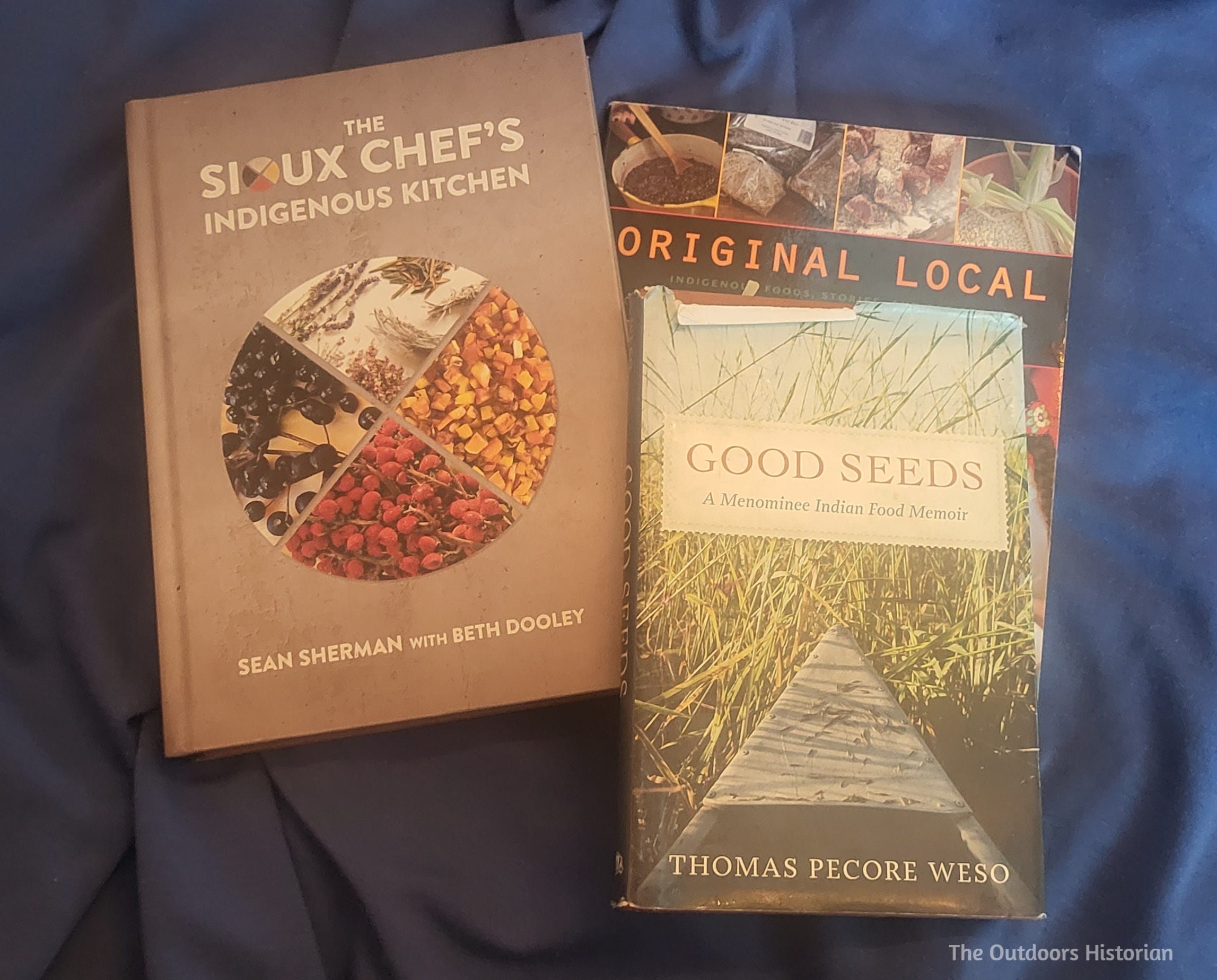
Heid E. Erdrich, Original Local: Indigenous Foods, Stories, and Recipes from the Upper Midwest
Why read it: Erdrich is a poet, and it shows. This is a beautiful mix of memoir, history, and recipes that specifically celebrates the foodways of the Great Lakes and Dakotas.
Andrew George Jr., Modern Native Feasts: Healthy, Innovative, Sustainable Cuisine
Why read it: A follow-up to his classic Feast!, this book focuses on healthy, sustainable eating and is very practical for everyday cooking.
Tashia Hart, The Good Berry Cookbook: Harvesting and Cooking Wild Rice and Other Wild Foods
Why read it: This is the definitive guide to manoomin (wild rice)—from the canoe to the table.
Sarah Calvosa Olson, Chími Nu’am: Native California Foodways for the Contemporary Kitchen
Why read it: A vital resource for the West Coast. Olson (Karuk) focuses on the diverse and often overlooked food systems of California tribes.
Sean Sherman, The Sioux Chef’s Indigenous Kitchen
Why read it: The book that changed the industry. Sherman (Oglala Lakota) cuts out colonial ingredients (dairy, wheat, cane sugar) to showcase a truly decolonized diet.
Thomas Pecore Weso, Good Seeds: A Menominee Indian Food Memoir
Why read it: Part history, part cookbook, this is a distinct look at Menominee life in Wisconsin. It captures the humor and community of eating together.
Alanna Yazzie, The Modern Navajo Kitchen
Why read it: A celebration of Diné (Navajo) comfort food. It bridges the gap between traditional family recipes and the ingredients available to most modern families.
Resources to learn about Indigenous peoples in the United States
When we talk about “Indigenous Peoples of the United States,” we are talking about a massive, diverse group of sovereign nations—over 574 federally recognized tribes, plus many state-recognized and unrecognized nations.
Too often, the American education system treats Indigenous history as a footnote to the “real” history of the Founding Fathers. The resources below challenge that narrative. They argue that you cannot understand the Civil War, the Constitution, or the modern economy without understanding the central role of Native nations.
I have selected a mix of broad historical surveys, modern fiction, and podcasts. These works move beyond the “tragedy narrative” to show that Indigenous people are not just victims of history, but active political players, creators, and contemporaries.
Free Resources
Essential listening for contemporary relationality and issues
One of the best ways to keep up with news written by Indigenous peoples and about Indigenous peoples
The best primer on the legal reality of sovereignty and Indian Child Welfare Act
Robin Wall Kimmerer, “The Serviceberry,” Emergence Magazine. (There’s also an audio version available at this link!)
Books
Ned Blackhawk, The Rediscovery of America: Native Peoples and the Unmaking of U.S. History
Why read it: It puts Indigenous history back at the center of American politics, arguing you can’t understand the Constitution or the Civil War without understanding Native power.
Roxanne Dunbar-Ortiz, An Indigenous Peoples’ History of the United States
Why read it: An unapologetic, hard-hitting counter-narrative to the history taught in most US high schools.
Robin Wall Kimmerer, Braiding Sweetgrass: Indigenous Wisdom, Scientific Knowledge, and the Teachings of Plants
Why read it: A gentle but profound guide to viewing the land not as a resource to extract, but as a relative to care for.
Tommy Orange, There There (Fiction)
Why read it: A Pulitzer-finalist novel that explores the “Urban Indian” experience, shattering the myth that all Native people live on reservations.
David Treuer, The Heartbeat of Wounded Knee: Native America from 1890 to the Present
Why read it: A direct response to Bury My Heart at Wounded Knee, this book argues that Indigenous history didn’t end in 1890; Indigenous history is an on-going story of survival and adaptation.
Matika Wilbur, Project 562: Changing the Way We See Native America
Why read it: A stunning visual journey across 562+ Native nations. If you only buy one book for your coffee table to start conversations, this is it.
Resources for learning about whose land you live on
Many of us don’t know the specific history of the ground beneath our feet. Was the land ceded by treaty? Was it unceded and seized? Was it shared by multiple nations?
I suggest starting with these two tools:
Best for: Visualizing the timeline of land loss in the United States.
Why use it: This interactive map allows you to click on your location and see exactly which treaty (or executive order) transferred the land from Indigenous to US control. It links directly to the text of the treaties, allowing you to read the specific promises made—and often broken—by the government.
Best for: Understanding the overlap of territories, languages, and treaties across the Americas (and the world).
Why use it: This is the best tool for breaking out of the rigid “state lines” mindset. It visualizes the fluidity of Indigenous territories.
Important Note: This data is crowd-sourced and approximates boundaries. It is a starting point, not a legal document.
A Final Word on Research: Digital maps are only the first step. Once you identify the nations near you using these tools, go to that Tribal Nation’s official website. Look for their Tribal Historic Preservation Office (THPO) or Culture Department to read how they describe their history and territory.
Read more, support local
The books I’ve suggested also make great gift ideas (for others or for yourself) for the holiday season! If you are planning to buy a book, consider supporting a local bookstore. I’m lucky to live in a community with several awesome bookstores (like this one, and this one, and this one). But, if you don’t have a local bookstore in your community, you can order from an Indigenous-owned bookstore like Birchbark Books or support one of my local bookstores (they all have options to ship) or use BookShop.org.
Keep the Conversation Going Beyond Thanksgiving
This list might feel like a lot. That’s okay. You don’t need to become an expert overnight, and you certainly don’t need to finish this list by the end of the holiday weekend.
Think of this post as a library you can return to throughout the year. The goal is simply to start. Pick one podcast episode for your drive, one book for your nightstand, or one recipe to try next week.
I’d love to hear where you are starting. Which resource caught your eye? Let me know in the comments, and let’s keep learning together.
If you have suggestions for other resources, please feel free to share in the comments!
Love this perspective, you've done such an excellent job outlining the ongoing work beyond just Thanksgiving itself. I'm really thinking about that crucial distinction you make – how do you navigate teaching or explaining the historical and political reality without inadvertently implying entitlement to cultural knowledge for someone just starting their learning journay?