
A map is usually a promise of where you want to go, but for a student of landscape literacy, it is also an archive of what happened in a place before you arrived. Most maps tell us where we are, but they rarely tell us about the historical depth of the places we visit.
As I focus on a few weeks of deeper research and my day job, I wanted to leave you with a different kind of guide. This watercolor map isn’t about highways or mileage; it is an attempt to visualize sites that illustrate the“Stacked Maps” of the Lake Superior Circle Tour Series—the layers of Indigenous sovereignty, industrial extraction, and spiritual resilience that define this coast.
Think of this as a sample Deep Map Syllabus: eight anchor points where the land speaks louder than the GPS if you know what to look for. This hand-painted map was designed to evoke the feeling of a personal field journal—a tactile andpersonal record of the “stacked” histories that digital navigation simply can’t capture.
Use this as inspiration to plan your own dream Lake Superior Circle Tour.
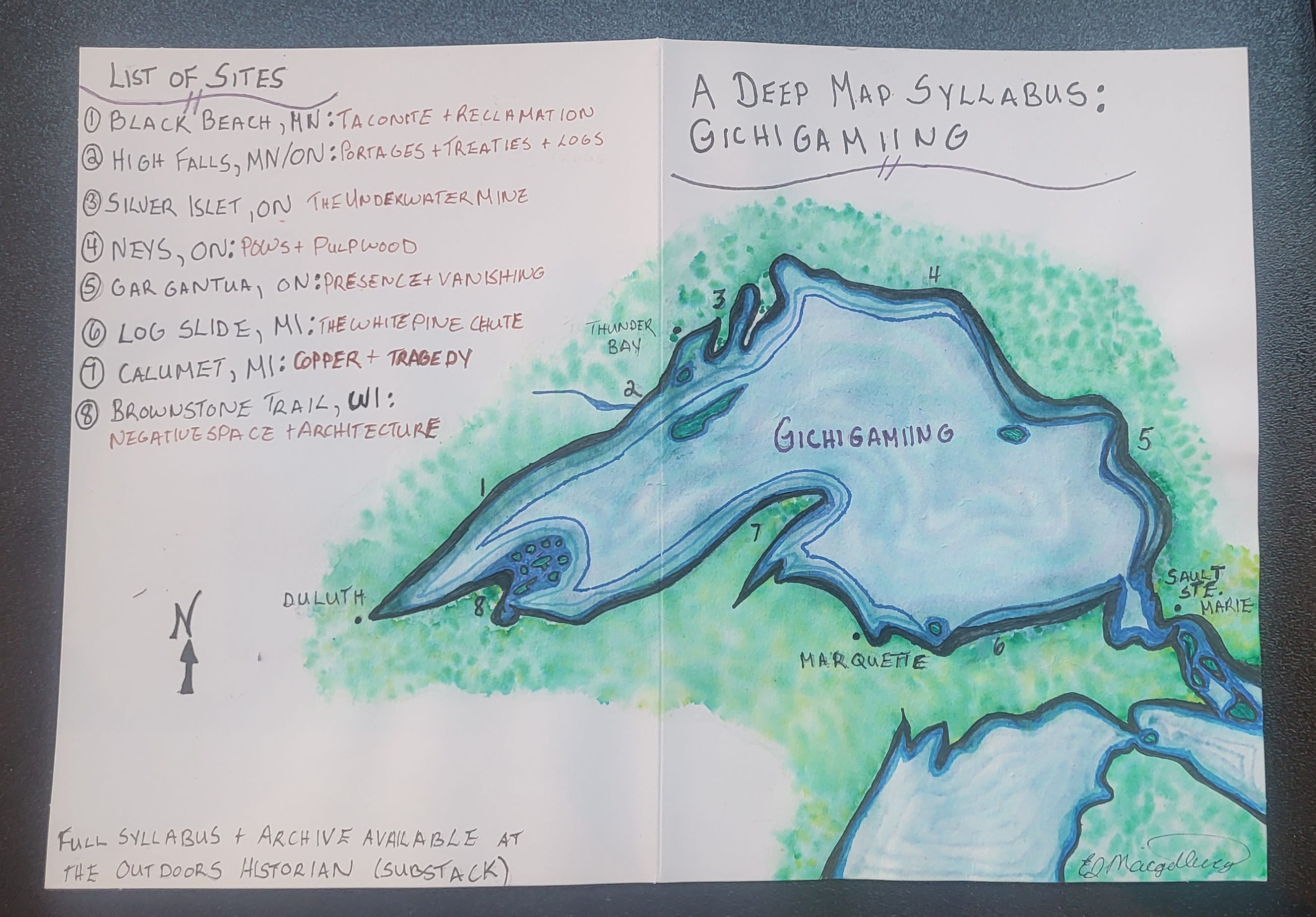
The “Deep Map” Annotations
1. Black Beach (Silver Bay, MN): The Color of Industry
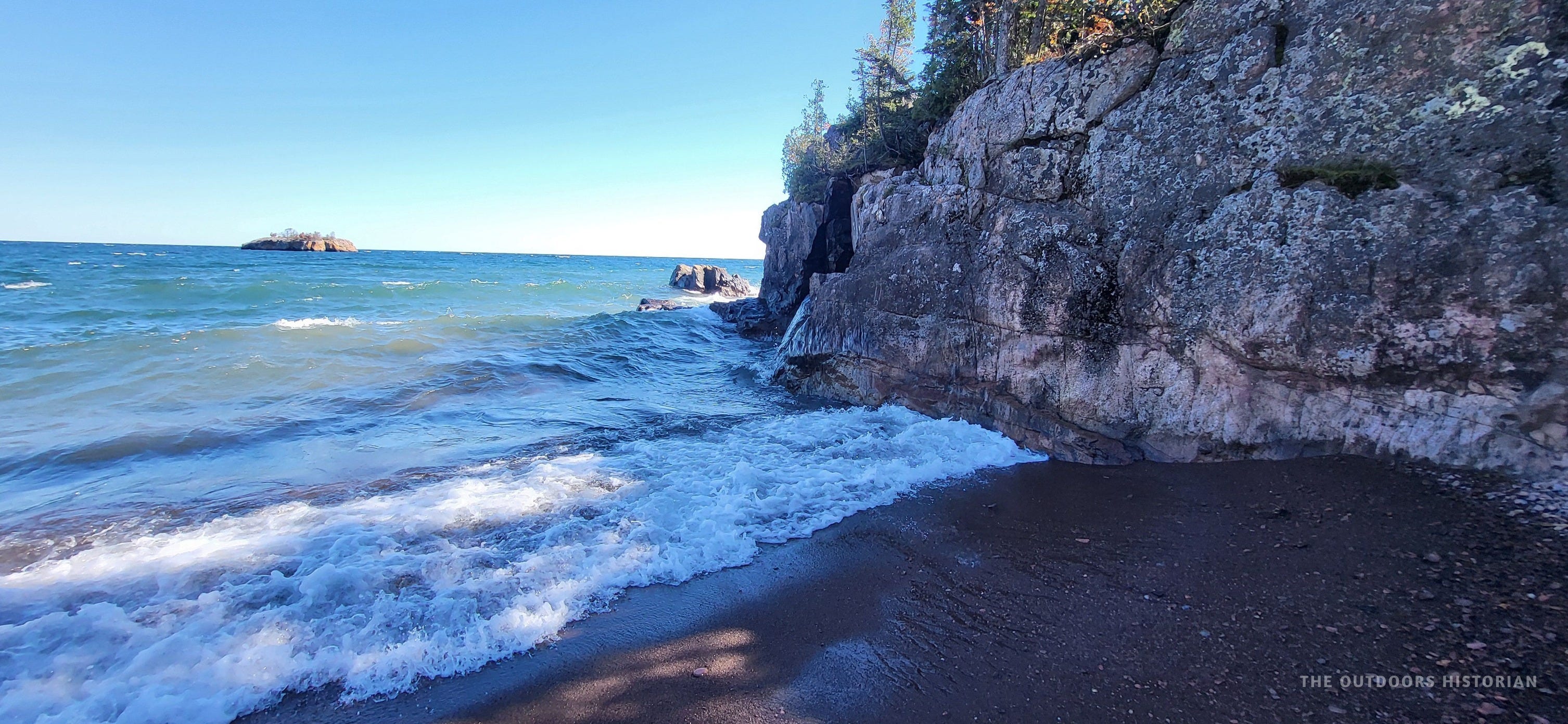
The Surface Layer: An anomaly of black sand that looks volcanic against the blue of the lake. It draws tourists seeking a one-of-a-kind beach on the Minnesota North Shore.
The Deep Layer: This isn’t natural geology; it’s taconite tailings from a nearby processing plant that operated from 1956 to 1987. It’s a material culture site where the waste of the Iron Range literally reshaped the shoreline. While striking, these tailings historically impacted local fish spawning and water ecology.
The Lesson: Sometimes the most “scenic” spots are actually industrial footprints with long-lasting ecological impacts.
2. High Falls (Pigeon River, MN/ON Border): From Highway to Dividing Line
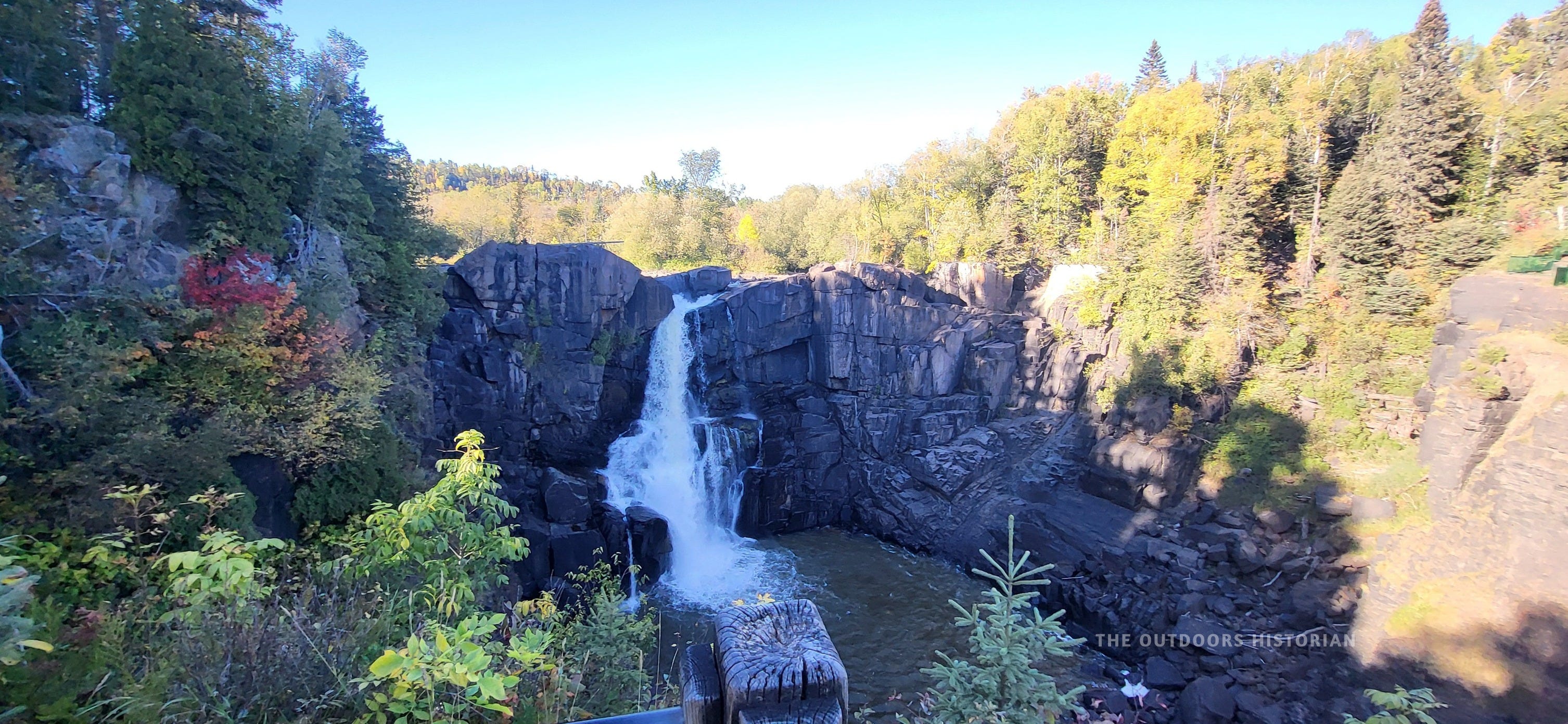
The Surface Layer: Tourists make the trek to see the tallest waterfall on the Minnesota North Shore in Grand Portage State Park. They can also access the falls from the Ontario side of the border in Pigeon River Provincial Park.
The Deep Layer: Bypassing these falls is the foundational reason for the “Grand Portage.” Originally used by the Anishinaabe and other Indigenous peoples for generations, this route was later adopted by the fur trade. By 1842, the Webster-Ashburton Treaty formalized this river as the border between the United States and (British) Canada. In 1850, Anishinaabe people transferred the land on the north side of the border to the British Crown. In 1854, Anishinaabe people on the southern side of the border transferred the land to the American federal government. In the late 19th century, the river shifted from a canoe highway to a timber conduit. Clear-cut White Pine was floated down the river to paper mills; today, you can see remnants of the log flume used to bypass the height of the falls.
The Lesson: The Lake Superior watershed has a deep Indigenous history; the borders we see today are relatively recent geopolitical inventions.
3. Silver Islet (Sibley Peninsula, ON): The Underwater Mine
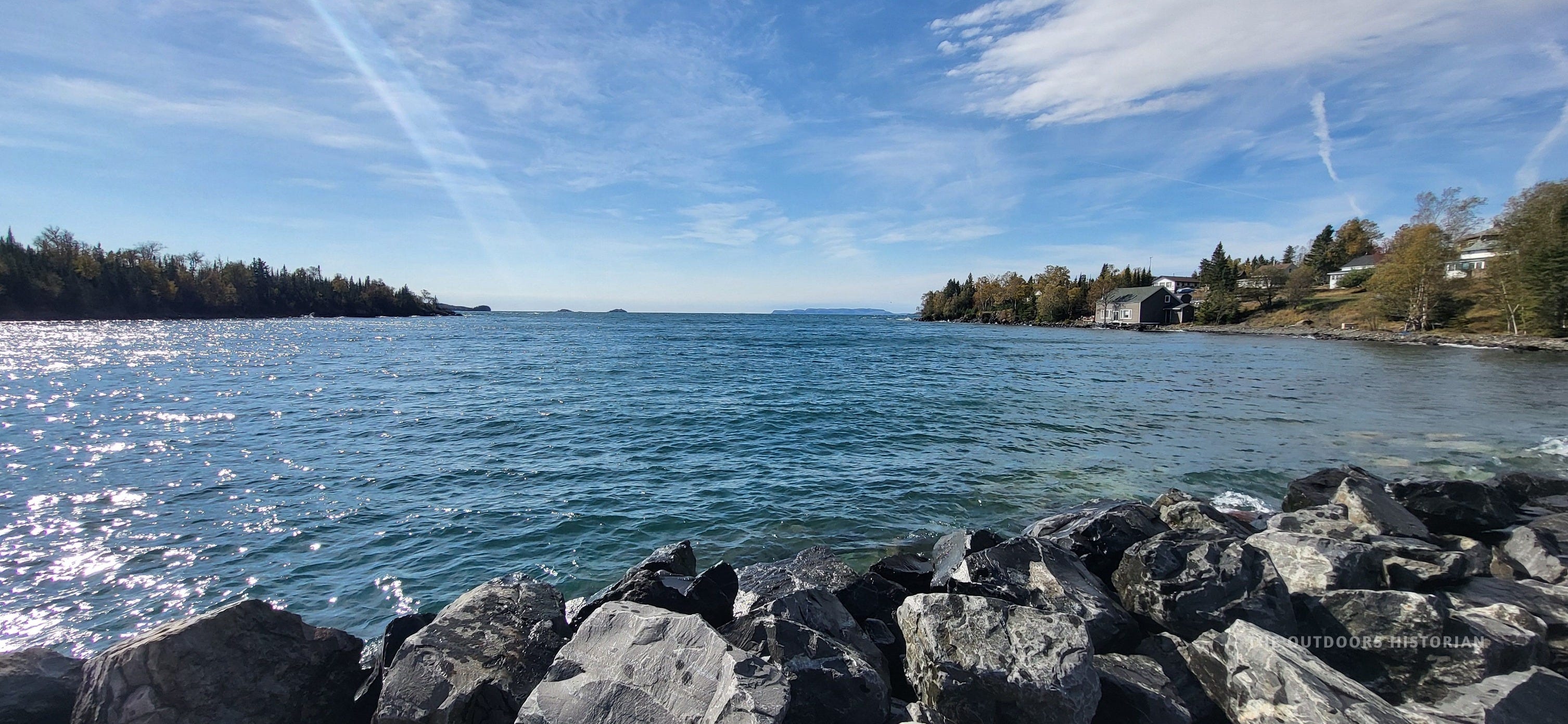
The Surface Layer: A quiet cluster of cottages and a general store with docks looking out at the open lake beyond.
The Deep Layer: Out in the open water beneath the waves sit the shafts of what was once the richest silver mine in the world. It was a feat of Victorian engineering that ultimately succumbed to the lake’s power when the pumps failed and the mine flooded in 1884. The community of Silver Islet is the ongoing legacy of the mine in the present.
The Lesson: Extractive industries rarely have great long-term odds against the power of Gichigamiing.
4. Neys Provincial Park (Ontario): Complexities in the Silent Forest
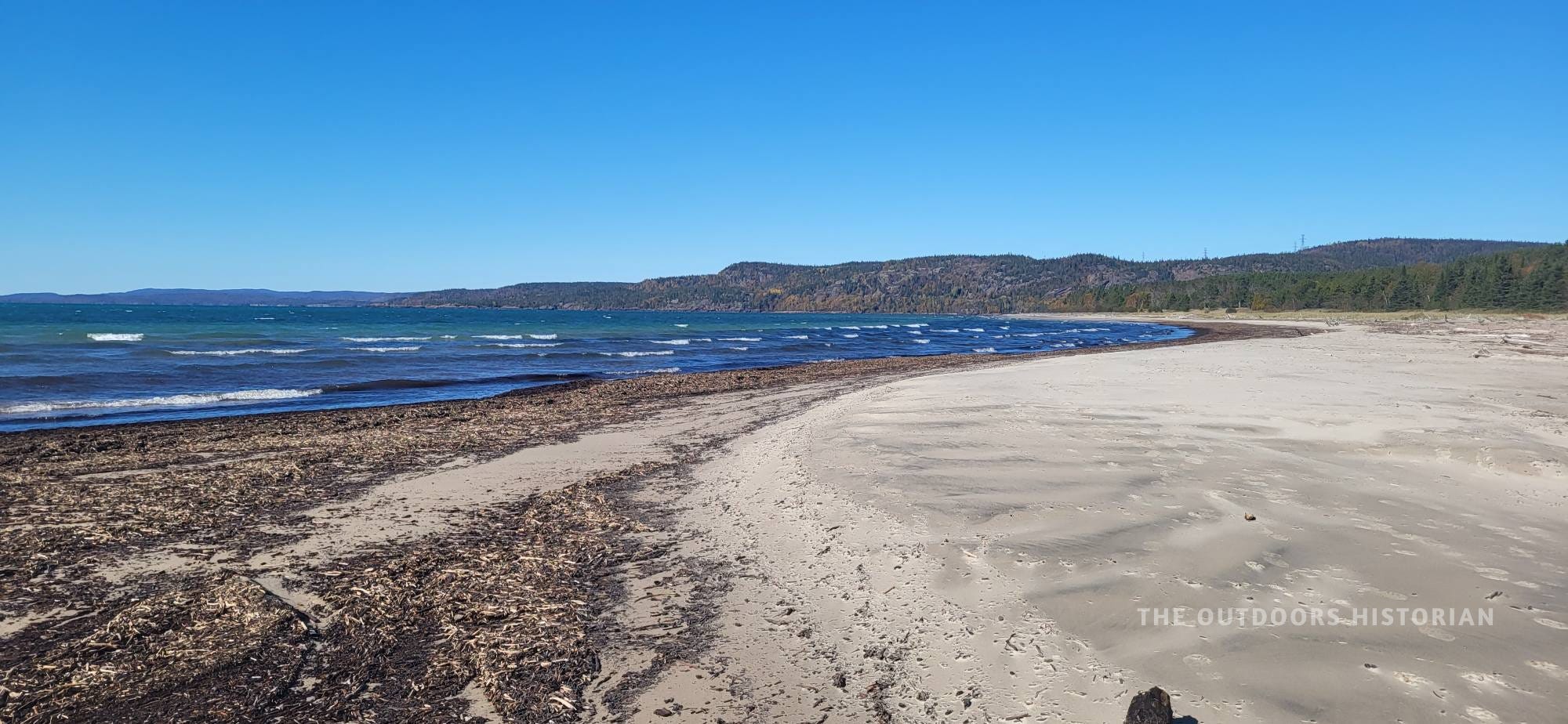
The Surface Layer: Sweeping sand beaches and beautiful views.
The Deep Layer: These volcanic shores were shaped by the Midcontinent Rift—the same geologic event that created the Sawtooth Mountains and the Keweenaw. Hidden within the brush are the remnants of a World War II prisoner-of-war camp and 1940s-era pulpwood docks. It’s a landscape of confinement and labor that has been largely reclaimed by the boreal forest.
The Lesson: The forest is an expert at composting difficult histories, but that doesn’t mean these industrial and human layers should be forgotten. When we visit recreational sites today, it is important to reflect on who spent time in these places in the past and what the circumstances were. In the present, we are free to visit these sites as we please, but that wasn’t always the case for the inhabitants of previous eras.
5. Gargantua (Lake Superior Provincial Park): Presence & Vanishing
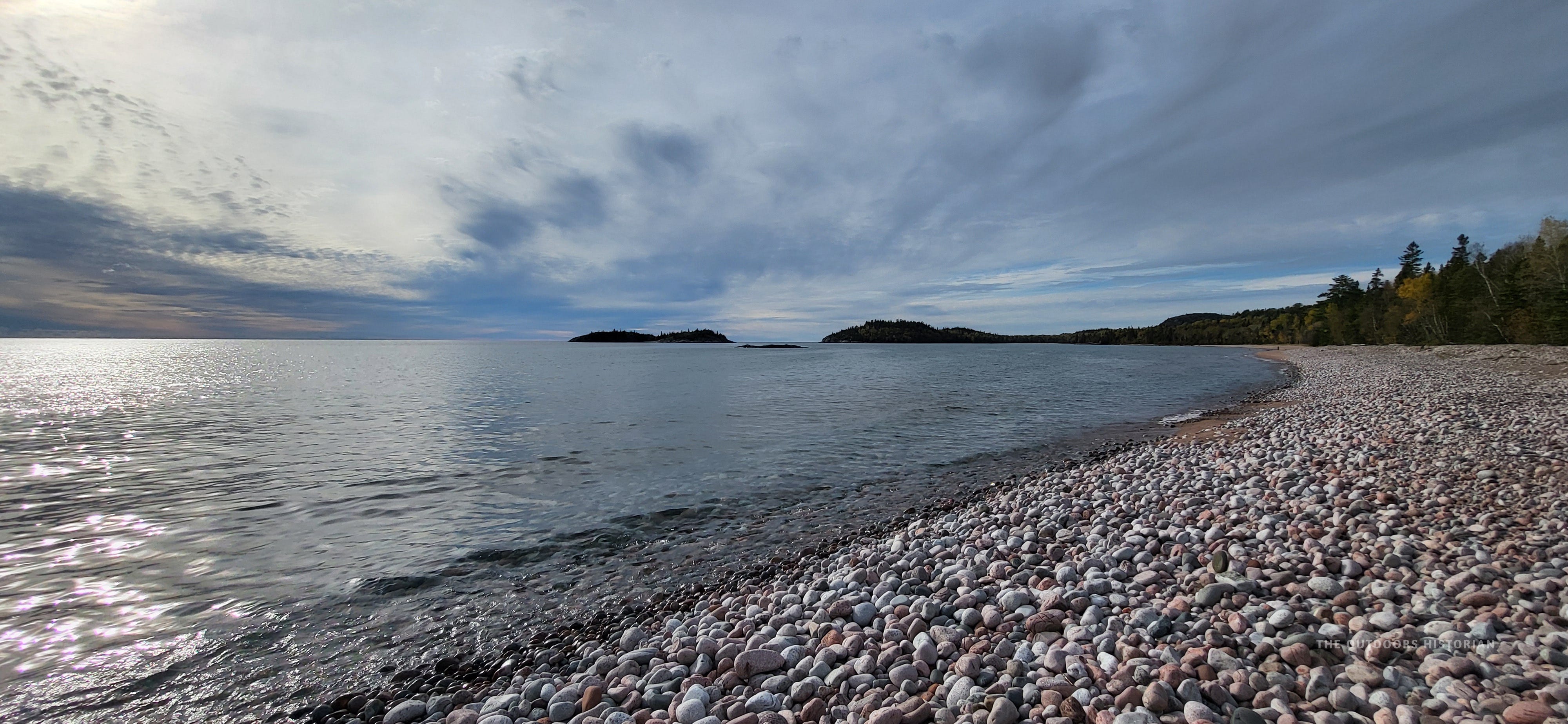
The Surface Layer: A rugged, rocky harbor accessible only by a long, unpaved road through the boreal forest.
The Deep Layer: This was once a bustling commercial fishing village and a key stop for lake steamers. Long before that, it was a place where Anishinaabe people fished and held ceremonies. Today, the village is “ghosting”—leaving only a few rusted engine blocks and submerged cribs behind. However, it is a popular site for outdoor recreation, including hiking and backpacking. And for the Batchewana First Nation, this place remains a spiritual landscape they reclaimed by asserting their sovereignty in the 21st century.
The Lesson: In the Northwoods, “permanent” is a relative term. Industrial boomtowns come and go, but Anishinaabe stewardship persists across generations.
6. The Log Slide (Pictured Rocks, MI): The Chute of Green Gold
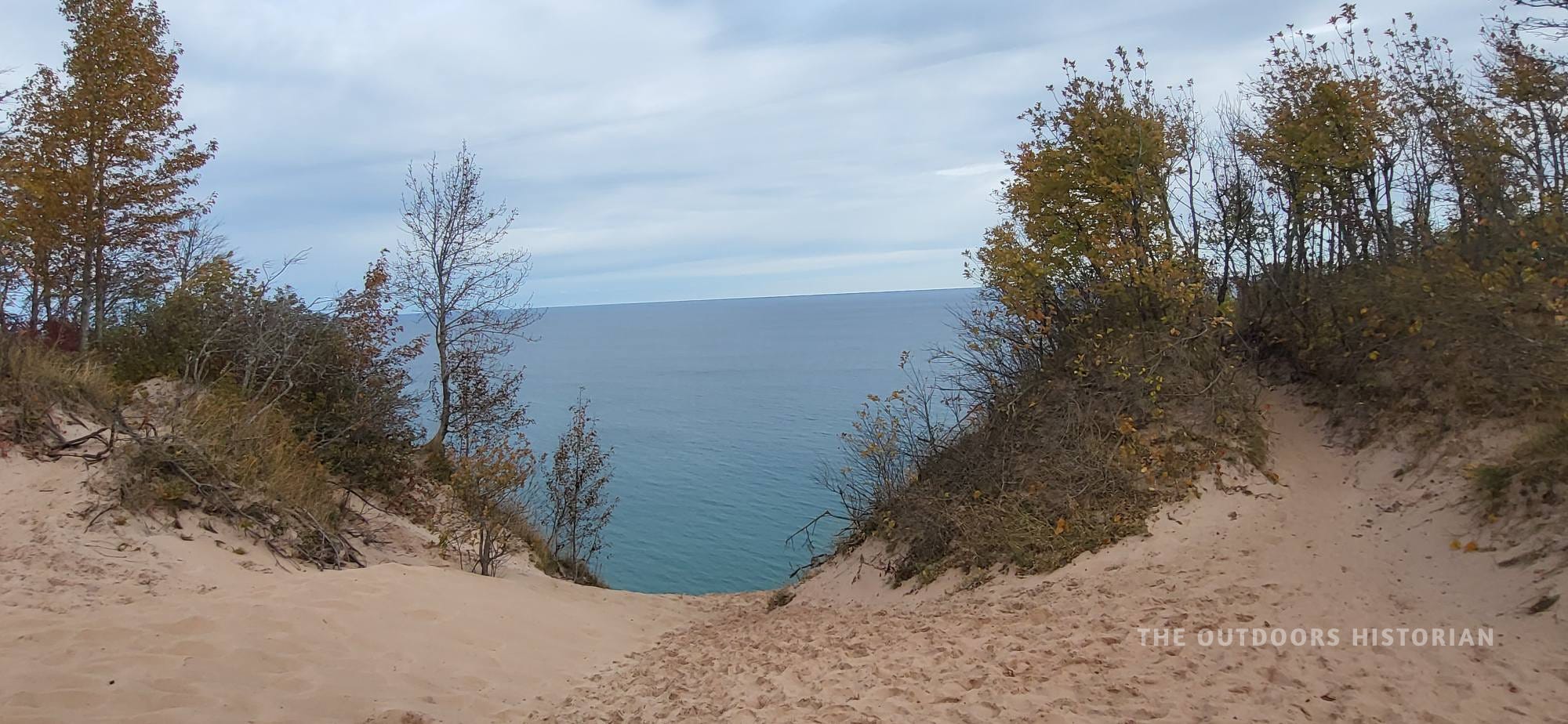
The Surface Layer: A massive, 300-foot sand dune with a vertical drop to the water.
The Deep Layer: This was a high-speed highway for White Pine logs. The “imprint” you see today is the scar left by millions of board-feet of timber extracted in the wake of the Treaty of Washington (1836) that transferred the region from Anishinaabe control to the United States.
The Lesson: Places that are scenic overlooks today were often the “assembly lines” of 19th-century extraction.
Calumet (Keweenaw Peninsula, MI): The Weight of the Copper Country
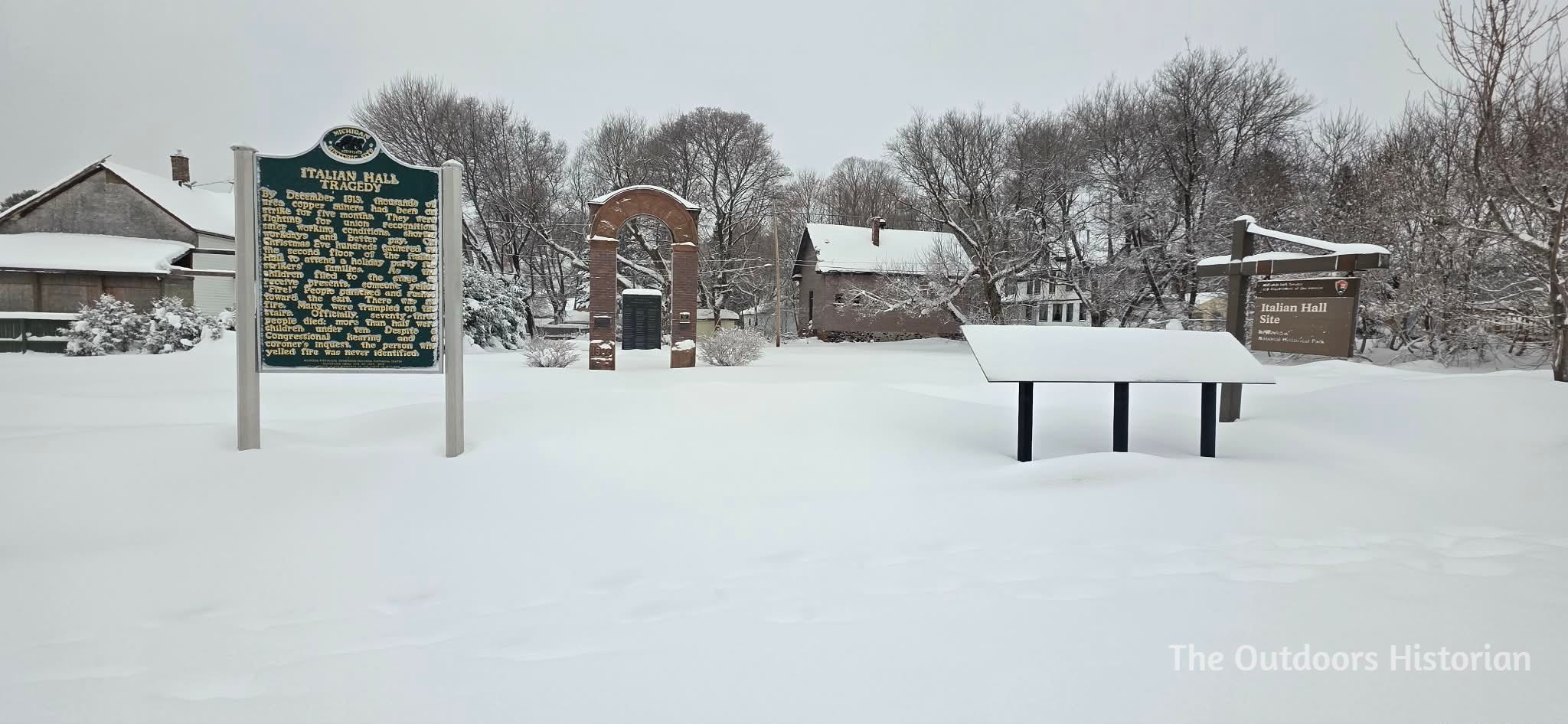
The Surface Layer: Massive red-brick ruins and steel hoist houses rising out of the trees like industrial cathedrals, alongside the hallowed sandstone archway of the Italian Hall site.
The Deep Layer: This was the heart of “Copper Fever,” built on the 1842 Treaty of La Pointe. This “Copper Treaty” ceded mineral-rich land to the U.S., opening the door for the deepest mines in the world and the subsequent 1913–14 strike. During the conflict, the Italian Hall disaster killed 73 people, mostly children. This sits atop an even older foundation: over 7,000 years of Indigenous copper mining by the Anishinaabe and their ancestors.
The Lesson: A landscape is not just a resource; it is an archive of sovereignty, labor struggle, and the difficult memories that remain long after the mines close.
8. The Brownstone Trail (Bayfield, WI): The Architecture of the Midwest
The Surface View: A cliffside path overlooking Lake Superior.
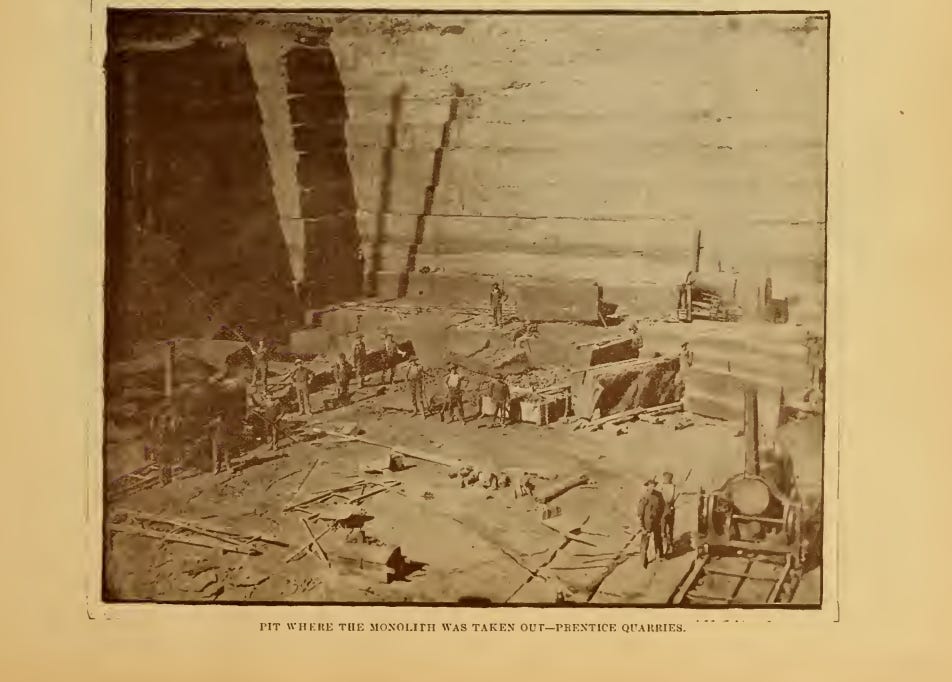
The Deep Layer: The trail follows an abandoned 1883 railroad grade designed specifically to transport “Green Gold” and red sandstone. This stone built the iconic architecture of Chicago and Milwaukee (and you can also see brownstone buildings in nearby communities like Bayfield, Washburn, and Ashland). When you walk here, you are standing on the industrial spine that filled the “negative space” of the urban Midwest. This specific stretch of coast was also the site of the Prentice Quarry at Houghton Point, where in 1892, workers cut a record-breaking 115-foot monolith intended for the 1893 Chicago World’s Fair. The “Great Monolith” famously cracked during the move and was abandoned—a giant that remained on the shore as the industry eventually collapsed.
Conclusion: The Syllabus of the Land
Mapping a place like Lake Superior is an act of humility. You are constantly reminded there is more to see, more to explore, and more to learn. While these eight anchor points offer a glimpse into the layers of the coast, they are only a fragment of the “Syllabus of the Land.” As I shift my focus toward deeper archival research and writing here in Bayfield, I hope this Deep Map serves as a companion for your own observations.
The goal of the Outdoors Historian isn’t just to find the remnants of history, but to understand why they remain. Whether you are standing on the black sands of Silver Bay or walking the railroad grade of the Brownstone Trail, you are participating in a living history.
If this sample “Deep Map” has piqued your curiosity, my Lake Superior Circle Tour Field Guide is the full “textbook” to this syllabus. It features curated itineraries and strategies to help you find the hidden layers of the Northwoods, along with comprehensive planning logistics.
You can also kickstart your own Lake Superior Circle Tour road trip with my free planner.
I grew up in Sault Ste. Marie, MI, by the St. Marys River that connects Lake Superior to Lake Huron, so that entire region has a special place in my heart. But I have been recently digging into my mother’s mother’s line who lived in and around the Keweenaw Peninsula from the late 1800s into the mid-1900s.
Specifically right now I am kind of obsessed with learning more about Pequaming, the lumber mill village that popped up between L’anse and Baraga on the Keweenaw Bay in the late 1800s. My great-great-great grandmother Alida moved there as a young widow with her daughter, my great-great-grandmother Clara, and lived the rest of her life there.
In the early 1900s the mill was abandoned and after an attempt to resurrect the town by Henry Ford, it finally died again. It’s now considered a ghost town. https://mikelbclassen.com/pequaming-ghost-town-baraga-county-michigan/
I’m planning a visit this summer!
Ninth Pin? - Frog Bay Tribal Park. Just don’t tell too many people. It’s magic when the only other beings around are spirits.