
Fall around Lake Superior gets a lot of attention for the color, and it deserves it. But most of what gets written about the season stops at “here’s when to see the leaves.” There’s more to know if you actually want the trip to go well — some of it practical, some of it worth knowing out of respect for the place and the people who live here year-round. Here’s what I’d tell a friend before they visit.
1. Crowds happen — have a plan B
Fall color brings crowds to the same handful of famous overlooks and falls, often at the same hour, on the same weekend. That’s not a reason to avoid them, but it is a reason to have a little flexibility built into your plan. If you hit a full lot or a long line, it’s worth asking whether waiting it out or finding what’s a few miles down the road might actually serve you better. (I wrote a whole piece on this, if you want the longer version.)
Reading the Reroute: A Fall Color Story

It was October, my last year of grad school, and Eugene and I had driven up to the eastern UP for a few days — half research trip, half pretending we weren’t stressed about everything waiting for us back in Ann Arbor. Neither of us had been to Tahquamenon before. We’d heard about it the way you hear about most famous waterfalls: big, brown, worth seeing…
2. Know before you go: closures and reduced hours
Fall is shoulder season for a lot of small businesses and sites around the lake, and that means schedules shift fast. Agawa Rock Pictographs, for instance, closes for the season earlier than a lot of visitors expect.
If you're hoping to camp, the same shoulder-season logic applies there too. It is important to know that some national forest campgrounds close by the end of September, and most provincial and national park campgrounds follow by mid-October. If you’re camping, a trip needs to be timed with that in mind, not just around peak color. Of course, you can also find select campgrounds that are open year-round, so there’s always options, they just decrease as it gets later in the fall.
Smaller tourist towns also scale back as the summer workforce and seasonal residents thin out. La Pointe on Madeline Island is a good example; after Labor Day, restaurant hours, ferry schedules, and shop availability decrease as the season winds down, sometimes week to week. A five-minute check on current hours before you go can save you from planning a whole afternoon around something that’s already closed for the year. And tbh, I always recommend checking out a business Facebook page. In our area, it’s often where the most up to date information is found.
None of this is a secret, but it’s also not always obvious from a quick search, especially when your immediate concern might be crowds, not reduced infrastructure.
Also, if you’re planning a quiet trip to the Minnesota North Shore after peak season, keep in mind that many of the state parks between Two Harbors and Grand Marais restrict access in certain areas in November for deer hunting season. The good news it that Visitor Centers and the trails between Highway 61 and Lake Superior, tend to remain open.
3. Watch the wetlands after the hardwoods drop
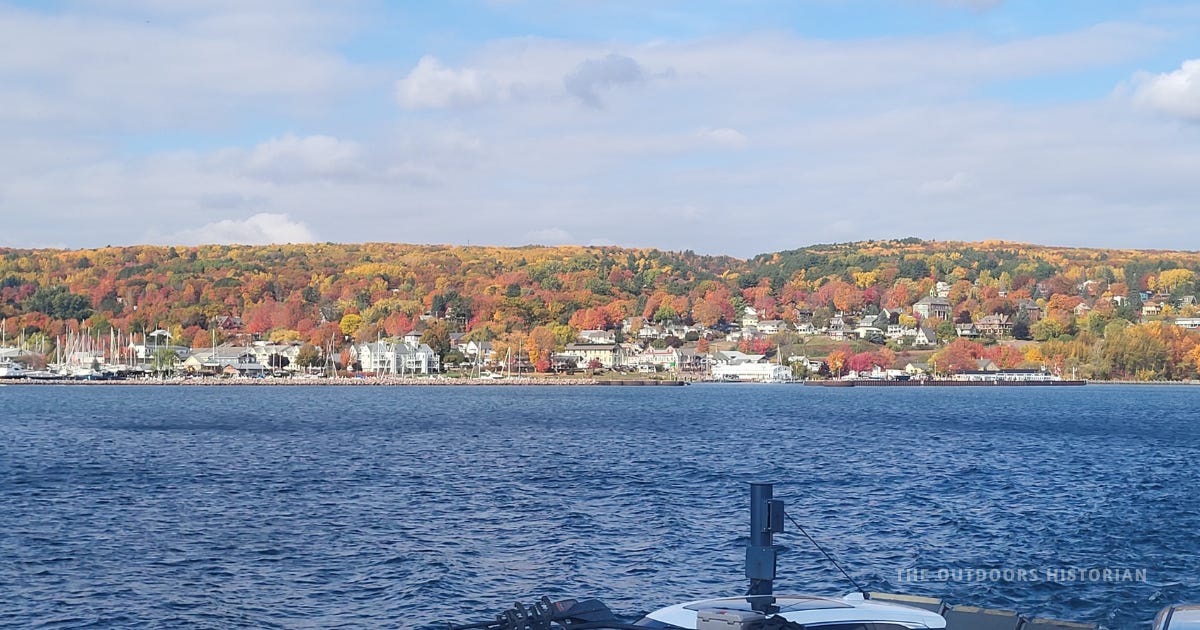
Most fall color advice is built around the hardwoods — maples, oaks, and birch — and for good reason. They’re the showstoppers. But, they aren’t the last word on color up here. Once the hardwoods start dropping (or if you accidentally miss peak), keep an eye on the wetlands. Tamaracks — one of the only conifers that actually loses its needles for winter — turn a deep gold later in the season, often when everyone else has already written fall off as “over.” If you’re hiking or driving past a bog or a stretch of lowland forest in late fall and it looks like it’s glowing, that’s why. It’s one of the best-kept secrets of the season, mostly because it happens after most people have stopped looking. Fall is also a great time of year to check out trails near wetlands and bogs, because these areas can be buggy during warm and humid parts of the years.
4. Pack for all four seasons, even if the forecast says warm and sunny
Lake Superior weather changes fast, and fall is when it changes the most. A warm, sunny morning can turn into wind, rain, or a real chill by early afternoon — especially anywhere near the water. Always have on hand: a warm hat (a toque, if you want the correct word for it), gloves or mitts, and some kind of rain jacket — even if the forecast looks perfect when you leave. It can be swimming temperatures one day, and gale force winds with overnight frost the next. It’s not about expecting bad weather. It’s about not getting caught without options when the lake decides to do its own thing.
A few more weather related hints:
When the weather turns quickly, strong winds can come up fast. If you’re camping, make sure you have any tents and tarps anchored securely and set-up for high winds.
Trails are more likely to be muddy in the fall than summer, so I recommend hiking boots if you’re planning to hit the trails.
5. Plan around events with purpose
Fall events around the lake — apple festivals, harvest festivals, etc. — can be genuinely great, but they also concentrate people in specific towns on specific weekends. Whether that’s good news or bad news for your trip depends on what you’re actually looking for. If you want the energy of a festival, plan to be there for it. If you’d rather have a quieter version of the same season, it’s worth checking event calendars ahead of time and either building your trip around them or deliberately timing around them. Also, keep in mind, not all events are the same. Some, like the 1854 Treaty Commemoration Day, are educational. Some—like Bayfield’s Apple Fest—are notoriously busy. Others are small, and laid-back.
6. Check what’s seasonal, beyond the leaves
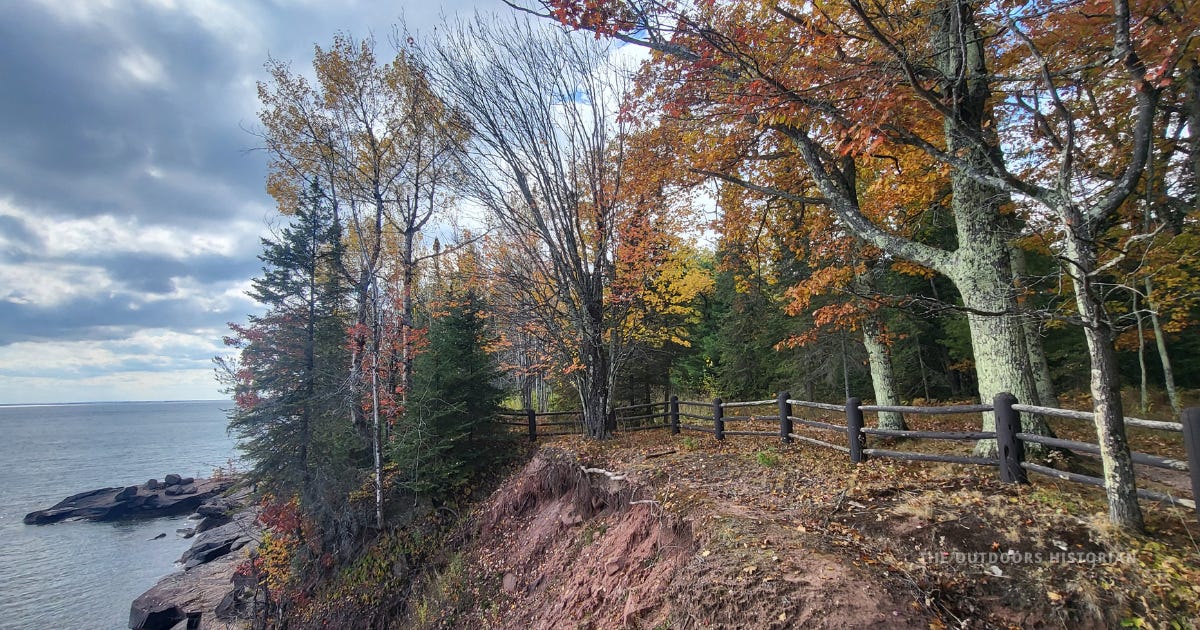
Fall color isn’t the only seasonal thing to experience.
For other fall activities, consider corn mazes, apple orchards, pumpkin patches, and the occasional haunted attraction. They’re worth checking into if you’re traveling with kids or just want something besides scenery on the agenda. And some of them (especially the haunted events), are open after peak colors, making them a great way to extend fall fun.
For fall flavors, sample fresh apples, apple donuts, and apple cider at orchards, Oktoberfest beers at microbreweries, and fresh herring (a late season treat) wherever you go for a Friday Night Fish Fry.
7. Darkness comes early
Compared to spring and summer, daylight fades quickly in the fall—especially when you’re in Central Time. Fall and Winter are the times we most use ambient lighting when camping, whether that’s strings of LED lights or tiki torches or a campfire or some combination thereof.
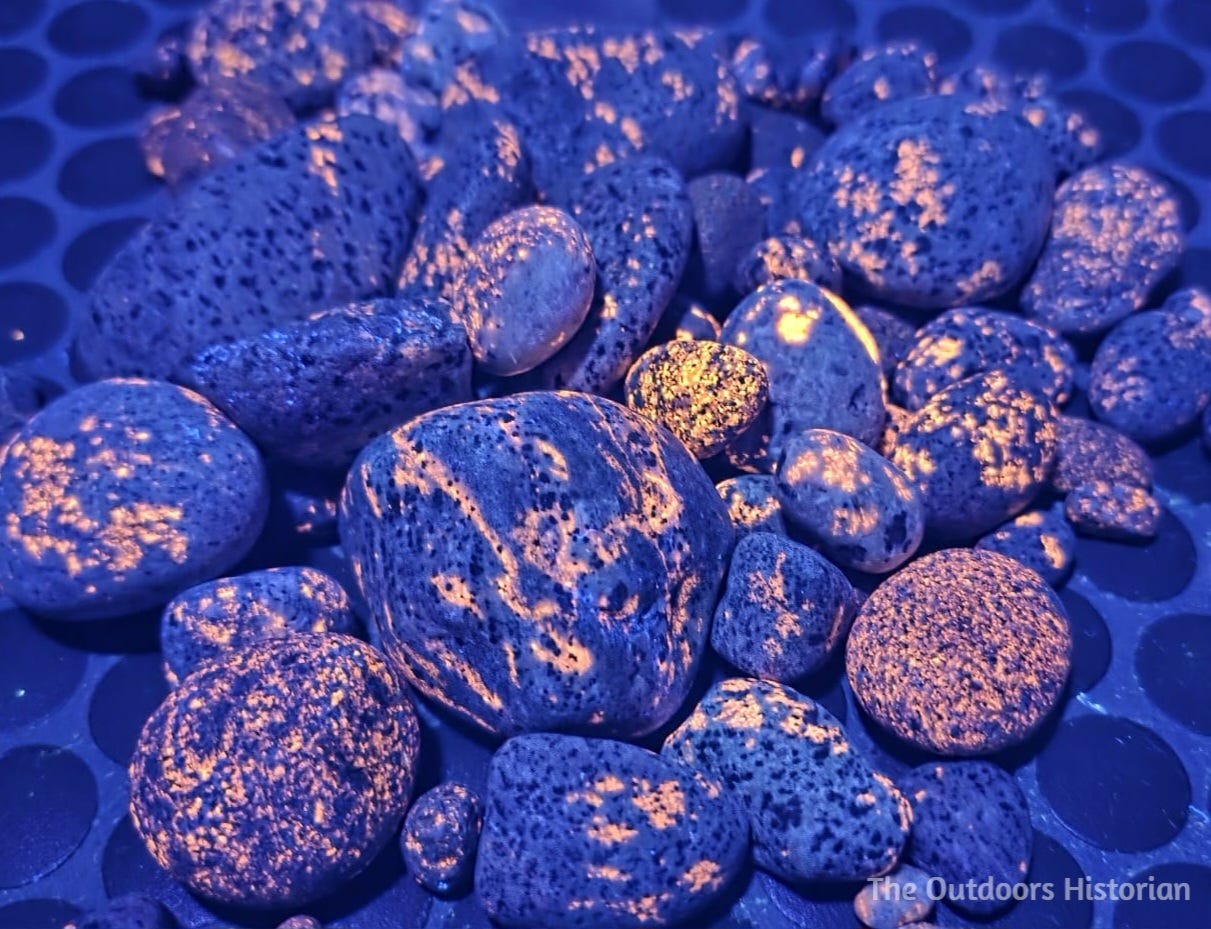
Make sure to take into account the sunset time when planning activities. And if you like activities that depend on the dark—like hunting for Yooperlites or stargazing—you’ll find that the early darkness is a actually perk.
8. Blaze orange matters — and hunting seasons can overlap in ways you might not expect
Fall is hunting season across the Lake Superior region, and it’s worth knowing that before you’re out on a trail or a back road. Wearing blaze orange when you’re hiking or walking in areas open to hunting is a basic, sensible precaution, not an overreaction.
It’s also worth understanding that hunting seasons aren’t always a single, unified calendar.
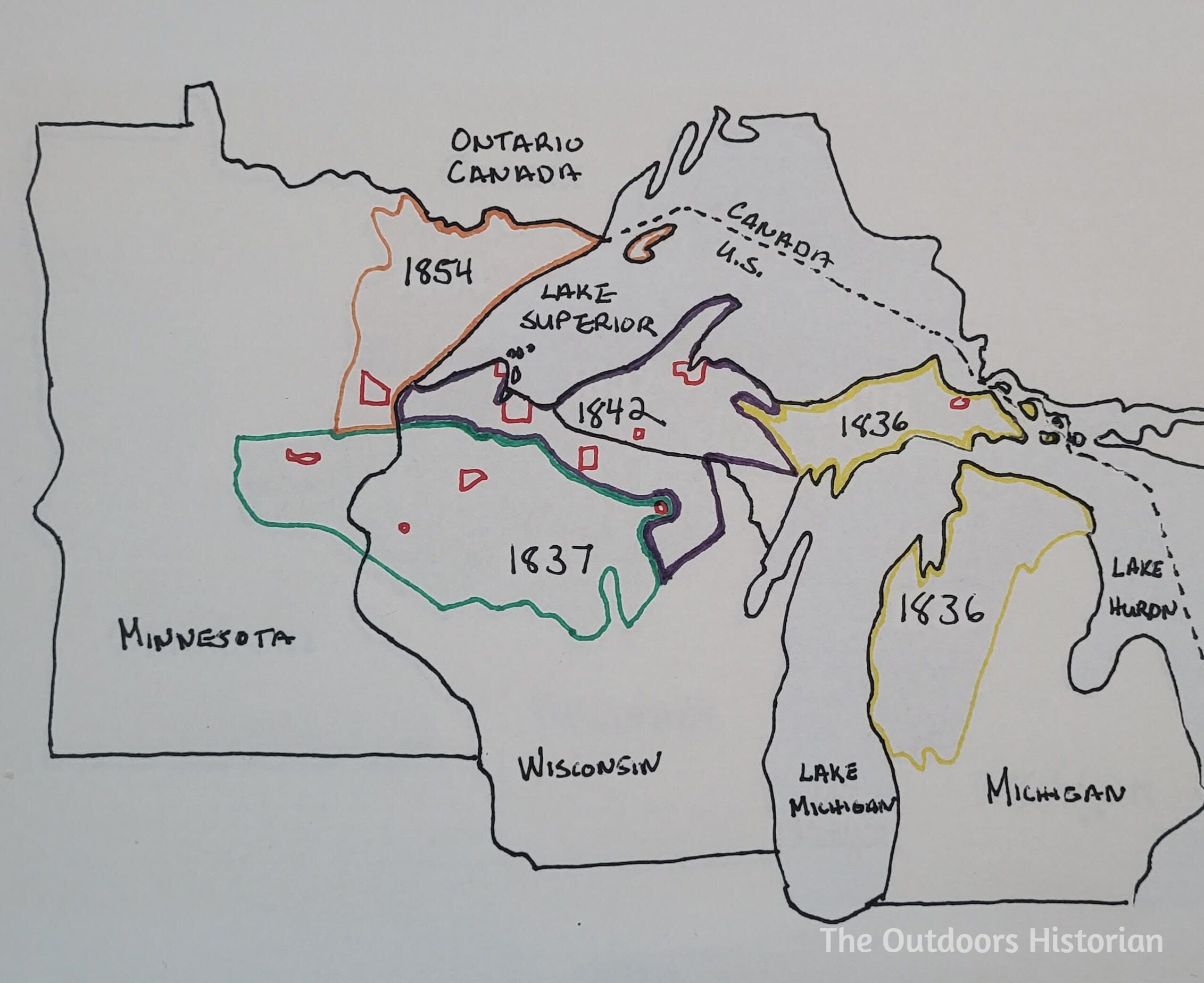
In Minnesota, Wisconsin, and Michigan, Ojibwe tribal members exercise hunting rights reserved under treaty, operating under tribal regulations that run alongside, and don’t always align with, the state DNR’s season dates. This isn’t a quirk or a loophole; it reflects rights that were retained by treaty, not granted by the state.
If you’re traveling in the region during fall, it’s worth knowing that more than one set of hunting regulations can be in effect at the same time, in the same place — and treating that as a normal feature of the landscape, not a source of confusion. To learn more about hunting on the American side of the lake, check out resources by Great Lakes Indian Fish and Wildlife Commission and The 1854 Treaty Authority.
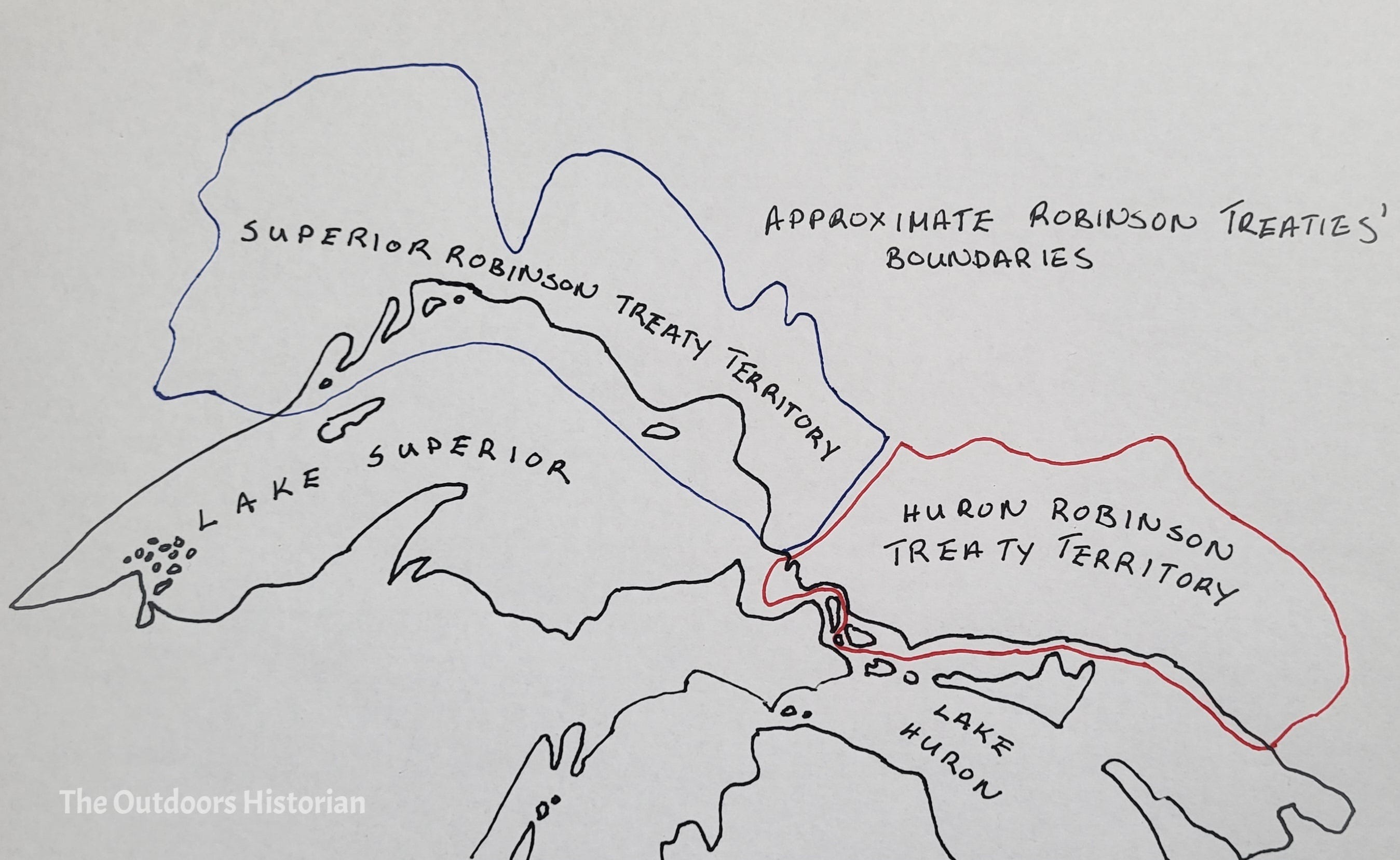
The same principle holds on the Canadian side of the lake. Ontario’s north shore falls under the Robinson-Superior Treaty of 1850, and First Nations communities there exercise harvesting rights that are constitutionally protected — not granted by the province, but recognized and affirmed under Section 35 of Canada’s Constitution Act. As on the U.S. side, that means First Nations hunting and provincial hunting seasons don’t necessarily run on the same calendar, and it’s worth knowing that going in rather than being caught off guard by it.
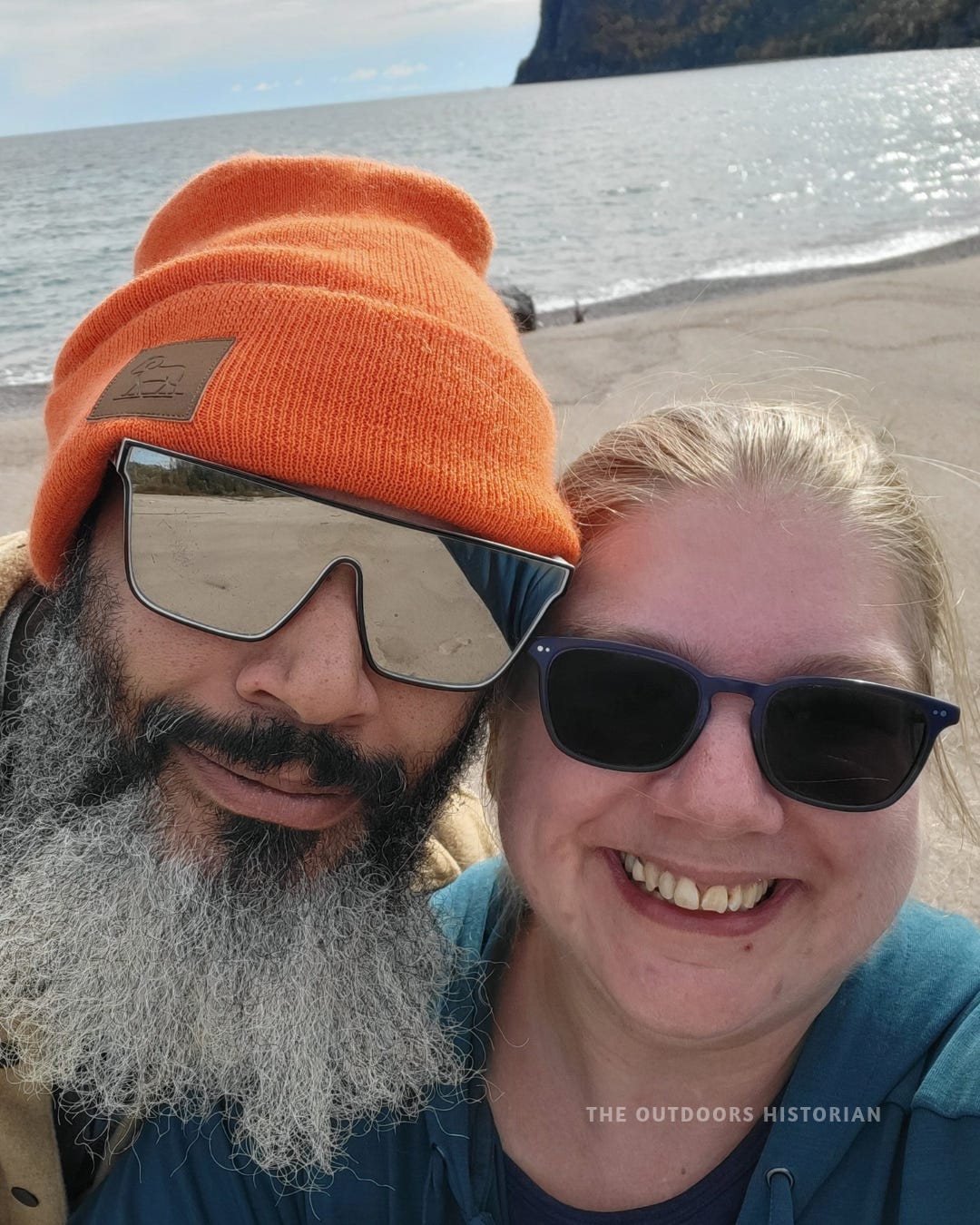
My general rule? Wear blaze orange when hiking in October and November. Rather than know all the regulations of each piece of public land we visit, it is easier to just keep orange vests and hats in our vehicles, so we always have something to throw on.
At the end of hunting season, we swap out our blaze orange gear for microspikes so that we’re ready for winter adventures!
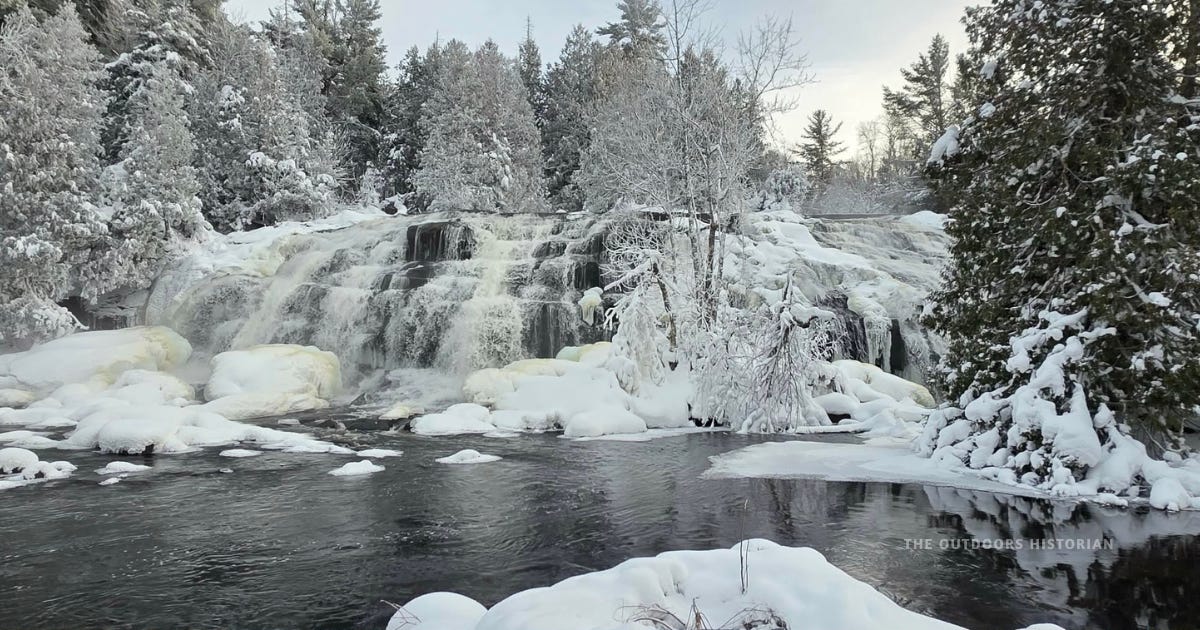
None of this is why you go to Lake Superior in the fall. You go for the color, the water, the quiet roads. But the boring, practical stuff is usually what decides whether the trip actually goes that way — or gets derailed by something you could have known ahead of time.
Where’s your favorite place to travel in the fall? Let me know in the comments!
Looking to plan a trip to Bayfield, Wisconsin this fall? Get my free 3-day itinerary!
Fun read! Of all the places you mention, La Pointe stood out to me. You make it seem like a nice place, but it also works best for my puzzles. I make city names into a word game and tell a little history about places. Weird hobby, I know. But now La Pointe, WI is high on my puzzles-to-do list.